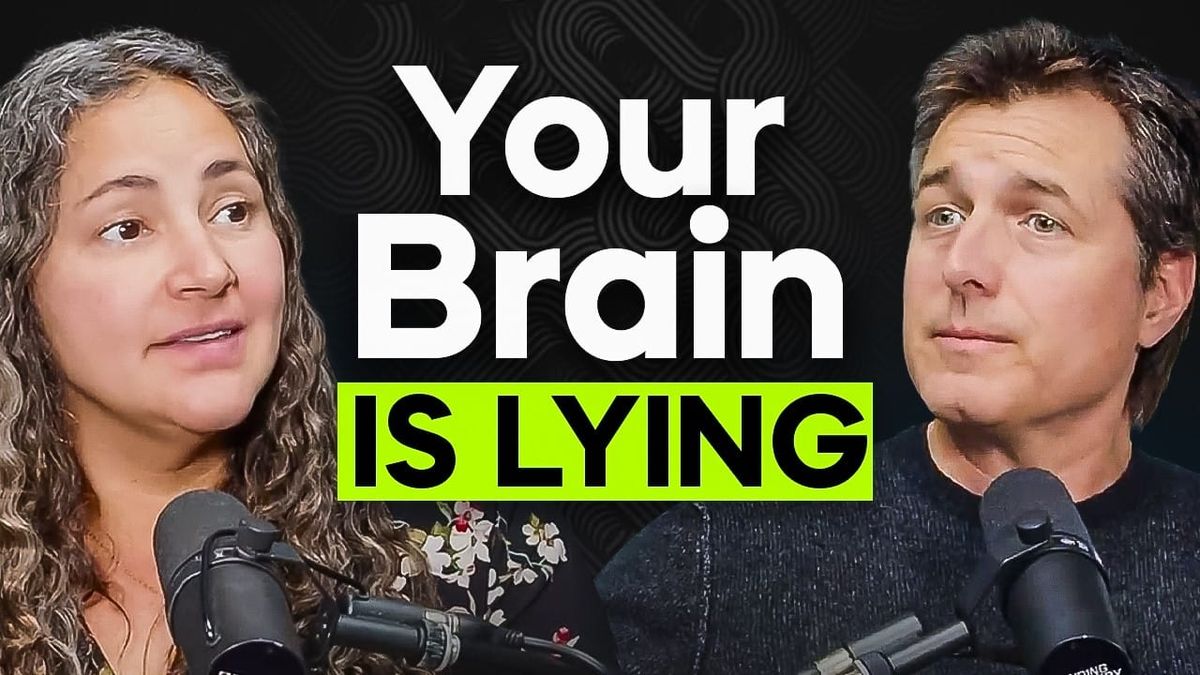
Original source: Finding Mastery
This article is an editorial summary and interpretation of that content. The ideas belong to the original authors; the selection and writing are by Streamed.News.
This video from Finding Mastery covered a lot of ground. 3 segments stood out as worth your time. Everything below links directly to the timestamp in the original video.
Ever wonder if the experts who teach about happiness secretly have it all figured out? Dr. Lori Santos offers a refreshingly honest look at the personal effort behind mastering emotional well-being.
Happiness Professor Lori Santos Reveals Personal Struggle with Emotional Regulation
Dr. Lori Santos, a prominent professor of happiness, openly shares that she was not inherently happy or skilled in emotional regulation before embarking on her research. She describes her journey into the field as a personal "education slope," necessitating constant effort to apply the very strategies she teaches. Far from being naturally adept, Dr. Santos relies on consistent practice and even gentle reminders from her colleagues to "practice what I preach."
This candid admission from a leading expert challenges the perception that emotional well-being is an innate trait. Instead, Dr. Santos highlights that happiness, much like physical fitness, is a discipline requiring ongoing work and intentional effort, not a static state. Her experience underscores that even those who deeply understand the science of happiness must actively cultivate it, emphasizing the universal nature of this ongoing endeavor.
"My natural individual difference was like I was really bad at some of these things before. Like I was not a naturally very happy person. I'm not naturally good at regulating or knowing my emotions or knowing myself."
Olympic Medalists Research Reveals Silver Medalists Often Less Happy Than Bronze
Research on Olympic medalists reveals a counterintuitive finding about happiness and achievement: silver medalists often express more negative emotions like contempt and sadness than bronze medalists. This phenomenon stems from their differing reference points; silver medalists tend to compare themselves to the gold winner, focusing on what they narrowly missed. In contrast, bronze medalists typically compare themselves to not winning a medal at all, leading to greater feelings of relief and gratitude.
Dr. Lori Santos highlights this insight to illustrate how our chosen comparison points profoundly shape our perception of success and well-being. She suggests that instead of looking for a "silver lining," individuals might benefit from a "bronze lining" approach, intentionally constructing counterfactuals that emphasize potential worse outcomes. This cognitive strategy encourages a mindset of appreciation for what has been achieved, rather than dwelling on what could have been.
"Their comparison point isn't gold... They're thinking, 'Oh my gosh, but by the grace of God, did I not like miss I could have gone going home completely empty-handed.'"
Psychological Distancing and Self-Compassion Key to Healthier Inner Dialogue, Says Dr. Santos
Dr. Lori Santos presents two evidence-based methods for training self-talk, aimed at fostering greater well-being. The first, psychological distancing, involves shifting from first-person self-talk (e.g., "I suck") to using the second or third person (e.g., "You've got this"). This linguistic change, proposed by Ethan Kross, encourages a more rational and less
Also mentioned in this video
- More than 40% of college students report being too depressed to function most… (0:00)
- Dr. Santos explains how our minds are wired to compare ourselves to others,… (1:04)
- Dr. Santos introduces the concept of self-compassion as a powerful tool for… (1:48)
- Dr. Santos explains that her interest in studying happiness began when she… (3:04)
- The staggering statistics of college student depression and suicidal ideation… (4:59)
- Dr. Santos attributes the college student mental health crisis to a combination… (6:02)
- Dr. Jery notes the overwhelming popularity of Dr. Santos's happiness course at… (7:00)
- Dr. Jery uses the analogy of "swimming naked" when the tide goes out to… (7:47)
- Dr. Santos discusses "lawnmower parenting," where parents excessively smooth… (9:22)
- Dr. Santos explains that parental over-involvement, while motivated by love,… (10:51)
- Dr. Santos defines happiness from a social scientist's perspective as… (11:23)
- Dr. Santos emphasizes that emotions are not purely positive or negative, using… (12:42)
- Dr. Santos asserts that our perception of any experience is primarily driven by… (14:06)
- Dr. Santos explains that the mind processes everything relatively, not… (16:01)
- Dr. Jery uses the example of athletes progressing to professional sports to… (17:28)
- Dr. Santos reveals that our brains tend to gravitate towards comparisons that… (18:28)
- Dr. Santos states that true happiness doesn't come from external achievements… (23:15)
- Dr. Santos reiterates the definition of happiness as feeling good in and with… (23:46)
- Dr. Jery expresses his desire for the fullness of life's emotional experiences,… (25:27)
- Dr. Santos likens negative emotions to car alert signals, emphasizing their… (27:01)
- Dr. Jery praises Dr. Santos's clear articulation of complex inner life… (28:03)
- Dr. Santos advocates for the practice of radical acceptance, urging individuals… (28:48)
- Dr. Santos highlights mindfulness and meditation as primary practices,… (32:58)
- Dr. Jery explains that non-judgmental observation is a crucial tactic for him… (34:07)
- Dr. Santos describes her personal practice of integrating emotional awareness… (35:08)
- Dr. Jery discusses how people often give themselves the least compassion and… (39:59)
- Dr. Santos explains how she uses self-compassion to address feelings of… (41:06)
- Dr. Jery and Dr. Santos discuss using the psychologically distanced question… (42:19)
- Dr. Santos explains that happiness is influenced by both genetics… (45:24)
- Dr. Santos emphasizes social connection, including both close relationships and… (47:45)
- Dr. Santos highlights the importance of focusing on others' happiness, citing… (49:58)
- Dr. Jery acknowledges that while most people know sleep is important,… (50:54)
- Dr. Santos suggests that improving sleep often requires addressing underlying… (51:11)
- Dr. Santos expresses concern that AI, particularly large language models,… (52:54)
- Dr. Santos suggests that better parenting involves focusing on future… (55:20)
- Dr. Santos advocates for treating children as agentive members of a team,… (56:15)
- Dr. Jery connects collaborative troubleshooting to the best practices of… (59:12)
- Dr. Santos emphasizes that leaders should prioritize their own and their teams'… (1:00:16)
- Dr. Santos explains that fostering a sense of belonging at work, where… (1:02:46)
- Dr. Jery discusses how framing in team meetings can be easily undermined by… (1:04:39)
- Dr. Santos explains that investing in mental skills, like social connection and… (1:07:09)
- Dr. Jery shares a practice of contemplating how to support a colleague before… (1:10:04)
Summarised from Finding Mastery · 1:13:54. All credit belongs to the original creators. Streamed.News summarises publicly available video content.
Streamed.News
This publication is generated automatically from YouTube.
Convert your full video library into a digital newspaper.
Get this for your newsroom →