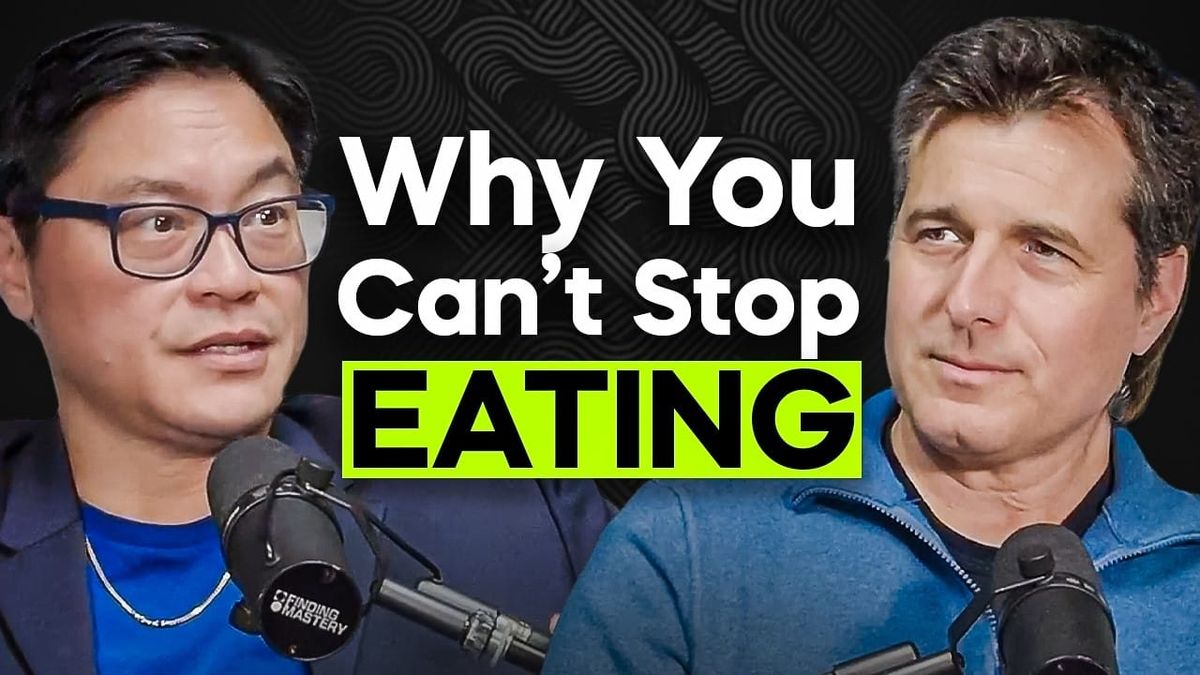
Original source: Finding Mastery
This article is an editorial summary and interpretation of that content. The ideas belong to the original authors; the selection and writing are by Streamed.News.
This video from Finding Mastery covered a lot of ground. 6 segments stood out as worth your time. Everything below links directly to the timestamp in the original video.
Ever wonder how small changes to your eating habits could make a big difference to your health? Discover how everyday ingredients and simple food preparation tricks might help manage your body's sugar response more effectively.
Dr. Fung Reveals Simple Methods to Lower Insulin Response: Vinegar and Cooled Rice
Dr. Jason Fung highlights two practical dietary strategies to significantly reduce the body's insulin response to carbohydrates. Consuming vinegar or other organic acids, such as those found in fermented foods like kimchi and sauerkraut or lemon juice, can inhibit the enzyme amylase. This inhibition slows the digestion and absorption of glucose, potentially lowering the insulin effect by 20-30%. Another effective technique involves creating "resistant starch" by cooking and then cooling rice, for example, by refrigerating it overnight or freezing it, before reheating. This process crystallizes the starch, making it less digestible and thus reducing carbohydrate absorption and the subsequent insulin spike, even if the taste remains the same.
"When you inhibit the amylase, then the absorption is much slower because it's not getting chopped up."
High Insulin Levels Linked to Weight Gain, Type 2 Diabetes, and Increased Cancer Risk, Says Dr. Fung
Dr. Jason Fung explains that hyperinsulinemia, or excessive insulin in the body, is a root cause of several chronic health conditions beyond just metabolic issues. He states that chronically elevated insulin levels directly contribute to weight gain by signaling the body to store more calories as fat, and is a key driver behind the development of Type 2 diabetes. Furthermore, Dr. Fung highlights insulin's powerful role as a growth hormone, linking high insulin to an increased risk of specific cancers, particularly colorectal and breast cancers. He notes that cancer cells, especially breast cancer cells, have significantly more insulin receptors (up to six times as many as regular cells), making them "love" and use insulin and glucose to fuel their growth. Diabetes itself, often stemming from high insulin, also raises the risk for heart disease, strokes, amputations, and infections.
"Insulin is not only a metabolic hormone, it's actually a very powerful growth hormone, and you can clearly link hyperinsulinemia, which is too much insulin, to a number of cancers, particularly colorectal cancer and breast cancer."
Statins Linked to Pre-Diabetes by Suppressing Satiety Hormone GLP-1, Dr. Fung Reports
Dr. Jason Fung warns that statin medications, widely prescribed for heart conditions, have a concerning link to pre-diabetes. He explains that statins significantly decrease levels of GLP-1, a hormone that typically signals satiety and reduces hunger. This effect has been recognized in medical literature for over 15 years as a contributor to diabetes. The reduction in GLP-1 by statins essentially works in opposition to GLP-1 agonist drugs like Ozempic, which are designed to increase satiety and help manage blood sugar. By turning off the body's natural satiety signals, statins can make individuals hungrier, leading to increased food intake and contributing to the development of pre-diabetes or Type 2 diabetes.
"Ozempic raises GLP-1, which increases satiety. Statins decrease GLP-1. So it's basically the opposite of Ozempic, which is going to make you diabetic as opposed to not make you diabetic."
▶ Watch this segment — 1:13:08
Ultra-Processed Foods Act Like Addictive Substances Due to Rapid Absorption and Dopamine Spikes, Says Dr. Fung
Dr. Jason Fung explains that ultra-processed foods (UPFs) profoundly alter eating behavior by dramatically increasing the speed at which nutrients are absorbed into the bloodstream. Unlike whole foods, UPFs are engineered with artificial flavors, colors, and texturizers to be easily chewed and rapidly pass through the stomach, leading to a quick influx of glucose. This rapid absorption triggers significant dopamine spikes, creating a rewarding sensation akin to addictive substances, such as nicotine or heroin, which are absorbed quickly for maximum effect. Dr. Fung illustrates this with the example of an apple versus applesauce: even with identical ingredients, the processing of applesauce leads to much faster digestion and absorption, resulting in a more rapid and pronounced glucose spike and a different hormonal response compared to eating a whole apple.
"The speed of absorption matters because if you're thinking about addictive behavior, pleasurable behaviors, how quickly you absorb a molecule is very important."
Eating Protein Before Carbohydrates Significantly Reduces Insulin Spike, Study Finds
Dr. Jason Fung emphasizes that the order in which foods are consumed at a meal can dramatically impact the body's insulin response. Citing a study, he explains that eating protein and vegetables before carbohydrates leads to a significantly lower insulin spike, with the insulin response being up to 30% higher when carbohydrates are consumed first. This effect occurs because the stomach acts as a reservoir, slowly releasing its contents into the intestines for absorption. When protein and vegetables are eaten first, they create a buffer in the stomach that slows the passage of subsequent carbohydrates, preventing a rapid influx of glucose into the bloodstream. In contrast, consuming carbohydrates on an empty stomach allows for their quick absorption, causing a sharp and elevated insulin response.
"The difference in insulin response to the same foods was shocking. It was like 30% higher when you ate the carbs first."
Post-Meal Walks and Drastic Reduction of Ultra-Processed Foods Key to Insulin Health, Says Dr. Fung
Dr. Jason Fung identifies two primary strategies for effective insulin management: taking a brisk walk within 30 minutes after eating and significantly reducing consumption of ultra-processed foods (UPFs). He stresses that UPFs, such as commercial white bread with its numerous chemical additives, are particularly problematic as they are rapidly absorbed, causing quick insulin spikes and stimulating hedonic hunger through dopamine release. Fung points out that the American diet consists of approximately 70% UPFs, a stark contrast to countries like Italy and Japan, where UPF consumption hovers around 25-30%, correlating with half the obesity rates. He notes that when individuals from Italy or Japan move to the United States, their obesity rates sharply increase, demonstrating the profound impact of the food environment rather than inherent cultural or genetic predispositions.
"My number one sort of golden rule of weight loss... is get rid of the ultra-processed foods because they actually again, they work on multiple levels... the absorption is very fast. You get this huge insulin spike."
▶ Watch this segment — 1:01:01
Also mentioned in this video
- Weight gain and diet failure are not due to lack of discipline but fighting… (0:00)
- Dr. Dery expresses enthusiasm about Dr. Fung's insights, while Dr. Fung… (0:49)
- Dr. Fung, a kidney disease specialist, describes how the rising epidemic of… (1:51)
- Dr. Fung recounts the moment he realized conventional diabetes treatment was… (3:48)
- Dr. Fung criticizes the calories-in, calories-out model for weight loss,… (6:25)
- Dr. Fung clarifies that type 2 diabetes can affect individuals who are not… (7:36)
- Dr. Fung addresses those struggling with weight loss, citing that 70% of… (9:28)
- Dr. Fung explains the 'three W's' concept to identify root causes, applying it… (12:59)
- Dr. Fung discusses the three types of hunger (16:42)
- Dr. Fung explains how satiety hormones like GLP-1, GIP, and peptide Y signal… (22:14)
- Dr. Fung discusses the side effects of Ozempic, including "Ozempic face" due to… (24:08)
- Dr. Fung explains how certain foods and practices can naturally stimulate… (26:10)
- Dr. Fung discusses the shift in dietary advice from discouraging snacking in… (28:27)
- Dr. Fung explains the benefits of intermittent fasting as an alternative for… (32:06)
- Dr. Fung explains the benefits of intermittent fasting for weight loss and type… (39:53)
- Dr. Fung highlights that fasting triggers autophagy, a rejuvenation process of… (43:10)
- Dr. Fung discusses how the menstrual cycle influences hunger, with estrogen… (47:08)
- Dr. Fung discusses that during perimenopause and menopause, managing appetite… (50:05)
- Dr. Fung explains that taking a walk immediately after a meal can significantly… (55:04)
- Dr. Fung emphasizes the importance of dialing in insulin levels, as medications… (1:00:04)
- Dr. Fung explains that the rise in obesity in the US is a social and… (1:04:41)
- Dr. Fung advises on healthier food choices, suggesting stone-ground tortillas… (1:07:39)
- Dr. Fung identifies common 'sneaky' ultra-processed foods, including oat milk… (1:10:13)
- Dr. Fung emphasizes that weight loss struggles are not an individual's fault,… (1:10:50)
Summarised from Finding Mastery · 1:16:09. All credit belongs to the original creators. Streamed.News summarises publicly available video content.
Streamed.News
This publication is generated automatically from YouTube.
Convert your full video library into a digital newspaper.
Get this for your newsroom →