Original source: Helen Yu
This article is an editorial summary and interpretation of that content. The ideas belong to the original authors; the selection and writing are by Streamed.News.
This video from Helen Yu covered a lot of ground. 5 segments stood out as worth your time. Everything below links directly to the timestamp in the original video.
How does a team with deep expertise in AI navigate a geopolitical crisis to redefine its mission? Discover the unexpected origins of a new AI powerhouse and the human story behind its vision.
Nebius Emerges from Yandex Exodus, Leveraging AI Expertise Post-Ukraine War
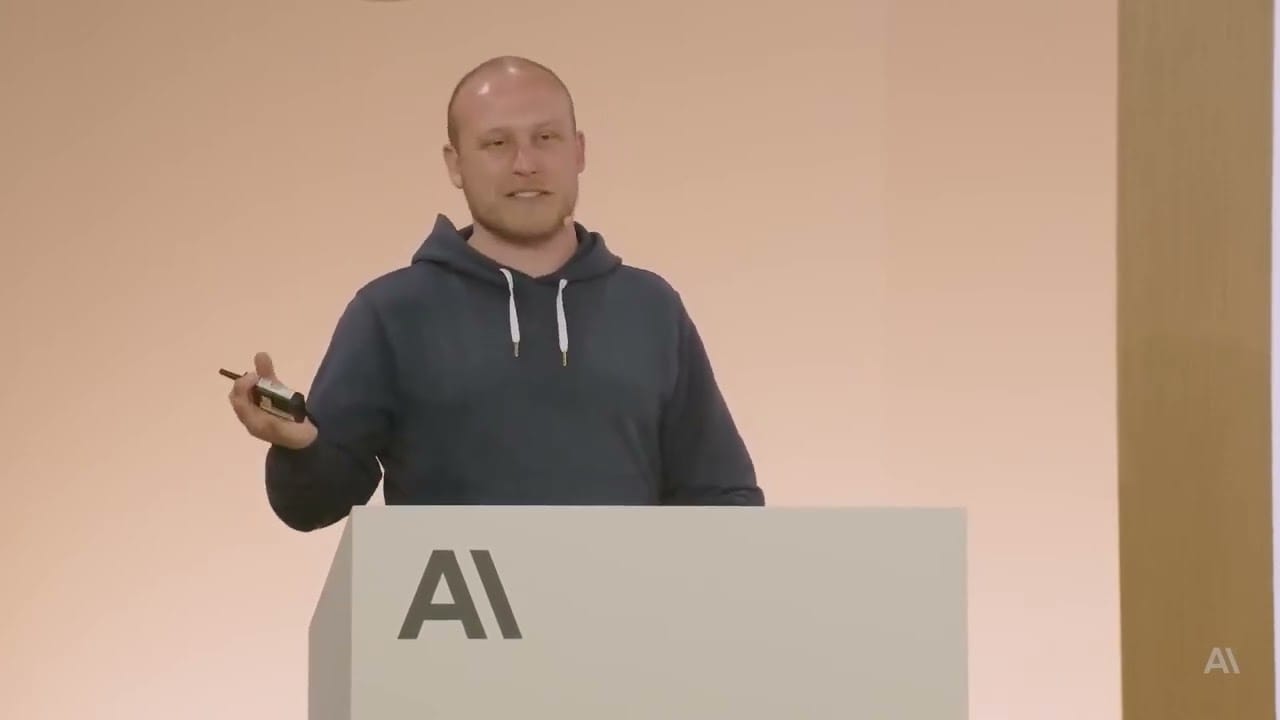
Nebius, an emerging AI cloud company, was founded by a core engineering team and founders who left Yandex, a major search company, in 2022 following the war in Ukraine. Roman Churnin, who previously led search and navigation at Yandex since 2011, recounted the challenging journey of relocating 1,300 families—primarily high-profile engineers—out of Russia. After a two-year corporate restructuring, Nebius inherited Yandex's public company status, pivoting its experienced talent toward global AI innovation.
This foundational team brought extensive expertise in machine learning and artificial intelligence, having built Nvidia clusters for training search models as early as 2013. This deep background enabled them to immediately grasp the transformative potential of AI after the ChatGPT moment in late 2022, inspiring the creation of an AI-focused cloud infrastructure. Churnin highlights that this multidisciplinary talent, spanning from physical infrastructure to AI research, was instrumental in rapidly aligning Nebius with the future requirements of AI customers and accelerating their development in the sector.
"We actually left Russia and we brought 1,300 families out of Russia, mostly high-profile engineers, people who know how to build on scale... When ChatGPT moment happened at the end of 2022 almost immediately it became obvious for us that this is something that changed the world."
Scaling AI Inference Demands Systems Engineering, Not Just Raw Compute Power
Scaling artificial intelligence inference beyond basic prototypes requires a sophisticated systems engineering approach, as "naive implementations are not working" at large scale, according to Roman Churnin. To achieve optimal performance, price, and quality, a comprehensive strategy is essential, encompassing techniques such as intelligent caching to avoid redundant model queries, dynamic resource provisioning to match fluctuating workloads, and strategic model selection, including the use of smaller, specialized models for particular tasks. The process also integrates advanced methods like speculative decoding pipelines, which boost efficiency for specific prompt streams.
This complex optimization task, demanding deep expertise and continuous updates on industry advancements, is simplified by Nebius's Token Factory. The platform delivers these comprehensive optimizations as a managed service, handling everything from deployment and observability to fine-tuning and parameter adjustments. By treating AI inference as an integrated system, Token Factory helps developers avoid the underlying MLOps complexities, enabling them to focus on product innovation while achieving significant cost reductions—reportedly up to 26 times in some cases—far exceeding what vanilla models or public benchmarks suggest.
"There are plenty of techniques that you can implement when you think about it as a system and not just as a like one GPU with with the model... We provide it as a platform. We invest to have all the layers of optimization... to optimize it as a system."
AI Inference Success Hinges on Economics, Not Just Reliability, Says Nebius CEO
While reliability is a critical factor for large-scale AI training jobs, Roman Churnin of Nebius highlights that economics are paramount when it comes to inference, particularly for production workloads. He explains that businesses face complex tradeoffs among quality, latency, and price, with the ultimate goal being to optimize unit economics. For growing companies, finding the right balance on this spectrum is not merely an advantage but "a question of existence," directly impacting their ability to scale and compete.
Churnin emphasizes that these economic considerations go beyond simple cost savings, aiming instead for "economics to grow." By intelligently navigating these tradeoffs—for example, choosing to serve a model slower but cheaper, or faster but more expensively—companies can unlock new use cases that were previously unfeasible due to cost barriers. Squeezing additional margin from the cost structure directly translates into faster business expansion and the capacity to innovate, demonstrating how precise economic optimization is foundational to AI product development and market penetration.
"Here in inference... I think there the most important part is economics... This is the matter of economics and not economics to save but economics to grow."
AI Developers Shift to Open-Source Models for Scalability and Customization
As artificial intelligence projects move beyond initial prototypes and aim for large-scale deployment, developers are increasingly shifting from closed-source frontier models to open-source alternatives, according to Roman Churnin. While closed-source models are convenient for demonstrating initial use cases, their economic constraints and limited flexibility for data-driven quality improvements become significant barriers at scale. Open-source models, despite perhaps not being the "smartest" out of the box, offer greater adaptability for optimizing performance, latency, and price, and crucially, allow for extensive tuning with proprietary data.
This transition, however, introduces substantial MLOps complexity, encompassing tasks like choosing the right model, fine-tuning numerous parameters, ensuring scalability, and managing updates. Nebius's Token Factory addresses this challenge by providing open-source models "as a service," offering the same ease of use as closed-source APIs but with the inherent flexibility of open-source solutions. By abstracting away the operational complexities of deployment, observability, and continuous optimization, Token Factory enables developers to concentrate on product innovation and customer-specific use cases, transforming what Churnin calls the "unsexy" work into a managed offering.
"Most of the work we do in Nebius Token Factory is helping people to switch from closed source models to open source models and scale with them because the struggle there is... you need to execute on that. We take care about deployment, observability, scalability... We provide you fine-tuning capabilities as a service."
Technical Prowess and Trust Drive Enterprise AI Adoption, Says Nebius CEO
While technical advantage remains a defining factor in the AI industry, enterprise adoption hinges significantly on trust and comprehensive service, according to Roman Churnin. He states that enterprises value Nebius's "AI nativeness," seeing the company as a crucial bridge translating frontier AI advancements from startups and research into practical, scalable solutions for large organizations. This ability to integrate cutting-edge innovation with enterprise-grade requirements is a key differentiator in the competitive landscape.
However, Churnin underscores that technology alone is insufficient; trust, compliance, and deep customer alignment are equally vital for long-term relationships. He describes cloud services as a "post-sale business," where delivering on promises and maintaining high service levels—including being "always on" for customer support and working closely to resolve bottlenecks—is paramount. By investing empathy and energy into ensuring customer satisfaction, Nebius fosters organic growth, illustrating how a customer-centric approach underpins successful enterprise AI partnerships and mutual expansion.
"Technical advantage is still a defining factor... But then to your point of the trust and building the service that beyond technology enterprises need that's also true. Cloud in general is we call it post sale business... can you deliver on your promise and I think we put a lot of energy a lot of empathy to build the service that people will be satisfied with."
Also mentioned in this video
- Nebius as an AI-specialized cloud that provides a full-stack infrastructure for… (0:35)
- The effort behind Nebius's vision and its team, referencing her positive… (9:00)
- Nebius's "AI native" approach means designing their entire system—from physical… (9:45)
- Nebius's architectural approach sets high expectations, especially when… (13:04)
- "economics to grow" is a critical factor that becomes evident when AI teams… (17:02)
- The complexity of the developer world and asks Roman to explain "Token Factory"… (23:03)
- Helen Yu asks Roman to elaborate on what was realized as broken in inference… (24:20)
- Cost efficiency is one dimension, but long-term advantage comes from how models… (32:05)
- Roman Churnin asserts that data is the only enduring competitive advantage in… (32:46)
- Performance or cost challenges, given that making this evolution work requires… (37:03)
- Nebius optimizes by analyzing the customer's specific use case and data, then… (37:44)
- As AI becomes central to enterprise operations, technical optimization is only… (39:19)
- Is uncommon among technology companies, and asks Roman for his forward-looking… (42:19)
- Roman Churnin expresses excitement about the impending expansion of AI from… (42:52)
- Helen Yu concludes the conversation by recapping three key takeaways (45:05)
Summarised from Helen Yu · 47:17. All credit belongs to the original creators. Streamed.News summarises publicly available video content.
Streamed.News
This publication is generated automatically from YouTube.
Convert your full video library into a digital newspaper.
Get this for your newsroom →