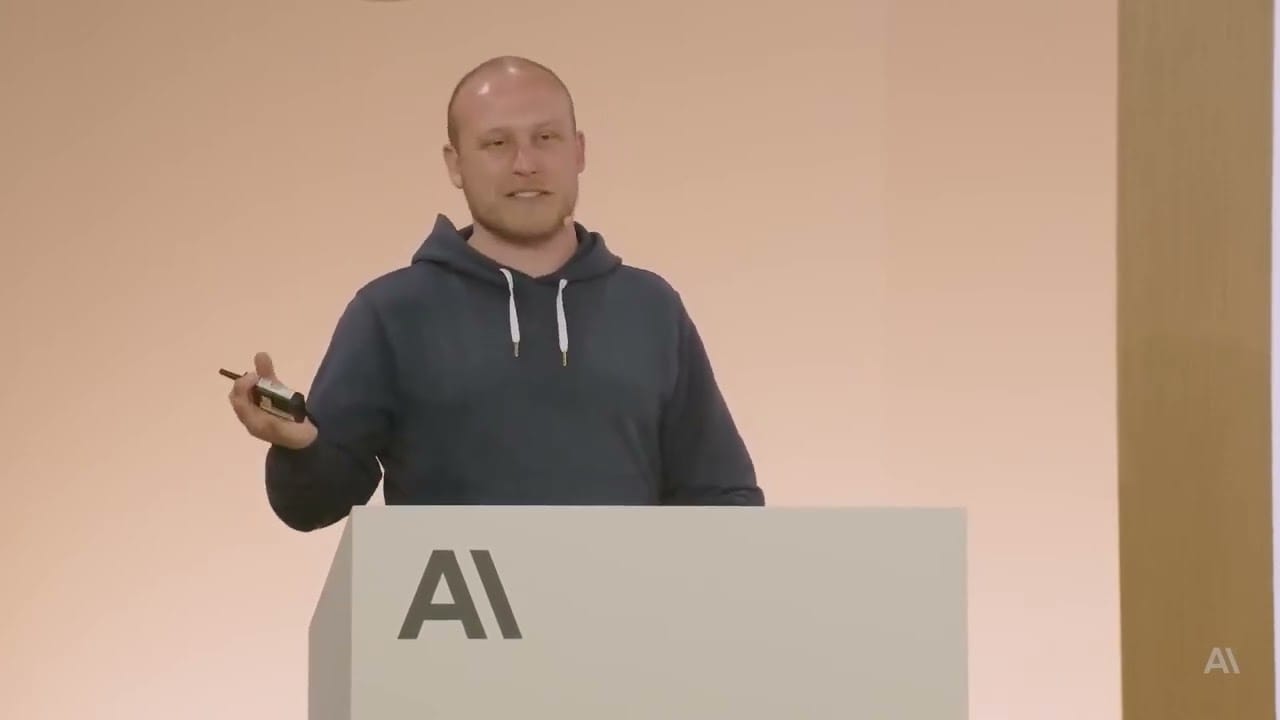
Original source: Helen Yu
This article is an editorial summary and interpretation of that content. The ideas belong to the original authors; the selection and writing are by Streamed.News.
This video from Helen Yu covered a lot of ground. 6 segments stood out as worth your time. Everything below links directly to the timestamp in the original video.
Ever wondered how businesses can tighten their belts without sacrificing essential functions? This perspective challenges the common notion of budget cuts, showing how strategic re-allocation can transform inefficiency into stronger protection.
Security Leaders Urged to Reframe Budget Cuts as Strategic Reallocation
Kumar Ramachandran advises security leaders to redefine "budget cuts" as "strategic reallocation," focusing on eliminating "zombie spend" to enhance security posture. He highlights that approximately 60% of current budget reductions target redundant tools, overlapping licenses, and the administrative overhead associated with managing fragmented systems. This "zombie spend," which can consume as much as 30% of a budget, does not improve security but merely facilitates basic operations by forcing different vendors' systems to communicate.
By consolidating tools and eliminating the "tax of fragmentation," organizations can redirect these savings into critical areas such as talent development, allowing for better compensation and training for engineers to master unified platforms. Crucially, funds can also be invested in securing non-human identities, a rapidly growing threat surface where many organizations currently allocate zero budget, despite machine identities outnumbering human identities by 100 to 1. This strategic shift promises to expand security coverage and reduce risk, a narrative that resonates strongly with CFOs.
"We need to identify the zombie spend. Right now, if you're going to the board and saying, 'Okay, right now 30% of my budget is spent on making vendor A speak to vendor B.' That is zombie spend. It does not make you any safer. It just makes you operational."
Cybersecurity Leaders Cautioned Against FOMO-Driven AI Investments
Kumar Ramachandran advises cybersecurity leaders to approach Artificial Intelligence investments with caution, warning against allowing "fear of missing out" (FOMO) to drive decisions that could lead to "operational immaturity." He points to a 22% "optimism gap" between projected AI capabilities and current delivery, suggesting that organizations are betting on potential rather than proven results. Instead of viewing AI as a fully autonomous solution, Ramachandran suggests treating it as a supervised "intern," suitable for augmentation in high-value, low-risk applications such as anomaly detection and behavior analytics, where errors can be easily mitigated by human oversight.
While 91% of organizations are experimenting with AI, only 7% have achieved organization-wide deployment, underscoring the need to "stop boiling the ocean" and focus on incremental adoption. Successful AI integration, according to Ramachandran, hinges on critical prerequisites: prioritizing data hygiene and consolidation, which can take 6 to 12 months, and demanding "glass box AI" for explainability. This transparent approach allows security teams to understand AI's decision-making processes, building trust and ensuring that AI complements human expertise rather than replacing it prematurely in high-stakes security operations like automated access revocation.
"I tell leaders, don't let the fear of missing out drive you into the wall of operational immaturity... Treat AI, like I said before, as an intern, not as a CISO. You wouldn't give your intern the keys to the kingdom on day one."
Fragmented Security Tools Lead to Exponential Complexity, Draining Engineering Resources
Kumar Ramachandran argues that the traditional "best-of-breed" strategy for cybersecurity tools, while appealing on paper, leads to exponential complexity and undermines overall security. He explains that adding even a third specialized tool does not simply add another login, but creates a sprawling "web of integration, policy conflicts, and data silos." This fragmentation turns security engineers into "API plumbers," consuming as much as 35% of their time on integration and troubleshooting rather than critical threat hunting activities.
This integration overhead, dubbed an "integration tax," results in fragmented visibility, leaving organizations unable to secure what they cannot see from a single perspective. Ramachandran highlights "air gaps" or "security gaps" between disparate tools as prime targets for hackers, where vulnerabilities like dormant accounts can hide. The changing landscape, marked by an explosion of machine identities, persistent talent shortages, and escalating complexity, is now compelling organizations to rationally shift towards consolidation as a necessary response to operational realities, recognizing that unified platforms can often deliver better security outcomes than a collection of unintegrated, specialized tools.
"Hackers love the space between your tools... If your governance tool doesn't speak perfectly to your access management tool, then that's the gap. That's where the dormant accounts hide. That is a sitting duck in your security architecture."
Organizations Face "Execution Gap" in Security Consolidation Efforts
Despite 76% of organizations expressing interest in or evaluating security consolidation, only 27% are actively transitioning, revealing a significant "execution gap." Kumar Ramachandran attributes this gap to a confluence of factors beyond mere technical complexity. A critical barrier is the "Catch-22" of talent shortage: organizations acquire numerous specialized tools to address skill gaps, only to find they lack the architectural expertise to migrate data, rewrite policies, and manage the resulting complex integrations, leading to teams being overwhelmed.
Financial realities also deter consolidation, as costs invariably spike initially due to old system payments, termination fees, and migration expenses, often scaring off leadership. Furthermore, deep-seated psychological barriers exist, with 66% of skeptics fearing the loss of specialized functionality, a mindset cultivated by years of emphasis on "best-of-breed" tools. Ramachandran emphasizes that overcoming institutional inertia, risk aversion, and the short-term difficulties of relearning workflows and rebuilding integrations is crucial for leaders to recognize that complexity itself poses a greater risk than vendor consolidation, making a unified, manageable platform often superior to fragmented, highly specialized tools.
"Everybody wants to consolidate because the complexity is killing them, but very few actually do it... The real blocker is just not the technical complexity. It's also the talent issue."
Executive-Practitioner AI Confidence Gap Widens in Identity Operations
A significant 41% "confidence gap" exists between C-suite executives and cybersecurity practitioners regarding the implementation of Artificial Intelligence in identity operations. Kumar Ramachandran notes that executives express 68% confidence, driven by a three-to-five-year outlook on potential cost savings and efficiency gains, while practitioners are only 27% confident. This disparity stems from their differing timelines: practitioners face the immediate reality of AI's "black box" nature, needing to explain to auditors precisely why an AI model might deny access, highlighting the critical "explainability gap."
Ramachandran advocates for treating AI not as a "magic wand," but as a "junior analyst" requiring extensive training, supervision, and clean data. He points out that only 43% of organizations currently report positive AI outcomes, with practitioners bearing the brunt of false positives and "hallucinations." A major overlooked challenge is the "training data challenge," where preparing and structuring data can take 6 to 12 months before AI tools can even be deployed effectively. Ultimately, AI should serve as an augmentation tool, handling high-volume, routine tasks to free up human analysts for complex problems, thereby bridging the trust gap through explainability and robust data hygiene.
"To close the gap, we'll have to stop treating AI as a magic easy wand and start treating it like a junior analyst that needs training, supervision, and good data."
Talent Shortage Transforms Cybersecurity Strategy, Drives Demand for Consolidation
The global talent shortage has emerged as the most defining force shaping cybersecurity strategy, even more so than Artificial Intelligence, profoundly reshaping customer conversations. Kumar Ramachandran observes a fundamental shift from clients prioritizing "best-of-breed features" to demanding "operational viability." Organizations now confront the reality that they "cannot hire their way out of this complexity," making consolidation less about cost savings and more about a "survival strategy" to manage increasingly intricate digital environments with limited staff.
This shortage forces a critical choice: adopt simplified architectures that limited teams can manage efficiently, or endure complex, fragmented environments that exceed team capacity, inevitably leading to security gaps and operational failures. Ramachandran highlights that the pain of managing multiple identity tools spikes immediately after just two, yet 70% of organizations operate in multi-vendor environments. Consequently, the talent deficit acts as a "forcing function," dictating decisions across AI adoption, automation, and vendor selection, fundamentally redefining what constitutes a robust identity security architecture in the modern era.
"Consolidation is no longer a cost exercise. It's It's more of a survival strategy... We have six identity platforms and three people to manage them. And 60% of our people spend their time on vendor coordination, integration troubleshooting, and they're actually not spending their time on security."
Also mentioned in this video
Summarised from Helen Yu · 36:22. All credit belongs to the original creators. Streamed.News summarises publicly available video content.
Streamed.News
This publication is generated automatically from YouTube.
Convert your full video library into a digital newspaper.
Get this for your newsroom →