Original source: The Guardian
This article is an editorial summary and interpretation of that content. The ideas belong to the original authors; the selection and writing are by Streamed.News.
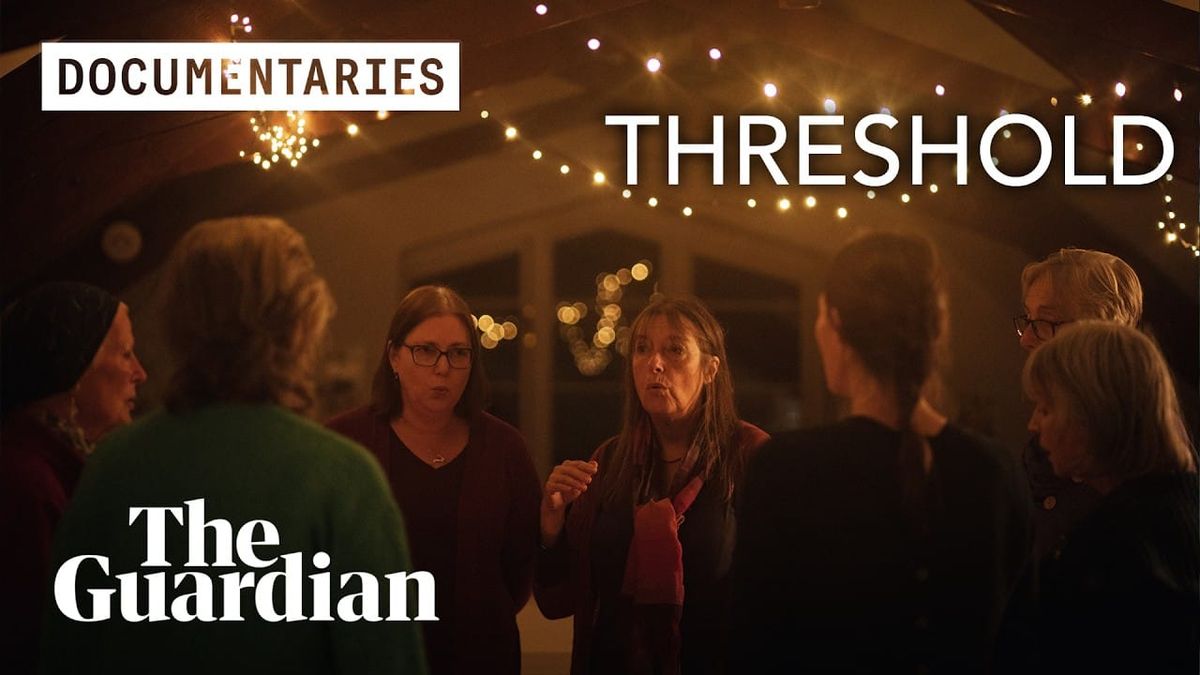
This video from The Guardian covered a lot of ground. 6 segments stood out as worth your time. Everything below links directly to the timestamp in the original video.
Peter's reflection offers a profound perspective on how facing mortality can transform one's values, shifting focus from external achievements to internal peace and the healing power of gratitude.
Peter, Facing Stage 4 Cancer, Embraces Death as "Amazing Experience"
Peter, a man with stage 4 cancer and only a few months to live, expressed an unexpected anticipation for his own death, describing it as potentially "one of the most amazing experiences" of his life. He revealed a personal journey of letting go of a lifelong drive for perfection, which he previously believed defined his self-worth through achievements like sales records or flawless performance. This shift allows him to approach death without the pressure of "doing it perfectly." His impending mortality has prompted Peter to re-evaluate past relationships, leading him to reach out and express gratitude to people he worked with up to two decades ago. He noted that the awareness of dying has fostered an "openhearted way" of seeing these individuals, enabling him to thank them for their kindness and support, even if their interactions were not deeply intimate.
"I'm quite looking forward to my death actually because I think it's going to be one of the most amazing experiences of my life."
Peter, Facing End-of-Life, Prioritizes Human Connection Above All
Peter, a man confronting stage 4 cancer, stated that human connection has become the singular most important aspect of his life. He identifies this vital connection across various relationships, including his 12-step meetings, Quaker community, friends, partner Kate, and even his conversations with the interviewer. This profound realization underscores a shift in his life's priorities as he nears the end of his journey. He emphasized the transformative power inherent in simple affirmations of worth, particularly the phrase "I value you." Peter suggested that if more people universally embraced such straightforward expressions of appreciation, the world would fundamentally change. His perspective highlights how the imminence of death can sharpen one's focus on the essential bonds that define human existence.
"I think the most important thing in life to me at the moment is human connection."
Grief Explored as Transformative Discipline for Empathy and Strength
An unnamed speaker reflected on grief not merely as pain, but as a "hard discipline" and a "taskmaster" that can profoundly transform an individual. This transformative process, she explained, has the potential to soften, expand, mellow, mature, ripen, and ultimately strengthen a person, leading to a deeper understanding of themselves and others. The speaker indicated she is still undergoing this process and would not wish to revert to her previous state of not knowing the depth of others' pain. The experience of grief has particularly highlighted the significant impact of kindness and empathetic gestures. She now keenly understands how "a kind word, a hug, a song, a handheld, a look of understanding" can make a crucial difference to someone in pain, a realization she believes she did not fully grasp before her own experience. This perspective underscores how personal suffering can cultivate profound compassion and strengthen communal bonds.
"Grief is a hard discipline. It's a hard taskmaster. But potentially it has a way of softening, expanding, mellowing, maturing, ripening, strengthening oneself."
Woman Finds Peace in Approaching Death, Reflects on Solitary Endings
An unnamed woman expressed a sense of peace regarding her own mortality, stating she feels "quite peaceful about it" and that "it's okay to die." While acknowledging that death entails the painful ending of relationships, she clarified that she does not wish to romanticize the experience. Her perspective suggests an acceptance of the inevitable, even as it involves loss. She also shared a nuanced observation about the final moments of life, noting that individuals may not always desire company during their last breath. Recounting the death of her husband, she revealed he passed away while she was briefly out of the room. This anecdote supports her belief, shared by others, that some people may prefer to take their "next step" alone, challenging conventional notions of being surrounded by loved ones at the very end.
"I actually feel quite peaceful about it. I feel quite that it's okay to die, actually."
Speaker Reframes Death Not as Monstrous, But as Essential for Life's Perspective
An unnamed speaker articulated a personal philosophy that reframes death, asserting she does not view it as "monstrous" or a lurking threat, despite the profound pain of losing loved ones. She acknowledged the immense difficulty and sorrow experienced from such losses, and admitted that a terminal diagnosis would still evoke fear. However, she distinguishes the pain of loss from the intrinsic nature of death itself. For this speaker, the continuous "presence of death" serves a crucial purpose: to maintain perspective on what truly holds value in life. She believes it helps her focus on what is "precious, on what is joyful, on what I can love," thereby defining what is most important to her. This perspective transforms death from an antagonist into an essential element for appreciating the richness and fleeting beauty of existence.
"The presence of death for me is a necessity to keep my perspective on what is precious, on what is joyful, on what I can love."
'When You Stub Your Toe' Illustrates Singular Nature of Personal Pain and Grief
An unnamed speaker read an evocative piece titled 'When You Stub Your Toe,' which powerfully illustrates the intensely personal and present nature of pain and grief. The analogy highlights that when one stubs a toe, the immediate and overwhelming pain is felt solely by the individual, without reference to historical or comparative suffering. The piece emphasizes that in that moment, "No human has ever felt a pain like this pain," underscoring the unique, subjective experience of personal suffering. The reading suggests that this immediate and singular experience of pain holds true for grief as well. It argues against the common tendency to universalize or diminish individual suffering by comparing it to others' experiences. The piece concludes that in such moments of acute pain, it is "just you and your toe," reinforcing the idea that acknowledging the individual and isolated reality of pain and grief is crucial.
"When you stub your toe, it hurts you. And in that moment, you do not think about all the toes throughout history that hurt... Your pain is now and in the present moment."
Also mentioned in this video
- Their purpose is to sing for comfort and relaxation for people nearing the end… (0:03)
- Setting up a threshold choir after having worked with families dealing with… (2:14)
- The importance of becoming comfortable with death, noting that it has changed… (4:16)
- Singers hold the awareness of singing for someone dying, and the person in the… (5:09)
- The speaker reflects on how the choir experience has changed her relationship… (5:52)
- She kept her illness a secret for 15 years to avoid complicating matters and to… (7:25)
- The woman clarifies that she did not tell her husband about her illness because… (8:09)
- Dying can be both beautiful, empowering, and enlightening, yet also the worst… (10:56)
- Practical aspects of keeping a loved one at home after death, suggesting a… (11:14)
- The speaker shares a beautiful thought that death serves love by bringing into… (15:22)
- The speaker reflects on the mystery of death, admitting a continued lack of… (20:09)
Summarised from The Guardian · 21:45. All credit belongs to the original creators. Streamed.News summarises publicly available video content.
Streamed.News
This publication is generated automatically from YouTube.
Convert your full video library into a digital newspaper.
Get this for your newsroom →