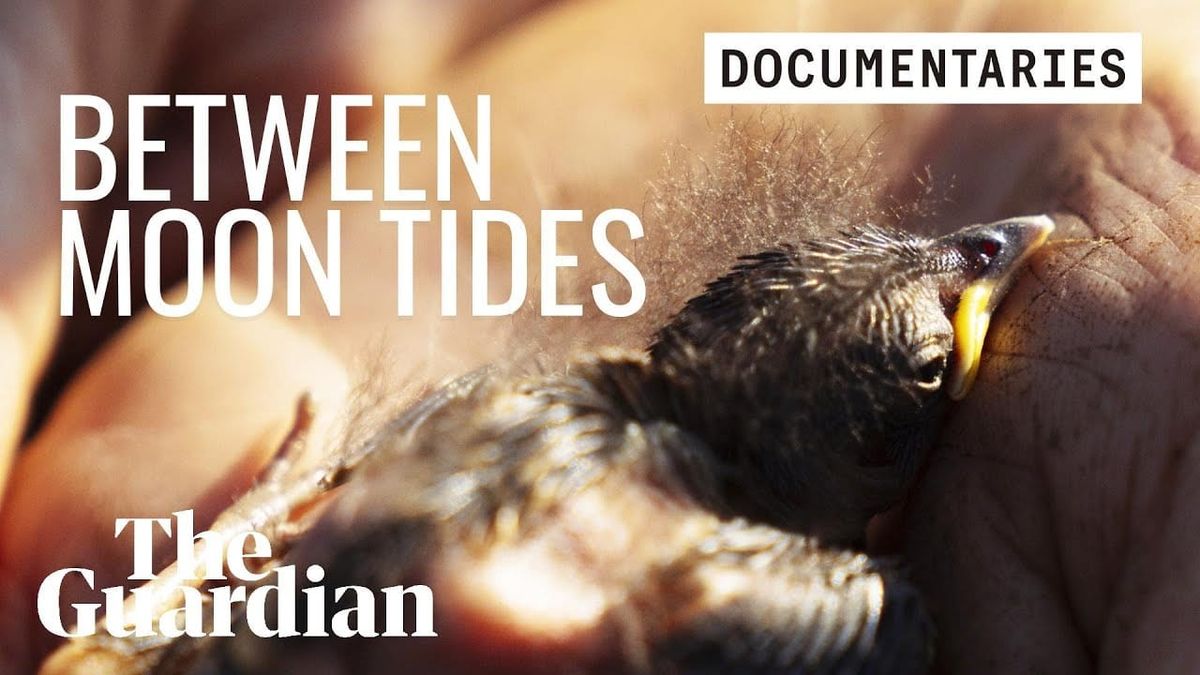
Original source: The Guardian
This article is an editorial summary and interpretation of that content. The ideas belong to the original authors; the selection and writing are by Streamed.News.
This video from The Guardian covered a lot of ground. 6 segments stood out as worth your time. Everything below links directly to the timestamp in the original video.
The fate of the salt marsh sparrow highlights how climate change directly threatens specialized ecosystems and species, raising critical questions about the effectiveness and urgency of current conservation policies.
Salt Marsh Sparrow Faces Mid-Century Extinction Amid Rising Sea Levels, Delayed Protections
The salt marsh sparrow is projected to become extinct by mid-century due to global warming and rising sea levels, which are shrinking the crucial 28-day window between flooding tide cycles required for successful nesting. With an estimated population decline of at least 75% and an average annual decline of 9%, researchers express near certainty that current marsh habitats will no longer support the species within decades as nests increasingly flood.
Adding to the species' precarious situation, the U.S. Fish and Wildlife Service has repeatedly postponed its decision to officially list the salt marsh sparrow as endangered. This delay raises concerns among scientists that vital conservation efforts might be initiated too late, underscoring the broader challenges of protecting vulnerable species facing rapid environmental change and bureaucratic hurdles.
"It's very likely by mid-century the salt marsh sparrow will be extinct. US Fish and Wildlife has been studying when to officially list this species as endangered… it just keeps getting postponed the decision."
New Buoyant Nest Design Offers Hope for Salt Marsh Sparrow Survival
Researchers have developed a novel nest-lifting design that successfully elevates salt marsh sparrow nests above flooding thresholds, offering a potential lifeline for the critically endangered species. The innovative system features highly buoyant pads placed beneath the nest, mounted on a dowel, and guided by a PVC pipe to allow for vertical movement as tides rise, effectively protecting nestlings from inundation.
This breakthrough provides a glimmer of hope not only for the salt marsh sparrow but also for other marsh species reliant on these vulnerable ecosystems. Scientists express optimism that the knowledge gained from such interventions could be instrumental in preventing extinction, emphasizing the critical role salt marshes play in global ecology and the planet's overall health.
"This is so buoyant that it raises the nest up above the flooding threshold. The more hopeful person, me, says we're going to learn something that's going to allow us to save the species."
Failed Nest Design Prompts Reflection on Irreversible Loss of Unique Salt Marsh Sparrow
An earlier nest-lifting design aimed at protecting salt marsh sparrows from rising tides ultimately failed, as all monitored nests flooded. This setback has led researchers to reflect deeply on the potential loss of the salt marsh sparrow, a species described as humble, hardworking, beautiful, and unique, with no other bird like it in the world.
The profound grief and anger associated with the imminent extinction of such a distinctive species are highlighted, with scientists emphasizing that this would constitute an 'unacceptable loss.' They argue that this emotional response must be channeled constructively to prevent similar future extinctions and drive more effective conservation strategies.
"There's no other species in the world like this particular bird. It will be grieved when it's gone... Most of us have to figure out what to do with our anger... how to channel that to prevent future losses."
Researchers Maintain Hope for Salt Marsh Sparrow, Advocate for Youth Engagement
Despite a bleak outlook for the salt marsh sparrow, with current projections indicating a high likelihood of extinction, researchers remain steadfastly hopeful, affirming that the loss of this unique species would be unacceptable. Described as the "hardest working bird on the planet," its extinction is seen as preventable, underscoring a commitment to continue conservation efforts.
To foster a deeper understanding of such environmental crises and inspire future solutions, scientists emphasize the importance of engaging young people directly in conservation work. This initiative aims to provide younger generations with direct experience of these vulnerable ecosystems, helping them grasp the profound impact of species loss and empowering them to prevent similar tragedies.
"The outlook at this point is not looking very promising, but that really doesn't diminish our spirits at all. There are some unacceptable losses and this is one of them. This little hardest working bird on the planet didn't need to go extinct."
Salt Marsh Sparrow's Rigid Nesting Cycle Poses Extinction Risk
The salt marsh sparrow, an inflexible salt marsh specialist, relies entirely on this unique ecosystem for nesting, an environment historically rich in food and low in predators that also serves as a crucial coastal buffer. Its tightly timed 28-day nesting cycle—encompassing nest building, egg-laying, incubation, and fledging—leaves virtually no margin for environmental fluctuations, making nests vulnerable to failure if the timing is off by even a day or two from the natural tide cycle.
This extreme specialization, once an evolutionary advantage in a stable environment, now renders the species highly susceptible to changes. Any disruption to the precise tidal patterns, such as those caused by rising sea levels, directly jeopardizes the reproductive success of the salt marsh sparrow, highlighting the fragility of highly adapted species in the face of rapid environmental shifts.
"The salt marsh sparrow is a salt marsh specialist. It's an inflexible species... It's so tightly timed that there's not much room for randomness or changes in weather."
High-Elevation Nests Offer Sparrows Temporary Flood Refuge, Scientists Race for Solutions
Observations show that salt marsh sparrow nests built in higher elevation iva, also known as high tide bush, are significantly more successful at avoiding flooding. The structure of the iva allows nestlings to climb its stems, providing a natural refuge during the highest tides, suggesting a potential natural selection advantage for sparrows that nest in these locations.
While this natural strategy offers some protection, scientists are urgently seeking additional solutions, as they believe there may not be enough time for natural selection to adapt the entire species to the rapidly changing environment. Researchers are actively exploring every possible advantage to buy critical time for the salt marsh sparrow amidst the accelerating threat of rising sea levels.
"Some of our nests are in *iva* or which is high tide bush that seems to provide some additional security for the nestlings to be able to climb up the stems of the *iva* and ride out the highest tides."
Also mentioned in this video
- Researchers observe a six-day-old salt marsh sparrow chick with consistently… (0:08)
- Researchers and young conservation biology students search for well-camouflaged… (5:08)
- As a 'hailmary approach,' researchers are experimenting with lifting nests… (9:07)
- A young participant named Cooper finds the first nest of the season, a five-egg… (15:37)
- Young people are invited to work with researchers to develop conservation… (18:22)
- Researchers are monitoring 10 active nests, five with chicks, and 10 lifted… (20:17)
- Feathering on their wings and body, increased activity, mobility, and better… (21:54)
- Drawing inspiration from Emily Dickinson's poem about hope, researchers are… (23:42)
Summarised from The Guardian · 25:24. All credit belongs to the original creators. Streamed.News summarises publicly available video content.
Streamed.News
This publication is generated automatically from YouTube.
Convert your full video library into a digital newspaper.
Get this for your newsroom →