🌐 Also available in: 🇪🇸 Español
🌐 Also available in: 🇪🇸 Español
Original source: Guy Kawasaki
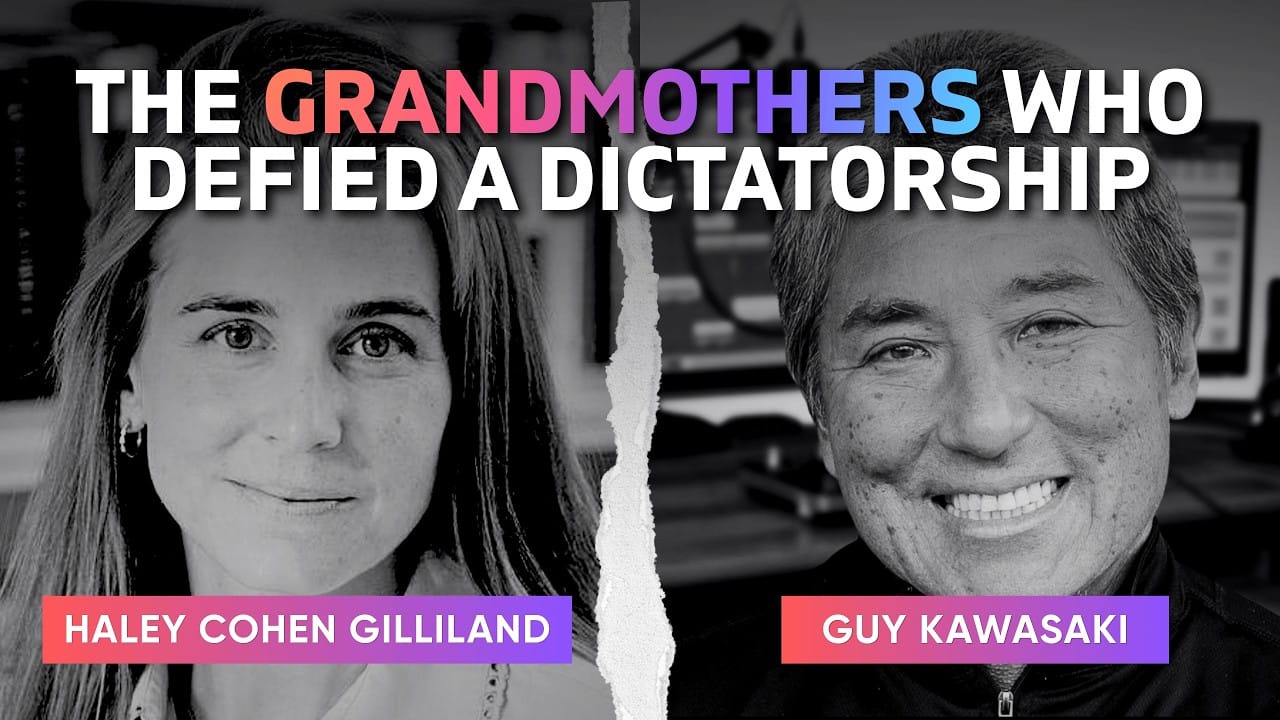
This video from Guy Kawasaki covered a lot of ground. Streamed.News selected 8 key moments and summarises them here. Everything below links directly to the timestamp in the original video.
Imagine discovering your entire life story was a lie, and the people you called parents were involved in a horrific cover-up. This segment explores the harrowing journey of those forced to confront such a reality.
Stolen Grandchildren Face Intense Trauma and Custody Battles Upon Discovery of True Identities
Haley Cohen Gilliland reveals the profound psychological challenges faced by Argentina's stolen grandchildren upon discovering their true heritage. As minors, many were subjected to fierce custody battles, often against adoptive families complicit in their biological parents' disappearance or murder. Adults grapple with the trauma of realizing their entire identity was built on a foundation of lies, making reconciliation incredibly complex. This situation highlights the enduring impact of state-sponsored atrocities on individuals and families, demonstrating that the discovery of truth, while vital, does not automatically heal the deep wounds of betrayal and fabricated identities. The process of confronting such a past requires immense emotional resilience from those directly affected.
"I mean, imagine being in the position of being raised by a set of parents... and then to be told when you're an adult that actually your parents... might have been complicit in the disappearance of your actual parents. That's incredibly hard to wrap one's head around."
Argentine Grandmothers Employ Cultural Camouflage to Outwit Dictatorship
Haley Cohen Gilliland explains that the grandmothers, not grandfathers, spearheaded the movement to locate stolen babies in Argentina because the biological parents were largely killed, leaving these women, often in their fifties and sixties, to lead the charge. Recognizing their underestimated status, these grandmothers strategically leaned into cultural stereotypes, presenting themselves as harmless "little grannies" to avoid military detection. This approach highlights how marginalized groups can leverage societal biases to their advantage, turning perceived weaknesses into operational strengths. Their innovative use of everyday activities, like knitting at cafes or hiding documents in chocolate boxes, was a crucial tactic in their dangerous mission against a brutal regime, underscoring the ingenuity born out of necessity.
"The grandmothers recognized that as women, when their grandchildren were taken, they were going to be underestimated. They could use that to their advantage."
Collective Action Against Oppression: The Enduring Message of Argentina's Grandmothers
Haley Cohen Gilliland would present at TEDx Minneapolis on the transformative power of collective action, drawing inspiration from Argentina's grandmothers. Despite being individually powerless, these women relentlessly worked to dismantle a brutal dictatorship and outlast its evil ideology, ultimately achieving their mission of reconnecting with stolen grandchildren. This narrative offers a compelling case study in how sustained collective effort can overcome immense odds, even against authoritarian states. It underscores the universal principle that dedicated grassroots movements, driven by a clear moral purpose, can achieve profound societal change, resonating with contemporary struggles for justice.
"They were powerless by all… but they recognized that through relentless work… they were able to topple one of the most brutal dictatorships in world history and outlast the evil ideology that was espoused."
Primal Love, Not Heroism, Fueled Argentine Grandmothers' Search for Stolen Children
Haley Cohen Gilliland highlights that Argentina's grandmothers were driven by a primal maternal and grand-maternal love, not a self-perception of heroism, in their perilous quest to find their stolen grandchildren. Despite immense fear, intensified by the disappearance of members from a sister movement, the Mothers of the Plaza de Mayo, they felt an unwavering compulsion to act. This insight emphasizes that extraordinary courage can emerge from profound personal connection and duty, rather than a conscious embrace of a heroic identity. Their actions reveal a fundamental human drive to protect family, a force capable of transcending overwhelming fear and state terror.
"They would argue that they had no other choice. It was a compulsion to find out the truth about their children, to fight for that truth, and to find their stolen grandchildren."
Argentina Grapples with Reconciliation Versus Amnesia in Post-Dictatorship Era
Haley Cohen Gilliland details Argentina's ongoing struggle to reconcile its past, fluctuating between prosecuting dictatorship-era crimes and granting amnesty. Successive administrations have "ping-ponged" between seeking truth and attempting to forget, with the current government adopting a revisionist historical narrative that downplays human rights abuses. This demonstrates the profound difficulty a nation faces in healing from systemic trauma, especially when political currents undermine efforts towards justice. The Argentine experience serves as a stark reminder that reconciliation is a protracted process, often jeopardized by shifts in political power and historical interpretation, preventing true societal closure.
"Argentina has really ping-ponged between these two impulses for the truth and fighting to acknowledge what happened during the dictatorship, and then toward amnesty."
Author Navigates Traumatic Accounts for Book on Argentina's Stolen Grandchildren
Haley Cohen Gilliland conducted extensive original reporting for her book, interviewing surviving grandmothers and recovered grandchildren about their traumatic experiences during Argentina's dictatorship. Despite the emotional difficulty of discussing profound loss and injustice with elderly women, they were eager to share their stories to aid the ongoing search for other stolen grandchildren, some of whom reside outside Argentina. This research process underscores the vital role of personal testimonies in documenting historical atrocities and the resilience of survivors who, even in their twilight years, prioritize justice and truth. Their willingness to relive trauma for a greater cause highlights the enduring hope that more stolen children will be reunited with their biological families, extending the reach of this unique human rights mission.
"Without exception, all of the grandmothers and grandchildren that I spoke to said, we are telling this story because we want it to be known."
Argentina's Stolen Generation Parallels Global Atrocities, Reveals Depths of Dehumanization
Haley Cohen Gilliland draws unsettling parallels between Argentina's "stolen generation" and similar historical events in countries like the US, Australia, Canada, Germany, and Chile. This phenomenon underscores that such atrocities are not isolated but reflect a universal capacity for humans to descend into horrific acts when they dehumanize others. The Argentine military's purge of anyone deemed "subversive"—including nuns, lawyers, and left-wing activists—demonstrates how a broad, sinister plan to erase dissent can justify the most extreme violations of human rights. This broader context highlights the persistent danger of dehumanizing rhetoric in any society, illustrating how it can pave the way for state-sanctioned violence and the systemic removal of children.
"It is not a phenomenon that is confined to Argentina by any means, and I think it speaks to the depths that humans can sink to when they dehumanize the other."
Argentine Grandmothers Band Together to Locate 500 Stolen Babies of the Dictatorship
Haley Cohen Gilliland's book details the harrowing story of the Abuelas de Plaza de Mayo, a group of grandmothers who united during Argentina's 1976-1983 dictatorship. Their mission was to find approximately 500 babies born to disappeared pregnant women, who were subsequently stolen and placed with military and police families as part of a state-sponsored purge. This systematic abduction and re-education of children highlight the extreme measures taken by the military junta to erase perceived "subversives" and their lineage. The grandmothers' tireless efforts, despite the immense personal risk, underscore a profound human rights struggle and their enduring quest for truth and justice in the face of absolute state terror.
"The military waited for the women to give birth first, and then stole their children, and gave them to military and police families to raise."
Also mentioned in this video
- A group of women in Argentina, despite lacking traditional power, banded… (0:00)
- The title "A Flower Traveled in My Blood" is inspired by an Argentine poem and… (1:57)
- The genesis of her book, which began when she learned about the Abuelas' story… (6:52)
- Whether heroes are born or made, suggesting that while the circumstances in… (18:22)
- The journalistic challenge of neutrality when covering atrocities, asserting… (23:39)
- The eerie and frightening parallels between events in Argentina during the… (27:55)
- Guy Kawasaki draws parallels between Argentina's historical reconciliation… (37:19)
- Her current role as director of the Yale Journalism Initiative, where she… (38:40)
- The challenges and importance of teaching journalism today, balancing… (40:20)
Summarised from Guy Kawasaki · 45:32. All credit belongs to the original creators. Streamed.News summarises publicly available video content.