🌐 Also available in: 🇪🇸 Español
Original source: Infobae
This video from Infobae covered a lot of ground. Streamed.News selected 8 key moments and summarises them here. Everything below links directly to the timestamp in the original video.
Economic opening promises lower prices, but at what social cost? An analysis reveals how other nations managed similar transitions to protect jobs and why 'fine-tuning' is key to Argentina's debate.
Álvarez Agis proposes industrial reconversion model with deadlines, specific unemployment benefits
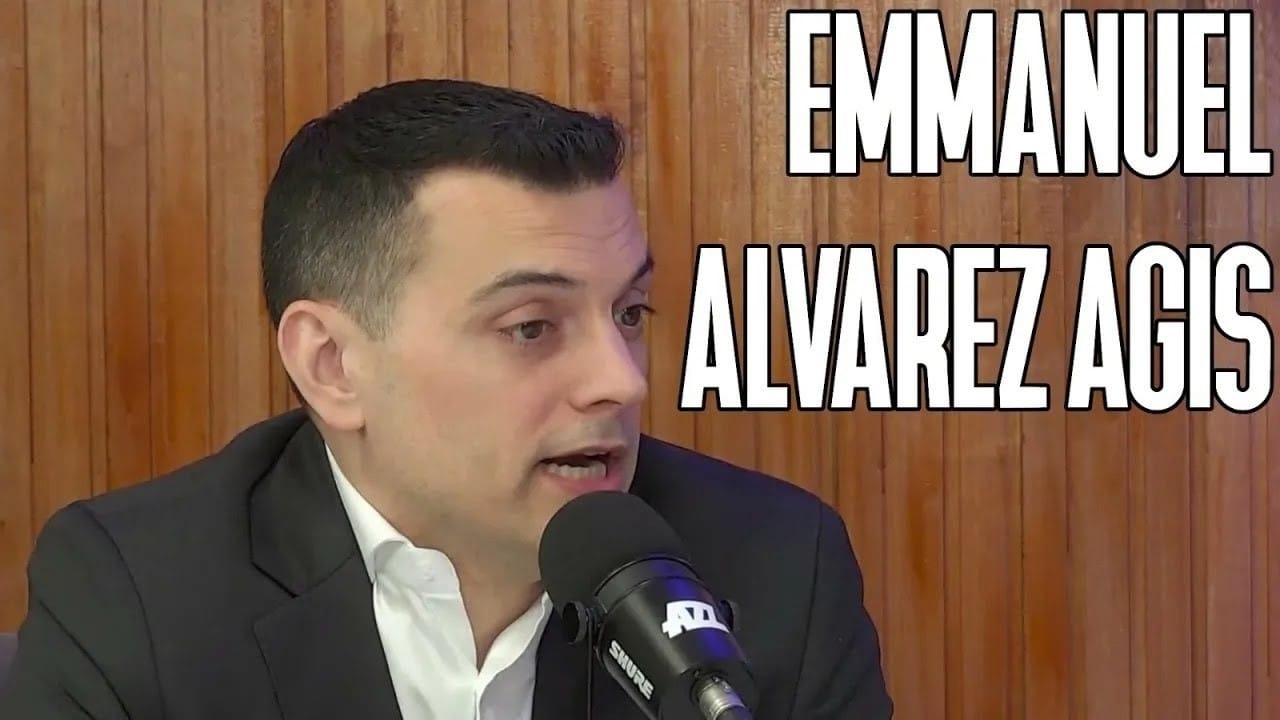
Economist Emanuel Álvarez Agis calls for a planned industrial reconversion in Argentina, complete with clear timelines and social safety nets. He contrasts this with the current abrupt economic opening. Agis points to the government's own 10-year transition plan for sectors competing under the EU-Mercosur deal as a reasonable adaptation period. He cited Chile's 1980s "pragmatic neoliberals," who used gradual opening, decreasing tariffs, and competitive exchange rates to give industry predictability.
Agis argues the current unplanned transition ignores workers unable to re-enter the workforce, such as 11,000 employees in Tierra del Fuego, many over 55. He proposes using fiscal savings from scrapped promotion schemes to fund specific, extended unemployment benefits for these sectors. This "fine-tuning," missing from current economic policy, is vital. It prevents workers, who "aren't to blame" for past economic models, from shouldering the full adjustment burden.
"Some sectors won't reconvert. Maybe you save 0.3 [points of GDP], and the 0.2 you have left, put it into a specific unemployment insurance for that industry. You know a 55-year-old worker will collect it for 10 straight years."
Government uses labor reform as wage anchor after price pact failures, says Álvarez Agis
Economist Emanuel Álvarez Agis states a 30% annual inflation rate renders an economy dysfunctional, creating a "fog" that hinders rational economic decisions. Pure market policies fail here; coordination is crucial to guide disinflation expectations. The government initially tried to anchor wages, capping monthly increases at 1%. This strategy collapsed when inflation failed to drop as expected, and unions secured higher raises.
Now lacking a wage anchor, Agis claims the government uses labor reform to discipline wages, forcing them to align with falling inflation. He calls this a flawed approach. Instead of confronting economic actors, the president should convene businesses and unions for negotiations, mirroring past Argentine crises. For a stabilization plan to succeed, Agis argues, an explicit agreement on price and wage coordination is essential, not unilateral imposition.
"When you have inflation, you often can't strictly apply market policies. You need someone in the fog to tell you: 'Look, disinflation is this way, at this speed.'"
Álvarez Agis warns $16B mining investment creates fewer jobs than one factory loses
Economist Emanuel Álvarez Agis challenges new investment sectors' capacity to absorb labor displaced by industrial reconversion, citing hard data. He noted a recent $16 billion mining investment would create a maximum of 1,100 direct and indirect jobs. In contrast, restructuring a single industrial firm like Fate means 1,000 job losses, highlighting a major imbalance in job creation versus destruction.
This imbalance, his analysis suggests, burdens the informal economy and "refuge sectors" like freelancers and app workers. After two years, these sectors show signs of saturation. Agis explained that service prices (e.g., transport, online retail) are falling, not due to efficiency, but because desperate labor supply outstrips demand. This price drop is "bad news," signaling worsening living conditions for those reliant on informal work.
"You look at that investment, $16 billion, and it gives you a maximum of 1,100 jobs. And in industry, when you destroy a company like Fate, you destroy 1,000."
Álvarez Agis: Tire Sector Sees 35% Price Drop, Halved Workforce, "Very High Sacrifice Ratio"
Economist Emanuel Álvarez Agis analyzed how import liberalization impacted Argentina's tire sector, introducing the "sacrifice ratio": jobs lost to curb inflation. His consultancy reports average tire prices plummeted 35%, from $240 to $160, since 2023. This price drop, however, nearly halved sector employment, from 7,000 to 3,500 workers.
Álvarez Agis calls this a "very high" sacrifice ratio. He points to China's subsidized competition and lower wages ($600-800/month vs. $1,500 for an Argentine Fate worker). This dynamic isn't unique to Argentina; Chinese overproduction impacts industries in Germany and the U.S. He argues economic programs shouldn't just lower prices by opening the economy but should manage the process to prevent disproportionate job losses.
"The tire sector once employed 7,000; we'll end up with about 3,500. For me, that sector's sacrifice ratio is extremely high."
Álvarez Agis: Argentina's Economy Reverts to Historic Stagnation, Only Broken by Crises
Economist Emanuel Álvarez Agis warns Argentina's economy mirrors past stagflation, historically "only broken by crashing everything." Economists view history as their sole laboratory, and the current moment, he argues, closely resembles prior economic impasses, regardless of the government in power.
Milei's administration has returned the economy to activity and inflation levels seen in 2011, 2015, 2017, and 2021—periods of stalled growth. The risk: disinflation achieved by reverting to a familiar stagnation point. Álvarez Agis believes solving structural problems demands more time and pragmatism, including dialogue with political figures the president might dislike.
"Looking back, this moment closely resembles the stagflation Argentina only broke by crashing entirely."
Álvarez Agis: Full Trade Opening Would Leave Just 20% of Argentine Jobs
Economist Emanuel Álvarez Agis warned that a sweeping, undifferentiated trade liberalization could leave only 15-20% of Argentina's total employment. He argued the debate should not be microeconomic, focusing on specific goods like clothing or tires, but macroeconomic, centered on "What will we work on?" He cited China's overwhelming competition, noting BYD now outsells Tesla globally, forcing even Elon Musk to demand 150% tariffs for protection.
From this perspective, the current economic plan's "sacrifice ratio" is too high. Álvarez Agis stated that since President Javier Milei took office, 180,000 registered private sector jobs disappeared, partially offset by 140,000 new freelancers (monotributistas). He considers destroying this many formal jobs to achieve GDP and inflation levels akin to past stagnation (2011, 2015, 2017, 2021) a poor trade for Argentina, unless the government proves inflation will continue to fall and labor market damage reverses.
"If Argentina fully opened its economy across all sectors, I believe only 15-20% of total employment would survive. China is devouring the world."
Álvarez Agis: Zero Inflation Needs Non-Libertarian Tools, Like YPF Price Intervention
Economist Emanuel Álvarez Agis states President Javier Milei must drop ideological dogmas for Argentina to reach zero inflation. Agis estimates success at "one in a hundred," requiring Milei to "burn Hayek's book" and accept non-libertarian tools from his more heterodox economic team. For example, the government could use state-owned oil company YPF as an anti-inflationary tool. Instead of free fuel price fluctuation, the state could guide gasoline prices to anchor the rest of the economy. Álvarez Agis calls this a "virtuous state intervention," clashing with presidential ideals, making him skeptical it will happen.
"Bring me all the tools you believe necessary to cut monthly inflation from three to 0.5. They will show him things that are not libertarian."
Refusing Peso Issuance for Reserves is 'Ideological Flaw' Hindering Rate Cuts: Álvarez Agis
Economist Emanuel Álvarez Agis criticizes President Javier Milei's 'ideological flaw' in monetary policy, clashing with real economic needs. Agis highlights the error of absorbing all pesos issued by the Central Bank to buy reserves. He explains that in an economy accumulating dollars, this local currency issuance is vital, like 'car oil,' to boost liquidity and thus lower interest rates, stimulating activity. Álvarez Agis notes Milei's rigid stance persists despite inflation falling, disproving monetarist premises. This monetary dogmatism contrasts with the government's less ideological, successful trade liberalization, which cut prices but severely harmed employment.
"Issuing money is an economic necessity in some situations. It's like the oil a car needs to run."
Also mentioned in this video
- Report on automotive & textile sector evolution (0:00)
- Agis: Argentine economy like an unstable canoe (15:44)
- Expert: Milei's govt takes contradictory measures (17:45)
- Contradiction between president's statements & actions (21:29)
- Álvarez Agis shares personal forecast experience (22:50)
- Álvarez Agis on hostility toward critical economists (26:27)
- Álvarez Agis: Peronism's path forward (33:52)
Summarised from Infobae · 35:15. All credit belongs to the original creators. Streamed.News summarises publicly available video content.