🌐 Also available in: 🇪🇸 Español
Original source: Radio Con Vos 89.9
This video from Radio Con Vos 89.9 covered a lot of ground. Streamed.News selected 8 key moments and summarises them here. Everything below links directly to the timestamp in the original video.
What if promised big investments don't create enough jobs? This analysis reveals the structural flaw in a model favoring low-employment sectors.
Milei's Plan Creates Unfixable Job Imbalance, Economist Warns
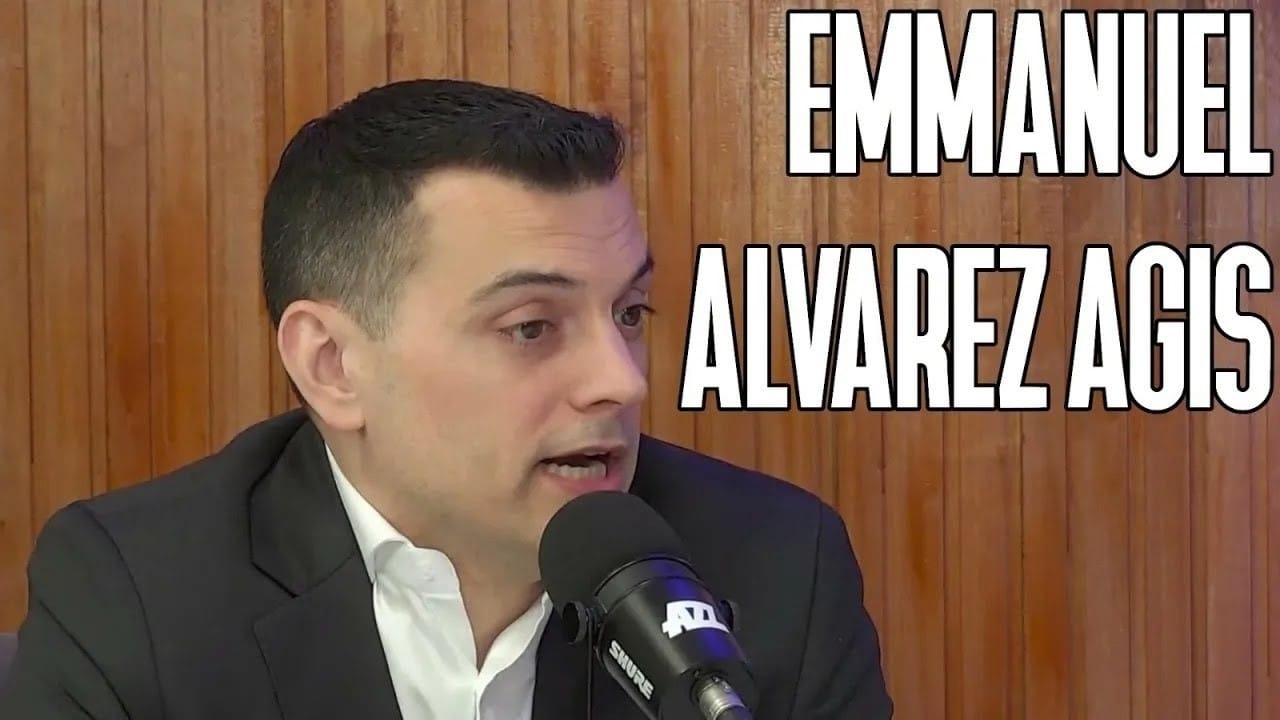
Economist Emmanuel Álvarez Agis rejects the argument that business closures are a "necessary birthing pain" for a better Argentina. He contends the economic program cannot structurally lead to a healthy macroeconomy. The issue: designated "winning" sectors, like mining, require very few workers, while "losing" sectors, such as industry, are highly labor-intensive. For instance, a repeatedly announced $16 billion mining investment would create just 1,100 direct and indirect jobs—insufficient to offset losses elsewhere.
This employment asymmetry means a negative net balance for the labor market, even with significant capital inflows. Álvarez Agis warns that if tire production halves while mining accelerates, unemployment remains imbalanced. Successful reconversion programs, he argues, not only identify necessary business closures for macroeconomic health but also design microeconomic strategies, like robust unemployment insurance, to ease social transition costs—features the current plan lacks.
"If tire production halves and mining goes full throttle, our employment problem remains imbalanced."
High Inflation Persists Despite Fiscal Cuts, Open Economy, Expert Warns
Informal labor market saturation and oversupply of imported goods are driving down prices in areas like apps and consumer products, creating a "double tourniquet" for domestic producers. They face lower demand and low-price competition, Emmanuel Álvarez Agis notes. This dynamic sees many entrepreneurs close factories to import, ultimately saturating the market and forcing importers to liquidate goods at low prices to avoid high carrying costs.
The economist highlights a paradox: despite a zero-emission program, the "largest fiscal adjustment in human history," and unrestricted economic opening, inflation persists at 3%. Álvarez Agis argues this proves the government's theoretical framework fails for this inflation type. Argentina, he concludes, has returned to the stagnation points of 2011, 2015, 2017, and 2021, but with a larger, more impoverished population. The "sacrifice ratio" imposed on society, he states, is unsustainable and fails to deliver promised results.
"You're in a zero-emission program, an economic opening program, the largest fiscal adjustment in human history, and inflation is 3%. So, I think you should realize something in that theory isn't working."
Argentina's Economic Opening Clashes With Global Protectionism, Expert Warns
Economist Emmanuel Álvarez Agis sharply criticized the government's economic opening timing, calling it the worst possible globally. Unlike the 1990s, when Carlos Menem opened the economy during a globalization boom, today's world moves toward closed trade blocs and rising protectionism. Agis points to US policy, imposing up to 100% tariffs on Chinese goods to protect its industry, as a clear example.
This global trend makes Argentina's "zero tariffs" strategy incompatible with the strategic alliances the government claims to seek. Álvarez Agis hypothesized a future US government pushing a common trade area in America to compete with Asian and European blocs. In that scenario, the US would never allow a key regional partner like Argentina to keep its doors open to Chinese products, undermining the bloc's protectionist strategy. The current policy, he concludes, is both anachronistic and counterproductive for the country's international integration.
"Do you think that project [a common area in America] has zero tariffs for Chinese tires? Do you think that project has an open economy like Milei's? Absolutely not."
Economic plan destroys formal jobs, creates precarious self-employment
Economist Emmanuel Álvarez Agis warns the current economic plan destroys formal jobs, replacing them with precarious self-employment. Since the government took office, 190,000 private sector registered jobs vanished. While 140,000 new self-employed individuals emerged, this reflects deep labor market precarization, not just rising unemployment, fostering a 'poor worker' class. This shift carries severe long-term macroeconomic risks. Workers moving from industrial roles to precarious self-employment see incomes drastically cut, impacting overall consumption of goods like meat or tires. Agis contrasted this model with successful past economic openings, such as Chile under 'pragmatic neoliberals' or early Menem administrations, which saw robust investment and productive modernization. He concludes the current experiment occurs during globalization's decline, with 'very bad' timing.
"The sacrifice ratio, instead of manifesting as increased unemployment, is manifesting as labor market precarization."
Government bets disinflation outweighs job precarization electorally, economist claims
Economist Emmanuel Álvarez Agis labels the government's economic policy 'brutal and unnuanced,' describing its strategy as a political gamble despite accumulating negative data. Indicators like 20,000 business closures, a 30% drop in automotive production, and only 40% metallurgical industry capacity utilization have not altered the course. Agis believes the government bets electorally on disinflation outweighing increasing labor market precarization. He calls this a short-term calculation that ignores the model's unsustainability. While voters might prefer less income with 2% inflation over more with 10%, this equilibrium is unstable. Incomes will continue falling as the informal market saturates, he warns. Eventually, subsistence activities will become unprofitable, revealing the current situation isn't a new economy but a deteriorating trajectory.
"They think electorally, disinflation beats labor market precarization."
Economic opening sparks 'import de-substitution' in contracting market
Emmanuel Álvarez Agis reports that commercial openness drives 'import de-substitution,' displacing national production in a shrinking market. For instance, tire imports rose 35% while domestic output plunged 50%, meaning two of three tires sold are now imported. This self-cannibalizing trend shrinks the overall market due to falling purchasing power. Agis argues the core issue is unfair competition. Argentine firms face Chinese companies backed by 'state capitalism,' benefiting from half the labor costs ($600-800 vs. $1,500 monthly), state-granted land, subsidized credits, and tax exemptions. While the West, particularly the US, imposes tariffs on China, Argentina lowers them. This exposes its industry to unwinnable competition, destroying jobs and productive capacity.
"What's happening is an import de-substitution process, but it cannibalizes itself because the market is shrinking."
Álvarez Agis: Liberals Hypocritically Judge Business Owners Responding to Market Incentives
Economist Emmanuel Álvarez Agis warns that abruptly exposing businesses and workers, accustomed to protected environments, to open competition is "very damaging." This will trigger an "avalanche" of closures. He likened it to a hunter operating in a zoo suddenly "thrown naked into the Amazon." Álvarez Agis slammed liberal discourse as hypocritical for morally judging entrepreneurs on profit margins or wages. He argues their decisions rationally respond to state-created incentives. The economist explained market conditions, not altruism or greed, dictate business behavior. If protection causes market supply shortages, prices inevitably rise as someone capitalizes on scarcity. Álvarez Agis finds it paradoxical that free market proponents morally judge actors who operate by market laws. He concludes the focus should be on smart policy design, not moral condemnation of those following established rules.
"It's paradoxical that liberals or ultra-liberals morally judge a business owner."
Tire Market Opening Saturates Supply Amid Falling Demand
Economic opening has flooded Argentina's tire market, raising available brands from five to twelve and tripling offers in the past year. However, according to Emmanuel Álvarez Agis, this supply surge has collided with plummeting demand, driven by falling purchasing power. The result is a saturated market where even new importers aggressively cut prices, a clear sign no one benefits from the current situation. This dynamic reveals a miscalculation in government strategy. The issue isn't just local producer FATE facing hardship; the entire market is in crisis. Álvarez Agis contrasts this abrupt opening with gradual timelines the government accepts in international talks, like the 10-year adaptation period for sensitive sectors in the Mercosur-EU agreement. This inconsistency suggests overly harsh policies for national industry, lacking transition for adaptation.
"It's not that some shrewd importer is making a fortune while FATE goes bankrupt producing more expensive tires. The importer isn't selling either."
Summarised from Radio Con Vos 89.9 · 30:55. All credit belongs to the original creators. Streamed.News summarises publicly available video content.