Original source: Pilot Debrief
This video from Pilot Debrief covered a lot of ground. Streamed.News selected 6 key moments and summarises them here. Everything below links directly to the timestamp in the original video.
What happens when a pilot in command disregards clear warnings from their first officer and automated systems, even with the runway in sight? This analysis shows a catastrophic failure of cockpit leadership.
Captain Ignored Repeated Go-Around Calls Moments Before Fatal Astra Jet Crash
In the final 90 seconds of the flight, a cascade of errors and a profound failure of command led directly to the crash. With the incorrect altimeter setting programmed, First Officer Gagan selected an altitude of 4,100 feet, which was effectively the airport's ground elevation, placing the aircraft on a collision course controlled by the autopilot. Gagan warned Captain Claudio that they were "full below glide slope" and 15 knots too fast, but his warnings were met with indifference and laughter from the captain, who only then seemed to realize he was not manually flying the plane.
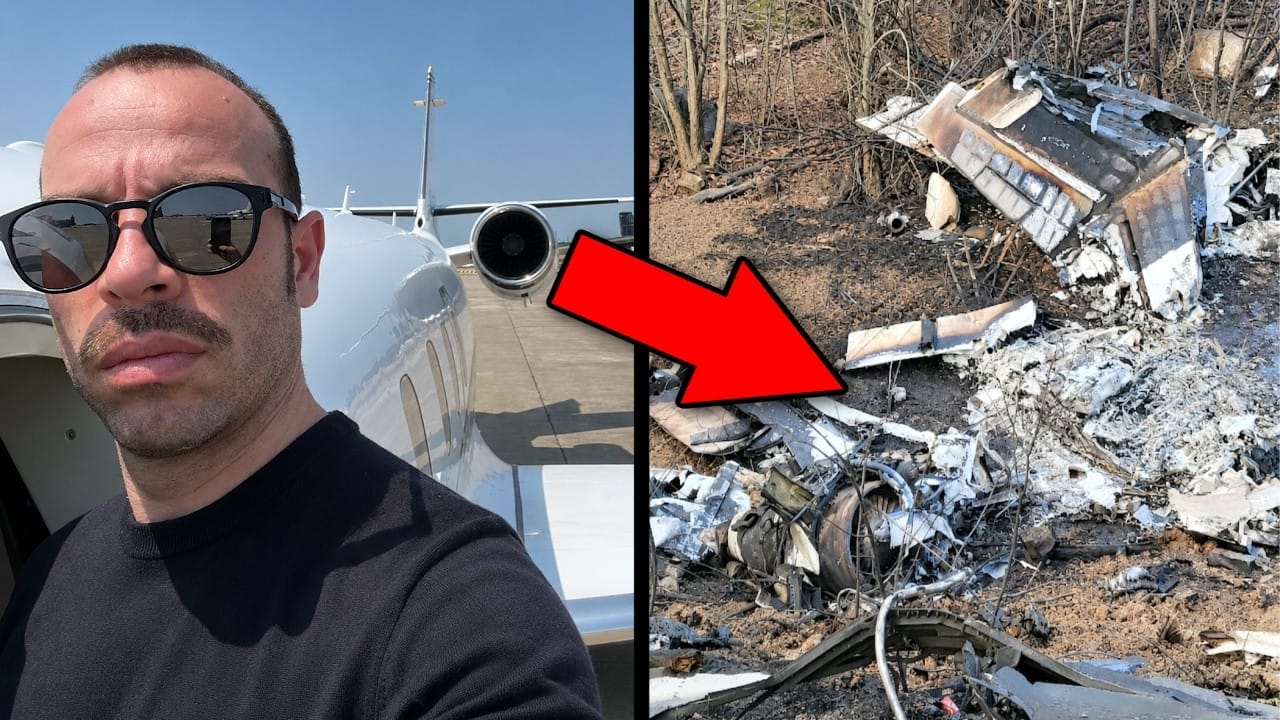
What needs to be understood is the complete breakdown of cockpit authority and airmanship in the flight's terminal phase. Despite having the runway in sight after breaking through the weather, Claudio failed to take corrective action. Most critically, he ignored two direct, urgent calls from Gagan to "go around." This final refusal to abort the unstabilized approach sealed the fate of the flight, which impacted a hillside just 300 feet short of the runway, killing all five people aboard.
"Sir, I suggest go around. ... Go around."
Investigation Finds Astra Crash Pilot Was Unqualified, Citing Preventable Failures
The official probable cause for the crash cited Captain Claudio’s failure to monitor his altitude during an unstabilized approach, a situation exacerbated by the crew's use of an incorrect altimeter setting. However, a deeper analysis of the events reveals that this technical explanation masks a more fundamental and disturbing truth about how the flight was allowed to operate in the first place.
The reason this holds significance is because the evidence indicates that Claudio was fundamentally unqualified to be flying the aircraft. The aircraft's owner, Mr. Diaz, who was a passenger on the flight, had enough aviation experience to have known better than to hire him. While First Officer Gagan also made errors, he ultimately recognized the danger and called for the go-around. Claudio’s refusal to listen was the final link in a chain of poor judgment that made the deaths of all five people on board entirely preventable.
"When you dig a little bit deeper, it becomes obvious that there's no reason that Claudio should have been flying that plane."
Crashed Astra Jet Crew Mistook 'Fake Localizer' for ILS Guidance
During the instrument approach, the flight crew made two critical and compounding errors that prevented them from establishing a safe vertical and lateral path to the runway. First, they failed to update their altimeters from the standard setting to the local one, causing their instruments to read several hundred feet higher than their actual altitude. Second, the crew misinterpreted an annunciation from the Flight Management System (FMS), believing they had captured the instrument landing system's glide slope when the aircraft was actually following a GPS-calculated path known as a "fake localizer."
To compound the issue, the crew was flying in weather and relying on automation they did not fully understand. Air traffic control challenged their altitude, noting they were 200 feet below their assigned clearance limit at the Aaylor* fix, but the crew incorrectly insisted they were on course. This combination of an incorrect altitude reference and a misunderstood automation mode placed the aircraft on a dangerously low approach path, all while the pilots remained unaware of the imminent danger.
"Whenever you see F LOC, think fake localizer because it's not a real localizer signal."
Astra Jet Crew Skipped Critical Approach Briefing Amid Challenging Weather
On the day of the accident, the Astra jet had no mechanical issues but was flying into a challenging environment. The destination airport, situated on a mountain ridge, was experiencing snow showers and winds gusting up to 38 knots. During the descent, the flight crew failed to perform two fundamental safety procedures: they did not cross-check their altimeter settings despite multiple reminders from air traffic control, and they completely omitted a formal briefing for the ILS approach to runway 25.
What needs to be understood is that these omissions constituted a severe breakdown in standard operating procedure. The approach briefing is a critical phase where pilots review altitudes, headings, and contingency plans, including the procedure for a go-around. By skipping it, the crew entered a complex phase of flight unprepared. A notable experience disparity—the junior first officer had more flight hours in the Astra than the senior captain—may have created a cockpit dynamic that contributed to these critical steps being overlooked.
"They didn't take the time to brief the approach, talk about how they were going to fly it, or what they were going to do if they needed to go around."
Pilot in Fatal Astra Crash Required Extra Training, Struggled With Avionics
The owner of the aircraft, Mr. Diaz, sent Captain Claudio for training on the Astra business jet despite a direct warning from a former director of operations that Claudio should never fly a turbine-engine aircraft. During the training, Claudio's difficulties became apparent; he required 11 simulator sessions to complete the course, nearly twice as many as his first officer. Training records consistently identified his single greatest weakness as the Flight Management System (FMS), a critical component for safely operating the aircraft.
The reason this holds significance is that despite these documented struggles and clear red flags, Claudio was awarded his type rating as pilot in command on January 28th. This decision placed a pilot with known, profound deficiencies in managing the aircraft's complex avionics in the captain's seat. Just six weeks later, his inability to properly use these systems during a critical phase of flight would become a central factor in the fatal crash.
"On almost every single lesson, Claudio's instructor said that his biggest weakness was the FMS."
Astra Crash Pilot Had History of Poor Performance, Was Fired From Previous Job
Months before the fatal Astra jet accident, Captain Claudio’s professional history revealed a clear pattern of declining performance. He had been appointed "chief pilot in name only" at Skyjet to satisfy FAA regulations but did not actively fly. He then took a part-time job with an air ambulance company, Reva, where he was hired to be a Learjet captain but performed so poorly in training that he was immediately downgraded to first officer. After just five trips, Reva fired him for failing to meet professional standards.
This history is critical because it established a documented record of the exact deficiencies that later contributed to the crash. Three different captains who flew with him at Reva reported a lack of adherence to standard operating procedures, poor checklist usage, an inability to manage the Flight Management System (FMS), and poor aircraft control. One captain went so far as to express disbelief that Claudio could have accumulated his claimed 13,000 flight hours, highlighting a severe gap between his qualifications on paper and his actual capabilities in the cockpit.
"Three different captains that flew with Claudio all said that he demonstrated a lack of adherence to standard operating procedures... couldn't manage the FMS, and he had poor aircraft control."
Also mentioned in this video
- The story of the crash began on March 10th, 2024, with CEO Mr. Diaz, his wife,… (0:28)
- Mr. Diaz, a pilot himself, founded Atlantis Aviation flight school in Florida… (1:05)
- First officer Gagan, 24, had a history of failing check rides for his… (1:47)
- Captain Clauddio, 63, had over 13,700 alleged flight hours, mostly from… (3:41)
Summarised from Pilot Debrief · 21:41. All credit belongs to the original creators. Streamed.News summarises publicly available video content.