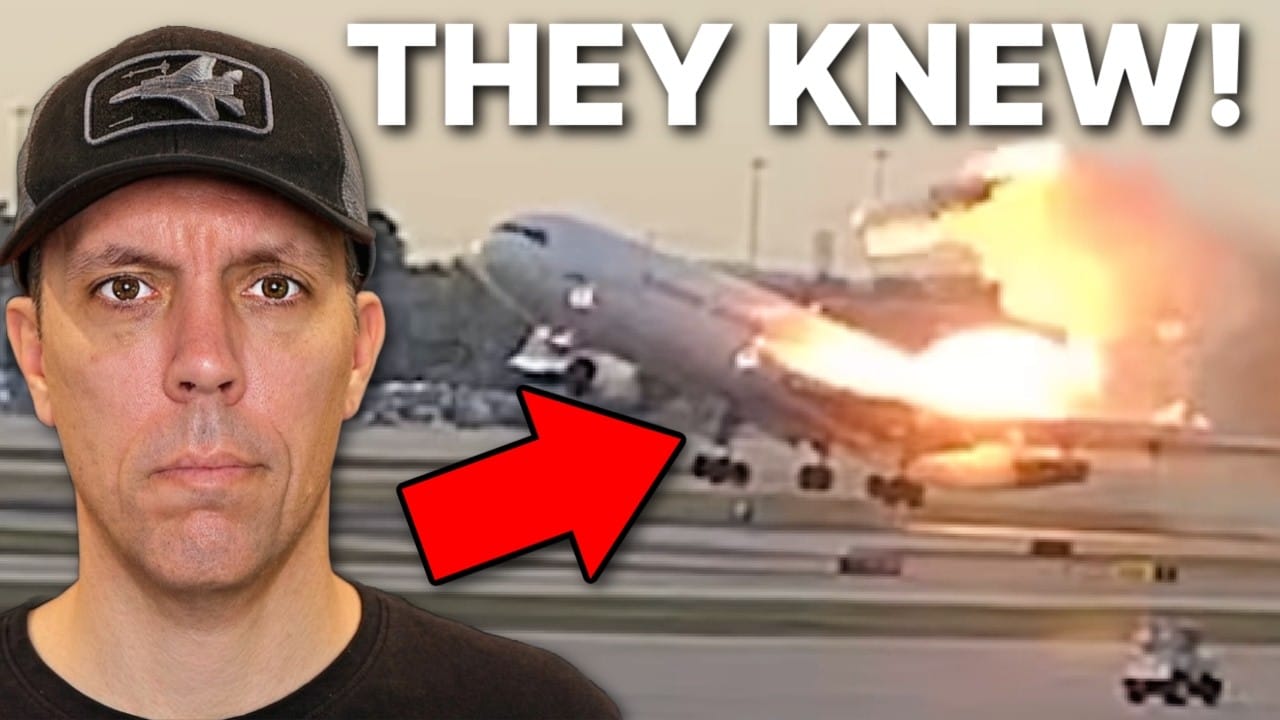
Original source: Pilot Debrief
This video from Pilot Debrief covered a lot of ground. Streamed.News selected 2 key moments and summarises them here. Everything below links directly to the timestamp in the original video.
The crash of UPS Flight 2976 raises a disturbing question: what other known mechanical flaws are being systematically overlooked across the aviation industry, and which are developing into the next preventable disaster?
NTSB Finds Decades of Dismissed Failures and Flawed Reporting Led to Fatal UPS 2976 Crash
The crash of UPS Flight 2976, which killed 15 people, resulted from a spherical bearing failure—a mechanical issue that had occurred at least 10 times previously. The National Transportation Safety Board (NTSB) investigation found that this documented failure mode, known since 2002, was repeatedly dismissed by both the manufacturer and regulators as not being a safety issue. The final, catastrophic failure occurred when the connecting lugs gave out completely, leaving the pilots with an unrecoverable situation.
The investigation exposed a critical flaw in safety oversight stemming from a working agreement between Boeing and the Federal Aviation Administration (FAA). This agreement stipulated that repeat events did not need to be reported as new items, which effectively masked the growing pattern of failures. When questioned by the NTSB, UPS affirmed that it relies on Boeing and the FAA for safety determinations, highlighting how the systemic breakdown, rather than pilot error, directly led to the tragedy.
"This wasn't a case of pilot error. It was a case where the system designed to catch problems like this failed repeatedly over decades."
Boeing and FAA Knew of UPS 2976 Crash Cause for Over 20 Years, NTSB Reveals
The National Transportation Safety Board (NTSB) has released new findings on the crash of UPS Flight 2976, which killed 15 people shortly after takeoff. The investigation revealed that the most shocking element was not the specific mechanical failure but the fact that both Boeing and the Federal Aviation Administration (FAA) were aware of the component's vulnerability for more than two decades and failed to implement a required fix.
This long history of inaction points to a significant breakdown in the safety and oversight protocols designed to prevent such tragedies. That a known, recurring mechanical fault was allowed to persist without a mandatory correction raises profound questions about the accountability of both the aircraft manufacturer and its primary regulator. The failure to act on two decades of data suggests that established safety systems were incapable of escalating a known risk before it led to a catastrophic event.
"For over 20 years, Boeing and the FAA knew what was breaking and they didn't do anything about it."
Also mentioned in this video
- On November 4th, 2025, UPS flight 2976 crashed shortly after takeoff from… (0:22)
- The failure of UPS flight 2976 was caused by a design flaw in the MD11's aft… (2:49)
- The 1979 American Airlines Flight 191 crash, involving a DC10 with a similar… (4:56)
- Between 2002 and 2007, multiple instances of fractured spherical bearings in… (7:18)
- Despite further bearing failures and a Boeing service letter in 2008… (9:49)
Summarised from Pilot Debrief · 15:02. All credit belongs to the original creators. Streamed.News summarises publicly available video content.