Original source: Pilot Debrief
This video from Pilot Debrief covered a lot of ground. Streamed.News selected 5 key moments and summarises them here. Everything below links directly to the timestamp in the original video.
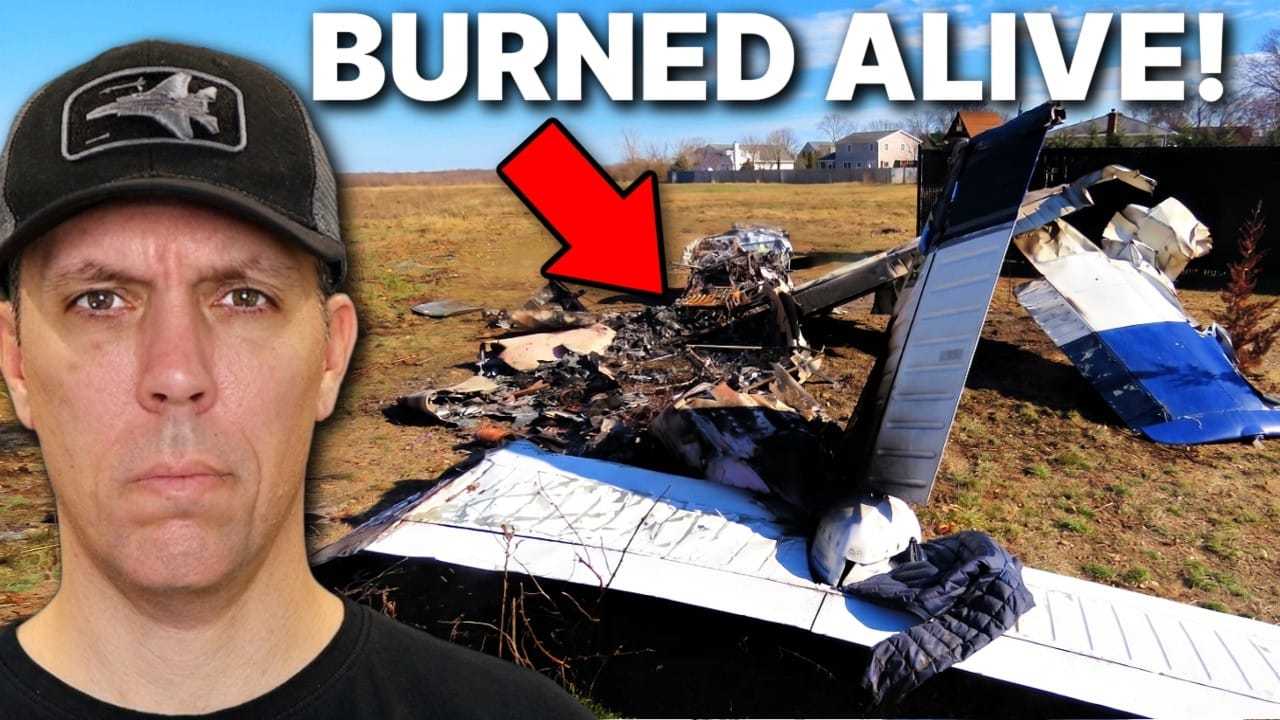
A fatal aircraft fire was traced back to a single, unauthorized mechanical part. The investigation reveals how seemingly minor maintenance issues, compounded by a weak safety culture, can lead to preventable disasters.
NTSB Finds Unauthorized, Leaking Oil Line Caused Fatal Piper Warrior Fire
Investigators with the National Transportation Safety Board (NTSB) identified an unauthorized oil pressure line as the cause of a fatal in-flight fire. The line, which was not part of the aircraft’s original design, had a damaged brass fitting that had been degraded by electrical arcing. Over time, this fitting allowed oil to leak under the floorboards, where it was eventually ignited by the same electrical arcing. The subsequent crash and fire killed the pilot, Faisal, and one passenger, Riva's mother. Faisal initially survived with severe burns but died months later, leaving Riva as the sole survivor.
What needs to be understood is that the tragedy was compounded by the flight school's complete lack of an emergency response plan, which left employees directionless in the immediate aftermath. This catastrophic mechanical failure was not a random accident but the final, predictable outcome in a chain of systemic safety lapses. The faulty part represented the last hole in a series of safety defences, or “Swiss cheese,” that should have prevented such a disaster, highlighting a case where the loss of life was entirely avoidable.
"This was the last hole in the Swiss cheese and this was an accident that never should have happened."
Pilot Reports Smoke, Then Flames, in Harrowing Final Moments of Flight
Forty minutes into a scenic flight, pilot Faisal declared an emergency due to smoke in the cockpit while flying approximately six miles over the ocean. The situation deteriorated rapidly as passenger Riva, seated in the back, witnessed flames erupting from the floor. With the cockpit filling with thick black smoke that obscured his vision, Faisal made a desperate attempt to clear the air by propping the main door open with his arm. However, this action only provided the fire with a fresh source of air, causing the flames to intensify and burn him severely.
The unfolding emergency left the pilot with a series of impossible choices: attempt a high-risk ditching in the ocean without life jackets, try for an improvised landing on a nearby highway, or press on for the airport six miles away. The aircraft was not equipped with a fire extinguisher, leaving the three occupants helpless as they were, in effect, “burning alive.” This lack of basic safety equipment, a direct consequence of the flight school's deficient oversight, removed any possibility of mitigating the fire and sealed the fate of the flight.
"In a desperate attempt to clear out the smoke, he propped open the door with his arm, but the flame shot up towards the fresh source of air."
Crashed Aircraft Had Multiple Prior Smoke Incidents, Investigation Reveals
The 1980 Piper PA-28 Warrior involved in the fatal crash had a history of smoke-related incidents that were inadequately addressed. The aircraft, which had accumulated nearly 19,000 flight hours, experienced at least two separate events of smoke in the cockpit within the two months prior to the accident. In one instance, an instructor reported the smoke to the school's owner, Danny, who allegedly dismissed the concern. Just days later, another instructor made a priority landing due to smoke and reported the issue, prompting a maintenance check.
Despite the recurring problem, the mechanic who inspected the aircraft failed to identify the source of the smoke. Though he admitted to the NTSB that he got a “whiff” of smoke during a test flight, he returned the plane to service because he could not duplicate the problem. These repeated, unresolved reports were critical warning signs of a potential fire hazard. The failure to ground the aircraft and definitively locate the fault demonstrates a systemic breakdown in safety protocol that directly contributed to the eventual disaster.
"Since he couldn't duplicate the problem, he never identified the source of the smoke, and the aircraft was returned to service."
Flight School Lacked Formal Maintenance Tracking System, NTSB Finds
The flight school at the center of a fatal crash had no formal procedures for documenting maintenance discrepancies, according to the NTSB's investigation. Testimony revealed a chaotic and inconsistent system for handling pilot-reported issues, known as “squawks.” The school’s mechanic described recording problems in a red folder that might be set aside, kept in his car, or placed in an office drawer, with no standardized protocol for ensuring issues were resolved and tracked. This ad-hoc process created significant gaps in safety and maintenance oversight.
The reason why this holds significance is because it points to a deeply flawed safety culture that extended beyond maintenance logs. One flight instructor told investigators that the owner, Danny, actively discouraged pilots from reporting difficulties over the radio for fear of FAA repercussions. This combination of suppressing safety reports and a haphazard tracking system created an environment where serious mechanical problems could be overlooked or ignored, setting the stage for a preventable tragedy.
"Danny told us never to report difficulties with the airplane over the radio because ATC can get your license taken away."
Flight School in Fatal Crash Lacked Safety Program and Standard Procedures, NTSB Told
The flight school involved in a fatal crash operated without a formal safety program, a designated safety officer, or standardized operating procedures, NTSB interviews revealed. The owner, Danny, ran a Part 61 flight school where instructors were treated as independent contractors, with him stating that “each instructor is a flight school in itself.” This decentralized model resulted in a significant lack of institutional oversight regarding safety protocols and training consistency across the organization.
The implication of this hands-off management style was the cultivation of what one instructor described to the NTSB as a “nonexistent” safety culture. While the owner claimed to hold occasional safety meetings, there was no structured system for reporting and addressing safety issues. This absence of a foundational safety framework is critical context for the accident, as it created an environment where dangerous maintenance practices and aircraft discrepancies could persist without effective checks and balances, ultimately leading to catastrophic failure.
"The flight school didn't have a safety officer, safety program, or formal safety meetings."
Also mentioned in this video
- The video opens with a desperate distress call from a flight instructor,… (0:07)
- The story of the crash begins on March 5th, 2023, in Farmingdale, New York,… (0:38)
- Operating altitudes and gliding distances, especially since the school lacked… (12:29)
- Air traffic control continued to provide landing instructions amidst reports of… (16:22)
Summarised from Pilot Debrief · 18:58. All credit belongs to the original creators. Streamed.News summarises publicly available video content.