Original source: Pilot Debrief
This video from Pilot Debrief covered a lot of ground. Streamed.News selected 7 key moments and summarises them here. Everything below links directly to the timestamp in the original video.
A single ambiguous command led to a dual-engine shutdown. This is the moment a routine flight turned into a fight for survival.
Pilot's Ambiguous Command Leads to Inadvertent Dual-Engine Shutdown
During the descent, a critical miscommunication between the pilot-in-command and the unqualified passenger at the controls led to a catastrophic power loss. The pilot, Wes, instructed his friend, Steve, to "pull the power out" to reduce speed. Steve, unfamiliar with the jet's throttle system, pulled the levers past the idle stop and into the fuel cutoff position, a move that immediately shut down both of the aircraft's engines in mid-flight.
The event underscores the profound danger of imprecise language in the cockpit, especially when delegating tasks to an individual not qualified to fly the aircraft. The design of many jet throttles includes this cutoff function, which, when combined with a vague command, transformed a simple power reduction into a life-threatening dual-engine failure—a scenario for which pilots receive little to no training.
"When Wes said, 'Pull the power out,' and Steve asked him, 'Just pull it on down?' there was a big misunderstanding... what happened next was the sound of two clicks, then a power interruption."
Single Forgotten Switch Crippled Jet's Electrical Systems After Engine Restart
Despite successfully restarting one of the engines, the pilot made a second, fatal error by neglecting to reset a single switch in the cockpit. Wes left the battery toggle switch in the 'standby' position, a step taken from an electrical power loss checklist. This oversight prevented the newly running engine's generator from repowering the aircraft's essential electrical bus, leaving the pilots with no navigation and crippled systems.
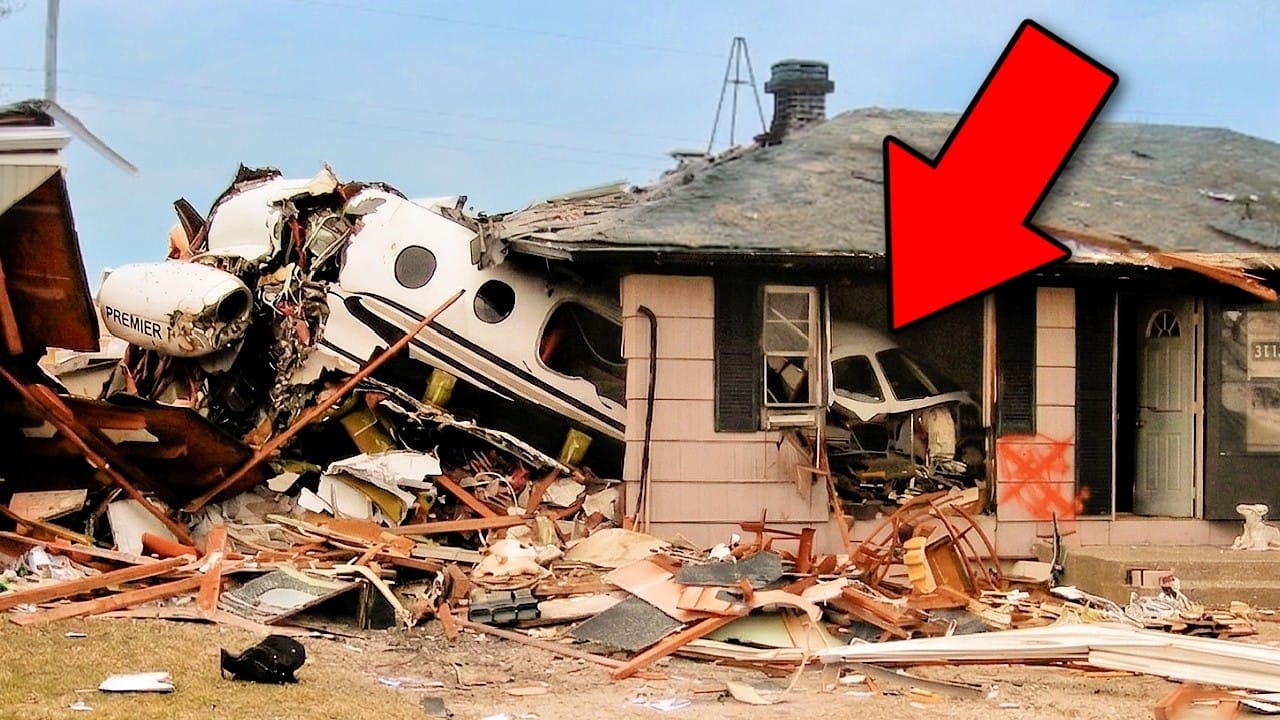
This failure had cascading consequences, as the lack of electrical power was a primary reason the landing gear failed to extend. According to the NTSB, the pilot's subsequent attempt to use the alternate gear extension was also performed incorrectly. The combination of these errors led to a botched landing attempt, a go-around, and the ultimate crash into a residential home, illustrating how a sequence of procedural mistakes can negate a partial recovery from an initial emergency.
"This one switch ended up complicating everything for him, because it meant that he still didn't have electrical power, and that's just one of the reasons why the landing gear wasn't coming down."
NTSB Cites Pilot's 'Inadequate Response' and Decision to Cede Controls in Fatal Crash
The National Transportation Safety Board (NTSB) concluded that the probable cause of the crash was the pilot-in-command's inadequate response to the dual-engine shutdown. The agency's final report directly traces the emergency back to Wes's initial, flawed decision to allow Steve, a passenger unqualified to operate the jet, to fly the aircraft.
What needs to be understood is that the entire tragedy was deemed preventable. Wes was not a certified flight instructor, and his choice to treat the flight as an impromptu instructional session fundamentally compromised his primary responsibility to ensure the safety of his passengers. By allowing Steve to handle the controls, he created the conditions for the initial error and was then unable to manage the ensuing emergency, a chain of events that highlights the non-negotiable duties of a pilot-in-command.
"The NTSB would go on to say that the reason why they crashed was because of Wes's inadequate response to the dual engine shutdown, which was caused by his decision to let Steve try to fly the plane, even though Steve wasn't qualified to do so."
Overspeed Warnings Ignored as Unqualified Pilot Flew Jet for 10 Minutes
In the critical descent phase of the flight, an overspeed warning activated, yet the unqualified passenger, Steve, remained at the controls. Despite having not flown in five years and possessing no experience in business jets, Steve was permitted to fly the aircraft for approximately 10 minutes while the pilot-in-command, Wes, coached him from the adjacent seat.
This hazardous situation is attributed to a form of confidence bias on the part of the pilot. Instead of immediately taking back control to ensure the aircraft was operated within safe parameters, Wes prioritized his informal instruction. This decision demonstrated a critical lapse in judgment, allowing a dangerous flight condition to persist and setting the stage for the more severe emergency that would follow.
"This is a classic example of confidence bias. Now, that's the voice inside your head that says, 'I got this,' before you really know what this actually is."
Pilot's 'Instructional' Descent Neglected Checklists and Used Risky Autopilot Mode
The foundation for the accident was laid early in the descent, when the pilot-in-command, who was not a certified flight instructor, began an impromptu training session with his passenger. He chose to use the autopilot's vertical speed mode, a setting that prioritizes rate of descent over airspeed. This decision immediately caused the aircraft to exceed safe speeds, requiring manual power reductions to correct.
To compound the issue, this focus on informal instruction came at the direct expense of standard operating procedures. The cockpit voice recorder transcript reveals that critical pre-landing tasks, such as obtaining weather information and briefing the approach, were not performed. Instead, the pilot was preoccupied with quizzing his unqualified friend, demonstrating a critical shift in priorities from safety and procedure to unsanctioned training.
"The problem with using vertical speed is that when you select that setting, the aircraft doesn't care about your airspeed. It just tries to maintain that vertical speed no matter what."
Dual-Engine Shutdown Created Untrained-For Emergency, Forcing Reliance on Radar Vectors
The accidental shutdown of both engines placed the pilots in an emergency for which there is no standard training protocol. Aviators routinely practice for a single-engine failure or an engine fire, but a dual shutdown caused by operator error is considered such an outlier that it is not part of recurrent training. This reality highlights the acute danger of permitting an unqualified individual to operate aircraft controls.
The immediate consequence of the total power loss was the failure of the aircraft's primary navigation systems. Without onboard guidance, the pilot was forced to ask air traffic control for radar vectors to locate the destination airport. This dependency on external guidance underscored how quickly the pilots' situational awareness and control had been degraded by the unprecedented nature of their self-inflicted emergency.
"Nobody trains for how to respond if you accidentally shut down both engines during the flight because no one ever plans to do that. And this is why you don't let someone who isn't qualified to fly the aircraft handle the controls."
Pilot in Fatal Crash Had 'Unheard Of' Rapid Rise to Flying Business Jet
The pilot-in-command, Wes, had progressed from a private pilot to being type-rated in a Hawker Beechcraft 390 Premier jet in just 16 months, an advancement described as "practically unheard of." He obtained his type rating with only 450 total hours of flight time, moving from his multi-engine rating to the jet qualification in approximately three months.
What needs to be understood is that while this rapid progression was legal, it provided insufficient time for the pilot to consolidate skills and build critical aeronautical decision-making experience. At the time of the crash, Wes had only accumulated 170 hours in the Premier jet. This lack of deep, seasoned experience is considered a significant contributing factor to the overconfidence and poor judgment demonstrated during the flight.
"To go from getting a multi-engine rating to getting a type rating in a business jet in about 3 months is practically unheard of. And what this really meant was that Wes didn't have any time to consolidate his skills."
Also mentioned in this video
- Steve Davis, an Oklahoma football legend, who died in a plane crash due to a… (0:00)
- The story begins on March 17th, 2013, with a private jet flight from Tulsa to… (0:25)
- On March 17th, Chris and his father-in-law, the two other passengers, had no… (3:32)
- The lack of a safety briefing reflects on pilot professionalism, and the NTSB's… (4:16)
- Ten minutes later, Wes told Steve to set maximum continuous thrust, then got… (8:13)
- Despite a brief attempt to restart an engine and the cockpit voice recorder… (12:33)
- After the power cut, Wes managed to restart the left engine, which should have… (13:29)
Summarised from Pilot Debrief · 16:54. All credit belongs to the original creators. Streamed.News summarises publicly available video content.