Original source: Pilot Debrief
This video from Pilot Debrief covered a lot of ground. Streamed.News selected 7 key moments and summarises them here. Everything below links directly to the timestamp in the original video.
A pilot's final moments reveal how quickly a flight can turn fatal when foundational rules are ignored. The presence of multiple substances in his system raises further questions about his fitness to fly.
Student Pilot Loses Control in Clouds, Crashes Minutes After Radio Contact
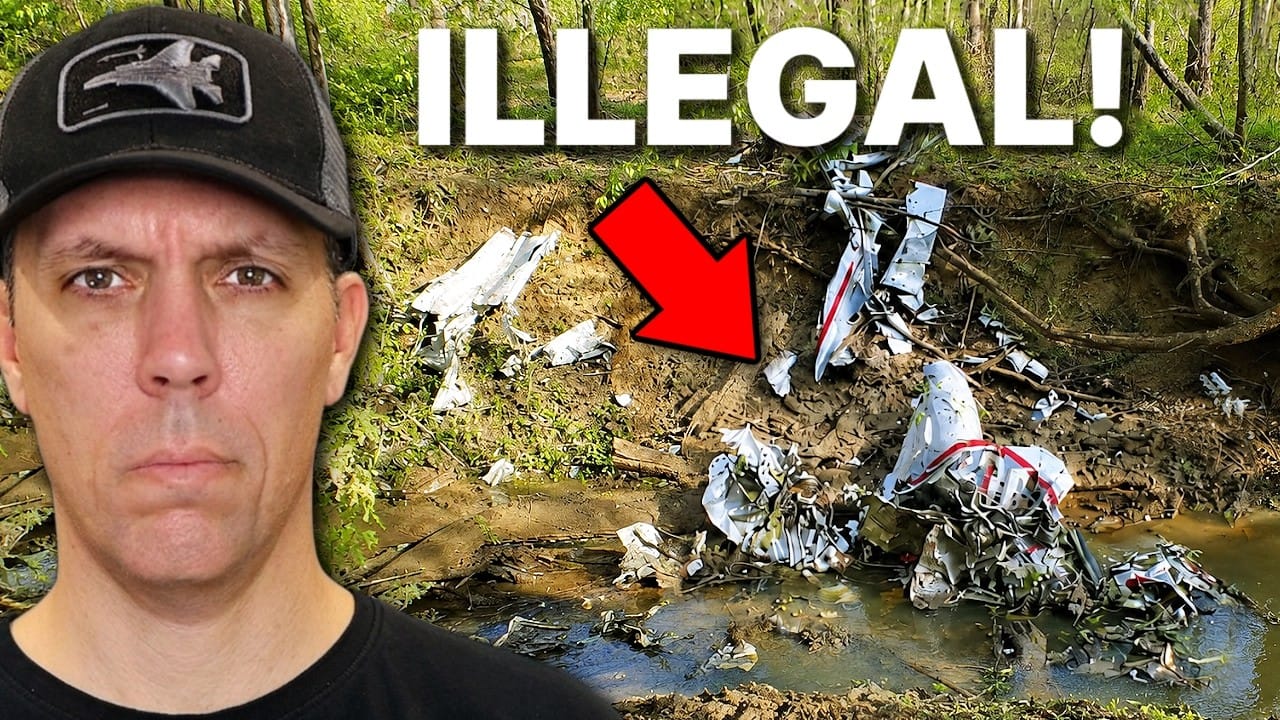
Less than three minutes after his initial contact with air traffic control, the student pilot and his mother were killed when their aircraft crashed. After flying into clouds, the pilot became spatially disoriented—a state where a pilot cannot tell which way is up—and entered a steep right-hand turn. The aircraft rapidly lost altitude as its airspeed increased to 270 knots, more than 80 knots above its published limit, before impacting the ground.
A subsequent toxicology report found ethanol, the antidepressant Wellbutrin, Xanax, and the anti-anxiety drug Bepbar* in the pilot's system. While the National Transportation Safety Board (NTSB) could not determine if these substances impaired his ability to fly, the analysis concluded that the crash was ultimately caused by the series of poor decisions he made before and during the flight, starting with the choice to take off into hazardous conditions.
"It took less than 3 minutes from the time that Chad first checked in with the controller until the time that he and his mom were dead."
Air Traffic Control Warned Pilot of Severe Weather, Offered Safe Diversion Before Crash
In his final communication, the student pilot received a clear warning from an air traffic controller at Memphis Center about the dangerous weather ahead. The controller advised him of a 40-mile-wide system of moderate rain, Instrument Flight Rules (IFR) conditions, and cloud ceilings as low as 1,500 feet. He was also informed of a safe alternative, McKellar airport to his east, which was reporting clear skies.
Despite this direct guidance, the pilot responded with a flawed plan to descend to between 2,000 and 3,000 feet, likely basing his decision on delayed weather radar from his iPad, which only showed precipitation and not the cloud layers. Critically, he never identified himself as a student pilot, a recommended procedure that would have alerted the controller to his limited experience and likely prompted more direct assistance. He lost control of the aircraft just 35 seconds later.
"The controller gave him all the information he needed... the weather system is about 40 miles wide and it's moving towards your destination and the clouds are as low as 1500 feet pretty much everywhere."
Student Pilot Violated Regulations by Flying with Mother, Departed Hours After Weather Deadline
The pilot departed at 5:20 p.m., more than three hours after a 2:00 p.m. deadline his instructor had set to ensure the flight would be completed before severe weather reached the destination. The delay was caused by a technical issue with his iPad that required a trip to a T-Mobile store. More significantly, the pilot illegally carried his mother as a passenger, a direct violation of federal regulations explicitly stated on his student pilot certificate.
What needs to be understood is that the pilot concealed the fact his mother would be on board from his instructor, as this would have prohibited the instructor from endorsing the flight. This deliberate violation, combined with the pressure of a family medical emergency and his aunt's planned vacation, created a context of self-imposed pressure that contributed to his decision to ignore the weather warnings and proceed with the flight into dangerous conditions.
"As a student pilot, you aren't permitted to carry passengers when you're acting as the pilot in command of the aircraft. There's even a warning on your student pilot certificate that says carrying passengers is prohibited."
Unlicensed Pilot Flew Directly Into Cold Front with Conditions Unsuitable for VFR Flight
Less than an hour from his destination, the student pilot encountered a large cold front presenting a solid layer of clouds from 1,200 feet up to 13,000 feet. Visibility was reduced by light rain and mist, and weather at his destination airport was reported as broken clouds at 500 feet with 2.5 miles of visibility. These conditions are defined as Instrument Flight Rules (IFR), requiring specialised training and aircraft equipment to navigate safely.
The reason this holds significance is because as a student pilot, he was restricted to Visual Flight Rules (VFR), which require clear visibility to see the ground and horizon. Audio from air traffic control confirms he was explicitly warned of moderate-to-heavy precipitation and impending IFR conditions. His decision to continue the flight at night into this weather system was a direct violation of the fundamental principles of VFR flight.
"These are not the kind of conditions for a student pilot to be flying in, especially at night."
Pilot in Fatal Crash Was Unlicensed, Flew Complex Aircraft He Purchased After Six Months of Training
The student pilot, Chad, purchased his own Piper PA-28 Turbo Arrow just six months after he began flight training in 2019. This aircraft is considered high-performance and complex due to its retractable landing gear and is not typically used for initial pilot training. Over a two-year period leading up to the crash, he accumulated 135 flight hours, including 108 in the accident aircraft and 51 hours of solo time, yet never earned his private pilot certificate.
The fact that he remained a student pilot despite logging nearly double the typical 70 hours required for certification points to a potential gap between his experience and his actual proficiency. Owning and operating a more advanced aircraft than he was qualified for may have contributed to a sense of overconfidence that was not supported by demonstrated skill, a dangerous combination in aviation.
"He eventually bought his own Turbo Arrow in July of 2019, just six months after he started learning to fly. But to be perfectly clear, he still didn't have his pilot license."
Instructor Warned Pilot of Weather, Offered to Accompany Him on Flight Hours Before Crash
On the day of the accident, the pilot met with his flight instructor to obtain the necessary solo cross-country endorsement. During their meeting, the instructor emphasised that the pilot needed to be airborne no later than 2:00 p.m. to avoid significant weather forecast for the destination that evening. The pilot explained the flight was necessary to visit his hospitalized father and also revealed that he had lost his job a week prior.
Sensing the pilot was under considerable personal stress, the instructor offered three separate times to accompany him on the 700-mile flight. The pilot declined each offer. This exchange represents a critical missed opportunity for intervention. Despite the instructor's explicit concerns about the weather and the pilot's emotional state, the pilot demonstrated a firm resolve to conduct the demanding flight alone, a decision that ultimately proved fatal.
"Considering the fact that this was going to be a 700-mile flight, and Chad was dealing with some pretty personal issues, the instructor asked him three separate times, 'Do you need me to go with you on this flight?'"
Uncertified Pilot Had Double the Typical Solo Hours, Far Exceeding Night Flying Minimums
The student pilot in the fatal crash had logged flight hours that significantly exceeded the typical requirements for certification. With 135 total hours and 51 solo hours, he had nearly doubled the average of 70 total and 10-20 solo hours that most pilots have when they earn their private pilot certificate. His 46 hours of night flying were also exceptionally high, dwarfing the 3 hours required for licensing.
While extensive flight time can suggest experience, in this case it points to a prolonged failure to meet certification standards. This pattern of accumulating a high number of hours, particularly solo and at night, without the validation of a license, may have fostered a dangerous overconfidence. The pilot was operating well beyond the bounds of a typical training environment, building experience that was not backed by the formal judgment and proficiency checks required for certification.
"Most students get their private pilot certificate with about 70 hours of flight time and maybe 10 to 20 hours of solo time, and Chad had basically doubled those numbers."
Also mentioned in this video
- The story begins on April 20th, 2021, when Chad and his mother took off from… (0:18)
- Chad's third-class medical certificate, required for solo flights, expired in… (3:00)
- Chad and his mother took off around 5:20 PM, and Chad subsequently removed a… (8:22)
- The controller attempted to provide information on nearby airports, but Chad… (14:46)
Summarised from Pilot Debrief · 16:56. All credit belongs to the original creators. Streamed.News summarises publicly available video content.