🌐 This article is also available in Spanish.
Original source: BrightvisionAB
This article is an editorial summary and interpretation of that content. The ideas belong to the original authors; the selection and writing are by Streamed.News.
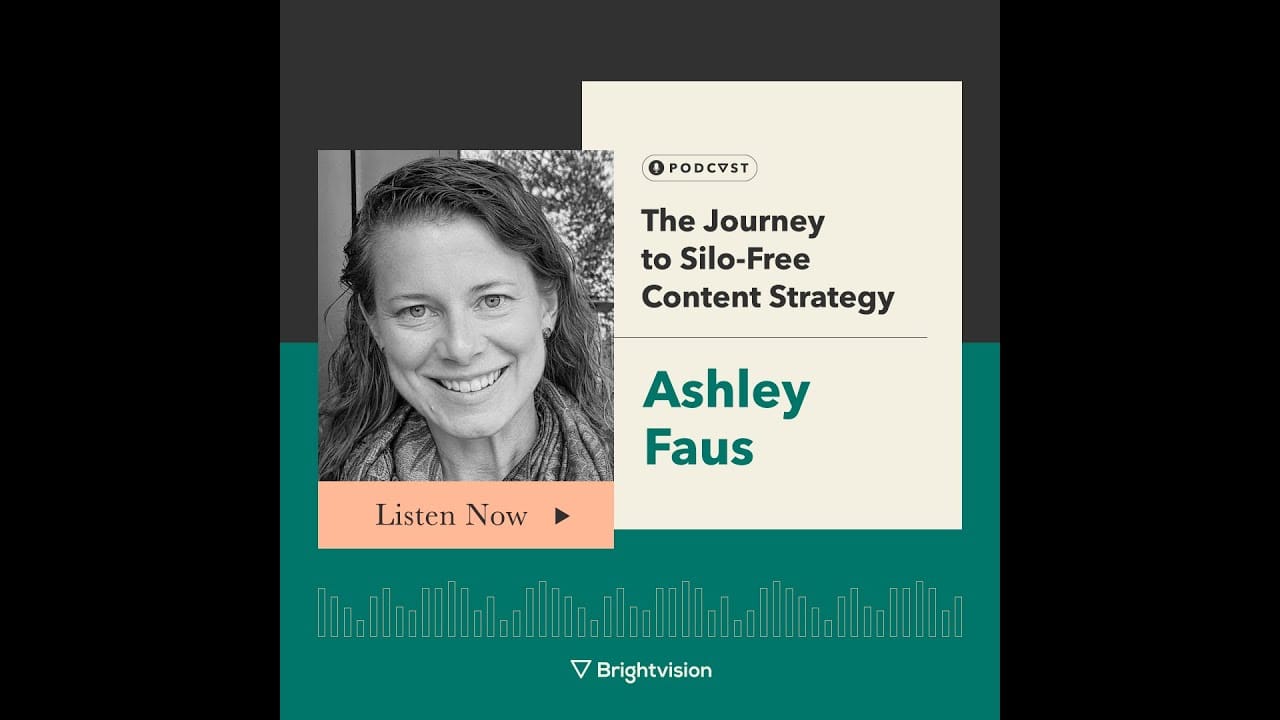
This video from BrightvisionAB covered a lot of ground. 6 segments stood out as worth your time. Everything below links directly to the timestamp in the original video.
Every time a company transfers you from marketing to sales to customer success, you feel it — and now there's a framework for why that friction exists and how to remove it.
Treating Customers as 'Prospects,' 'Users,' and 'Leads' Is Breaking the Buying Experience
Ashley Faus argues that the internal language companies use to label people at different stages of a purchase — prospect, customer, user — is the root cause of disjointed experiences. Each label transfers ownership to a different team, producing visible handoff seams: a prospect who simply wants to know a price gets routed to a demo booking instead, or a new customer arrives at a success manager who knows nothing about their research process.
The fix is a language and mindset shift: treat everyone as an audience on a single continuous journey rather than as an account moving through a pipeline. In B2B software, where teams must keep re-earning subscriptions, making internal org charts invisible to buyers is not a courtesy — it is a competitive necessity.
"We need to think of this as an audience journey for humans, not a prospect journey to a user journey to a customer journey."
Atlassian Strategist Declares the Marketing Funnel Dead, Proposes a Playground Model
Ashley Faus contends that the classic awareness-to-purchase funnel forces buyers through a sequence that rarely matches how they actually make decisions. Her alternative — designing content like a playground — means someone should be able to jump straight to pricing, skip back to awareness, or read migration documentation before they have ever opened a sales conversation. Hiding pricing behind a demo request, she notes, simply stops a budget-less researcher from building the business case needed to become a buyer at all.
The model has particular force in B2B software, where implementation complexity and migration paths are genuine pre-purchase concerns. Surfacing that information early doesn't accelerate a funnel; it enables a research process that may take months before any purchase intent formally exists.
"The funnel is dead — use a playground instead."
A Three-Intent Framework Maps Content Ownership Across Sales, Marketing, and Support
Faus proposes that most content ownership disputes inside companies stem from imprecision about what a piece of content is actually meant to make the audience do. Her framework separates output into buy intent, use intent, and affinity intent — with marketers owning the first, documentation and customer success teams owning the second, and brand teams owning the third. Shared goals around retention and growth sit above all three; each team then drives its own metrics toward that common objective.
Clear calls-to-action and cross-links between properties do the mechanical work of connecting these separately-owned assets into a seamless journey, ensuring audiences are never stranded at a content dead-end.
"Once you start to separate those intents, you start to realize how they all work together to create this cohesive journey."
Content Strategy Should Begin With Audience Questions, Not Internal Assumptions
Faus argues that effective content planning requires sitting with real audience data — the questions people actually ask on social platforms, in-product help panels, search engines, and forums — rather than internal brainstorming. She maps answers to three depths: conceptual content that frames a problem, strategic content that outlines how to approach a solution, and tactical content that delivers step-by-step guidance. Critically, none of these layers is inherently about a company's own product; the product may appear as one answer among many.
This audience-first sequencing prevents companies from building content that speaks only to what they want to sell rather than what buyers are trying to understand.
"What you think doesn't matter — you need to talk to your audience."
Atlassian Resolves Content Overlap Between Teams Through Cross-Linking and Values-Based Hiring
At Atlassian, the primary defence against content silos is not process but people: Faus says the company hires specifically for values — 'play as a team' and 'build with heart and balance' — so that an employee who discovers overlapping content instinctively looks for a collaborator rather than a territorial dispute. Documentation of intent ownership by team is a secondary layer, one Atlassian is actively formalising as the company grows. Where genuine overlap exists, such as product guides that serve both pre-purchase research and post-purchase support, the solution is deliberate cross-linking rather than a forced ownership decision.
The approach illustrates a broader principle: organisational design can only go so far if the underlying culture incentivises credit-taking over shared outcomes.
"If you don't have people who are willing to work together and who care about the outcome for the audience, no amount of process is going to result in that."
A Salesforce Insight From One Account Manager Became a Broad Campaign at Duarte
When Faus worked at Duarte, a presentation design and communications firm, an account manager reported that Salesforce maintained a formal tiered system governing who could speak publicly on the company's behalf. Rather than using that intelligence to close a single deal, the team built a full marketing campaign around the topic of preparing different speakers for different public-speaking contexts — turning a narrow sales observation into reusable content that applied to many large organisations facing similar governance structures.
The example illustrates the compounding return of cross-team information flow: a sales signal that would otherwise be spent on one account instead generates durable marketing assets with a much wider reach.
"They could have been off just selling one very specific thing to one very specific account, but instead we took that and expanded it into a longer-term campaign and strategy."
Also mentioned in this video
- A holistic approach to content distribution beyond traditional marketing… (19:44)
- Engaging audiences where they already exist and embracing product-led growth… (26:47)
Summarised from BrightvisionAB · 32:57. All credit belongs to the original creators. Streamed.News summarises publicly available video content.
Streamed.News
This publication is generated automatically from YouTube.
Convert your full video library into a digital newspaper.
Get this for your newsroom →