🌐 Also available in: 🇪🇸 Español
Original source: The Prof G Pod – Scott Galloway
This video from The Prof G Pod – Scott Galloway covered a lot of ground. Streamed.News selected 8 key moments and summarises them here. Everything below links directly to the timestamp in the original video.
Understanding China's leverage over Western corporations is crucial. How might this influence global supply chains and geopolitical alliances in the coming years?
Chinese Directives Influence Western Multinationals Beyond Apple
China exerts significant influence over a wide array of major US and European companies, extending beyond Apple to firms such as Qualcomm, Tesla, ASML, Volkswagen, BMW, BASF, Siemens, Richemont, and Rio Tinto. These companies derive a substantial portion of their global revenues from the Chinese market, making them highly susceptible to directives issued by the Chinese government, which they would be imprudent to disregard outright. This commercial dependency fundamentally alters the typical corporate governance structure, where shareholders often cede effective control to Beijing's policy imperatives in the Chinese market.
This dynamic highlights a critical geopolitical and commercial vulnerability for Western multinationals. The structural dependence on the Chinese market means that these firms are compelled to align their operations with Beijing's strategic objectives, potentially compromising their home governments' policy aims or their own ethical standards. Such economic leverage allows China to shape global corporate behavior, illustrating a broader pattern of state influence over private enterprise that transcends national borders and challenges traditional notions of market autonomy.
"All of these companies derive a very large proportion of their global revenues from China. And therefore, when the Chinese government says something or issues an order or an instruction to these companies, they would be very rash to refuse that instruction point blank."
Premier Li Qiang Positions China as 'Harbor of Stability' Amid Global Upheaval
Chinese Premier Li Qiang recently leveraged the China Development Forum to strategically position China as a "cornerstone of certainty" and a "harbor of stability" amidst rising global trade protectionism and disruptions to the rules-based international order. While avoiding direct mention of the United States, Li's rhetoric clearly drew a contrast between China's purported stabilizing role and the destabilizing actions of unnamed forces, implicitly pointing to Washington. This rhetorical strategy aims to accrue diplomatic capital for Beijing on the international stage, subtly undermining the US narrative.
Further reinforcing this stance, the Governor of the People's Bank of China, Pan Gongsheng, also criticized the international monetary system's reliance on a single sovereign currency, a clear reference to the US dollar, without explicitly naming the US. This constitutes a calculated effort to deflect criticism from China's significant trade surplus and to advance a long-term agenda of de-dollarization. Such coordinated messaging from high-level Chinese officials underscores a deliberate strategy to exploit perceived US missteps for China's diplomatic and economic advantage, particularly as global conflicts escalate.
"China was committed to being a cornerstone of certainty and a harbor of stability in a world that is dominated by rising trade protectionism and upheavals in the rules-based international order."
China's Economic Leverage Over Apple Signals Broader Corporate Influence
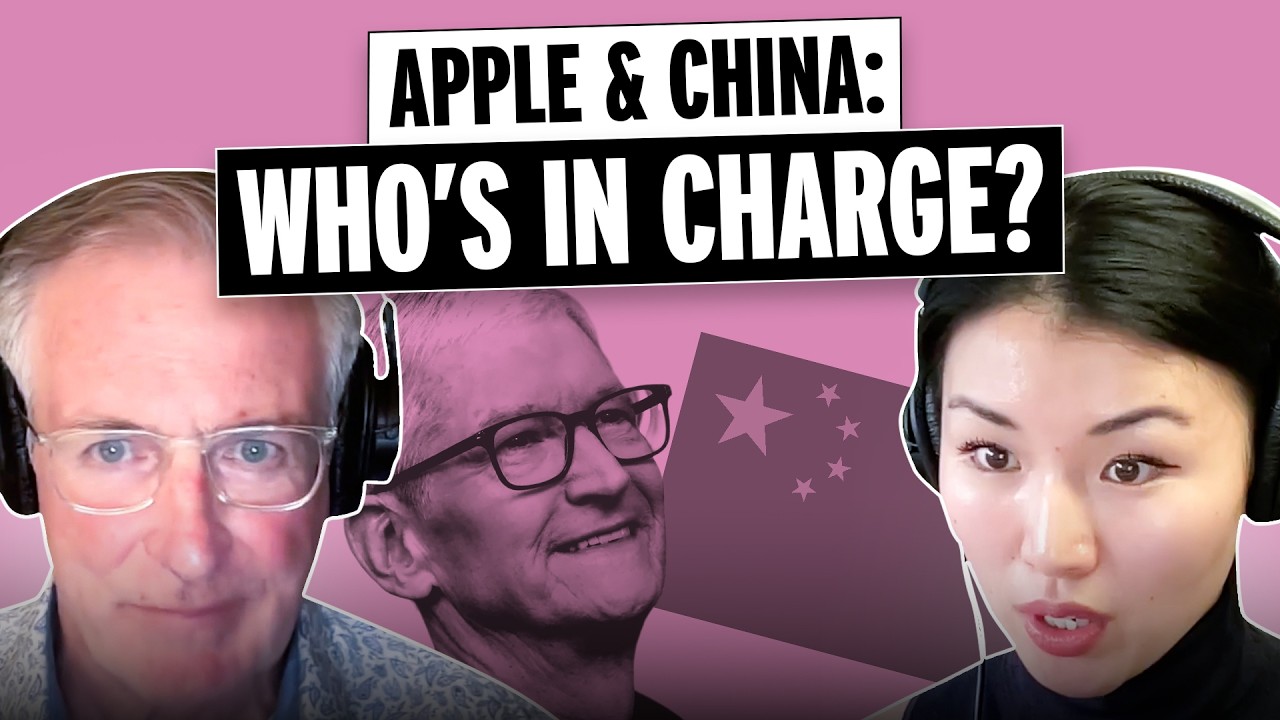
Apple's significant investment in and revenue generation from the Chinese market render it highly susceptible to Beijing's directives, exemplifying a broader phenomenon where the Chinese government wields considerable influence over major US and European corporations. This dynamic suggests that when China issues instructions, companies like Apple find it imprudent to entirely disregard such mandates. The structural importance of China to Apple's global operations, as previously observed by analysts, means that the company's strategic decisions within China are often dictated by governmental priorities rather than solely shareholder interests.
This situation is not isolated to Apple; numerous multinational companies operating in China face similar pressures, highlighting a systemic issue of state influence over foreign private enterprise. Such leverage allows Beijing to extract commercial concessions and shape corporate behavior, which has profound implications for global economic governance and the autonomy of private firms. The trajectory established by this influence mechanism suggests a persistent challenge for Western companies balancing market access with sovereign demands, reflecting a fundamental tension between globalized commerce and national strategic control.
"This is a story that says in this case, when China says jump, Apple will jump at least to some degree. That's because Apple has invested so much in the China market and because Apple gets such a large proportion of its global revenues from China."
China Advances De-dollarization Efforts Amidst Geopolitical Shifts
China is actively pursuing a strategy of de-dollarization, as evidenced by statements from the People's Bank of China governor and a notable increase in the use of the Chinese Yuan (CNY) for trade settlements, particularly with Gulf states and Russia. A significant data point indicates a 2,500-fold increase in digital tokenized cross-border transactions through central bank bridges with Hong Kong, Thailand, the UAE, and Saudi Arabia since 2022, totaling approximately $55 billion, with about 95% of this settlement occurring in CNY. This systematic push aims to leverage perceived US financial instability and geopolitical uncertainties to bolster the yuan's role in global finance.
The expansion of commercial banks using the digital CNY underscores a deliberate and long-term effort by Beijing to diminish the US dollar's dominance. The increase in CNY settlements between Russia and China since 2022, especially for oil and gas, further illustrates this trajectory. This shift indicates a growing alignment among certain nations to challenge the prevailing US-centric financial order, suggesting a potential rebalancing of global financial influence that could have profound implications for international trade and investment flows.
"China over the last few years has been working with the major central banks of Hong Kong, Thailand, UAE and Saudi Arabia to increase trade settlements via these central bank bridges, you know, digital tokenized cross-border transactions. And since 2022, we've seen a 2,500-fold increase in the use of these tokens through the these m bridges."
China Positions Itself as Peacemaker in Iran Conflict, Contrasting with US Actions
China is strategically positioning itself as a statesman and peacemaker in the escalating Iran conflict, aiming to curb the spread of hostilities and mediate future peace efforts, thereby implicitly portraying the United States as a "wrecking ball." According to Chinese Foreign Minister Wang Yi, immediate priorities include preventing the conflict from involving other nations, such as Saudi Arabia and the UAE, and pushing for an immediate ceasefire alongside renewed mediation. This approach seeks to enhance China's diplomatic credibility and influence in the Middle East, leveraging the regional instability.
Beijing’s strategy involves refusing to cooperate directly with the US on managing the conflict, as such collaboration would undermine its carefully crafted image as an independent and just actor. Instead, China intends to capitalize on the perceived US role in instigating the conflict to score propaganda gains and strengthen its diplomatic standing. This calculated non-cooperation allows China to present itself as a responsible global power dedicated to regional stability, contrasting sharply with its portrayal of US interventions as destabilizing and unjust.
"This gives China an opportunity to act as the statesman, the peacemaker. According to Wang Yi, China's foreign minister, he said that the urgent priorities now are firstly to curb the spread of the conflict and prevent other countries from becoming involved."
Trump's Summit Postponement Fuels Chinese Frustration, Beijing Seeks Leverage in Iran Crisis
The postponement of former President Trump's anticipated Beijing summit with Xi Jinping has elicited frustration from Chinese officials and mockery from state-run media, including the Global Times. This delay, framed by some Chinese outlets as a US attempt to involve China in policing the Strait of Hormuz, comes as Beijing increasingly views the Iran crisis as a strategic opportunity to gain political capital at the expense of the United States. While Chinese media coverage of Iran has been relatively muted, and direct criticism of US actions less vocal than might be expected, Beijing appears to be playing a calculated 'wait and see' game.
China has dispatched a special envoy to the Middle East, engaging with both Gulf states and Iran, suggesting preliminary diplomatic maneuvers for a potential long-term peace process. This measured response indicates Beijing's strategic intent to position itself as a key mediator in regional conflicts, thereby enhancing its diplomatic influence. The perceived distraction and entanglement of the US in the Middle East offers China a window to advance its geopolitical objectives without direct confrontation, potentially shaping future power dynamics in the region and beyond.
"Beijing sees the Iran crisis as a chance to make political capital at the expense of the US."
US Actions in Middle East Create Diplomatic Opportunity for China, Echoing Suez Crisis
The United States' engagement in the Middle East, characterized as an "unforced error" that has bogged down its resources, is creating a significant diplomatic opportunity for China. This situation allows Beijing to accrue leverage, not only within the Middle East but also in ongoing US-China trade negotiations, as a distracted Washington may reduce its focus on trade and technology export controls. Chinese state media, such as the Global Times, openly portray the current Middle East instability as a crisis of American making, implying that the US is seeking global assistance for a problem it initiated.
This refusal by China to participate in collaborative efforts, such as de-mining or unblocking the Strait of Hormuz, is reminiscent of the 1956 Suez Crisis, where the US notably declined to support its traditional allies, Britain and France, in their imperial endeavors. Beijing's current stance reflects a deliberate strategy to avoid entanglement with US objectives, instead preferring to observe and potentially capitalize on American difficulties. This mechanism of strategic disengagement enables China to enhance its international standing and pursue its own geopolitical interests without being constrained by US foreign policy priorities.
"This has been an unforced error by the Americans in which that has caused an opportunity for China to gain leverage, not only just in the Middle East, but also in potentially US-China trade talks."
People's Daily Criticizes Apple's Monopoly After App Store Commission Cut
China's official state newspaper, the People's Daily, publicly criticized Apple for monopolistic behavior shortly after the technology giant reduced its App Store commission in mainland China from 30% to 25%. This concession, which places Chinese users at a lower commission rate than their US counterparts, was deemed insufficient by Beijing. The editorial argued that Chinese users and developers continue to face anti-competitive restrictions, signaling China's demand for further regulatory changes from Apple.
During his recent visit to China, Apple CEO Tim Cook employed conciliatory language, stating a commitment to collaboration with Chinese partners. However, this rhetoric did not directly address the anti-competitive accusations, indicating a strategic effort to mollify growing sentiment against Apple in China. The ongoing pressure on Apple to make commercial concessions highlights Beijing's increasing assertiveness in regulating foreign technology companies operating within its market, suggesting a trajectory towards greater state control over global digital ecosystems.
"Earlier this month, the People's Daily, which of course is the mouthpiece of the Chinese Communist Party, criticized Apple for its monopolistic behavior."
Summarised from The Prof G Pod – Scott Galloway · 45:59. All credit belongs to the original creators. TheProfGPod summarises publicly available video content.