Original source: La Base
This video from La Base covered a lot of ground. Streamed.News selected 8 key moments and summarises them here. Everything below links directly to the timestamp in the original video.
Beijing's stance on Taiwan transcends a mere territorial dispute. It's a fundamental issue of national sovereignty, shaping China's foreign policy and becoming the most perilous flashpoint in its confrontation with the US.
Beijing Sees Taiwan as Unfinished Civil War Business, Eyes Military Reunification by 2027
China views Taiwan as an unresolved civil war issue, artificially prolonged by Washington's intervention. Beijing's "One China" principle forms the bedrock of its foreign policy, demanding recognition from any state seeking diplomatic ties. This stance clashes with US strategy, which formally acknowledges the principle while arming the island. Beijing's insistence on a 2027 reunification deadline escalates tensions, marking Taiwan as a primary flashpoint for direct conflict.
"For China, the Taiwan issue remains an unfinished chapter of its civil war, a chapter never closed and artificially prolonged by Washington's decision."
US, NATO Security Strategies Elevate China from 'Competitor' to 'Immediate Threat'
US and NATO security strategies have escalated their definition of China, moving from 'systemic competitor' to an 'existential and immediate threat.' Pentagon documents no longer discuss a long-term challenge; they project potential Chinese military action against Taiwan by 2027. This shift reflects a consolidated containment policy, justifying preparation for an Indo-Pacific conflict. The underlying logic unifies Western blocs under a shared threat narrative, legitimizing future actions and increased regional militarization.
"The Pentagon no longer speaks of a long-term challenge. It states China could be ready for military action against Taiwan by 2027, and the US must prepare for an Indo-Pacific conflict within two to three years."
Xi Jinping Warns Trump of War Risk with 'Thucydides Trap'
International press highlighted Xi Jinping's allusion to the "Thucydides Trap," a historical concept warning of high conflict risk when a rising power threatens an established hegemon. The reference, drawn from the Athens-Sparta war, directly targets US fears of losing global dominance to China's growth. By invoking this analogy, the Chinese leader acknowledges structural tension and places war avoidance responsibility on the dominant power. What's at stake is not just a power rebalance, but US hegemony's capacity to manage its decline without devastating conflict.
"The reference symbolizing conflict risk between a rising power and the hegemon shows a will for stability, yet also confidence in China's ascent."
Xi Jinping Warns Trump of 'Extremely Dangerous' Taiwan Clash
Washington grapples with a shift in global power towards a "Chinese century," raising the specter of direct conflict. Taiwan emerges as the most dangerous flashpoint, an explicit "red line" for Beijing. Xi Jinping's direct warning to Trump—that mishandling Taiwan could trigger an "extremely dangerous" clash—escalates tensions. This isn't a peripheral dispute; it's the core collision point between Chinese sovereignty and U.S. power projection.
"Mishandling the Taiwan issue would cause our two countries to clash or even confront each other, pushing the entire China-U.S. relationship into an extremely dangerous situation."
Multiple Crises Caused 2.5-Year Hiatus in US-China Summits
A 2.5-year gap in US-China presidential summits stemmed from multiple structural crises, not a single cause. The pandemic, Taiwan tensions, trade wars, and intense tech rivalry eroded top-level communication. This prolonged diplomatic silence shows the deep, systemic nature of the confrontation. Iran's visit to Beijing before Trump's further highlights a geopolitical realignment, with China strengthening ties to states challenging U.S. power.
China Refuses to Compromise Iran Ties, Seeks New Global Influence
Xi Jinping's call for China and the U.S. to be "partners, not rivals," reflects a long-held doctrine, not a concession. Proof: no Strait of Hormuz agreement during the summit, showing Beijing's unwillingness to compromise strategic ties with Tehran. This move suggests the emerging multipolar order may favor a division of influence among major powers over global cooperation. Europe appears sidelined as China and other players cement strategic alliances.
"China and the United States must be partners, not rivals."
Peloponnesian War: Thucydides' Trap Shows Cost of Hegemony
Sparta's fear of Athens' rise triggered the Peloponnesian War, a destructive conflict that weakened both sides. Sparta won militarily but lost its dominance, while defeated Athens' cultural legacy endured for centuries.
Thucydides' analysis of this war created the 'Thucydides' Trap' concept. It warns that an established power's aggressive response to maintain hegemony can lead to a pyrrhic victory and accelerate its decline. This lesson resonates with current U.S.-China tensions.
Putin to Visit China, Bolster Strategic Partnership, Economic Deals
Russian President Vladimir Putin will make a state visit to China to meet with Xi Jinping, CGTN journalist Xie Yalin reports. Both leaders expect to strengthen their comprehensive strategic partnership, sign a joint declaration, and ink multiple bilateral agreements covering economic cooperation and education.
This visit marks 30 years of their Strategic Coordination Partnership. It aims to align political positions amid a complex international landscape and deepen cultural and academic ties. The move solidifies the Sino-Russian axis as a long-term counterweight to Western power.
"Both leaders are also expected to sign a joint declaration and several bilateral agreements, especially in economic cooperation and education."
Also mentioned in this video
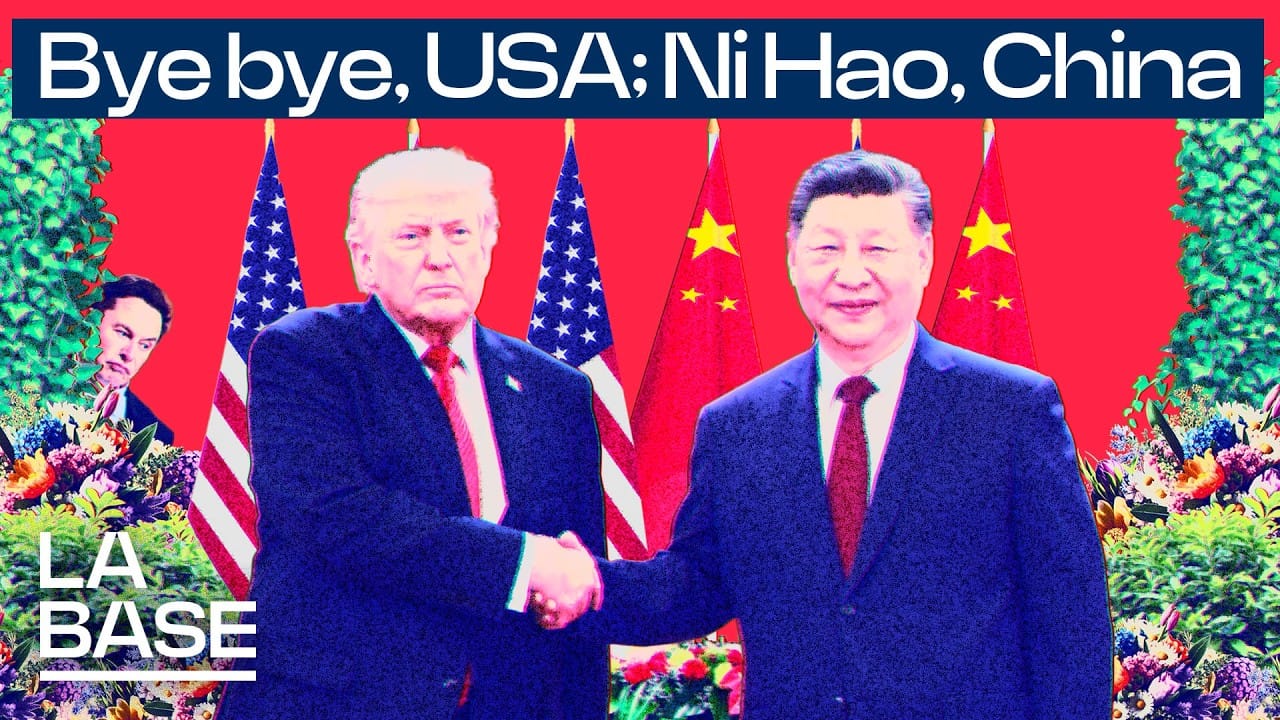
- La visita de Donald Trump a Pekín, acompañado de tecnomagnates, contrasta con… (0:00)
- Estados Unidos se muestra como un sujeto disruptor que genera caos, mientras… (0:49)
- Medios europeos muestran confusión y desazón ante la administración Trump y el… (1:29)
- Estados Unidos es percibido como una potencia desestabilizadora, mientras China… (2:30)
- Las dinámicas globales apuntan a la hegemonía china y al multipolarismo, con… (3:16)
- La visita de Trump a China busca ganar tiempo y corregir tendencias a corto… (3:59)
- La reciente visita diplomática de Donald Trump a Pekín, aunque descafeinada en… (5:41)
- La visita de Trump a China, con la presencia de su plana mayor y una delegación… (6:15)
- La estrategia de Estados Unidos hacia China, iniciada por Obama con el "pivot… (9:53)
- Biden, aunque más diplomático, no revirtió las medidas hostiles de Trump, lo… (11:07)
- A pesar de la retórica hostil, la diplomacia exige un banquete de lujo para… (13:12)
- La doctrina de política exterior de China se basa en la estabilidad… (14:48)
- Los acuerdos de la cumbre, como los de soja e inteligencia artificial, son… (15:20)
- Donald Trump es preguntado si defendería a Taiwán en caso de conflicto, a lo… (17:45)
- El análisis mediático superficial atribuye los acontecimientos mundiales a la… (18:18)
- El corazón político de China como "amurallado y hermético", contrastando con la… (20:06)
- David Alandete en ABC certifica que Trump solo consiguió "promesas vacías"… (21:31)
- Diarios que antes ignoraban el imperialismo estadounidense ahora critican el… (25:00)
- La prensa occidental, especialmente "El País" y "La Vanguardia", acusa a China… (28:05)
- El "luminoso y democrático" mundo dominado por Estados Unidos está dando paso a… (29:05)
- La primera etapa de la política exterior de Estados Unidos hacia China,… (35:01)
Summarised from La Base · 44:38. All credit belongs to the original creators. Streamed.News summarises publicly available video content.