🌐 Also available in: 🇪🇸 Español
Original source: Nate Hagens
This video from Nate Hagens covered a lot of ground. Streamed.News selected 8 key moments and summarises them here. Everything below links directly to the timestamp in the original video.
Have you ever considered what chemicals might be hiding in your everyday products? This study shows how small, personalized changes can make a big difference to your body's chemical load.
Personalized Interventions Dramatically Reduce Exposure to Endocrine-Disrupting Chemicals
A recent intervention study successfully lowered participants' exposure to bisphenols, phthalates, and parabens, as evidenced by a dramatic decrease in urinary metabolite levels. The approach involved tailoring product substitutions to individual exposure profiles, often recommending plastic-free alternatives for common household items like food storage containers and personal care products.
This personalized strategy highlights the efficacy of targeted environmental interventions in mitigating chemical exposure. The findings suggest that a conscious shift towards less toxic products, guided by individual use patterns, can significantly reduce the body's chemical burden, offering a pathway for broader public health improvements in a pervasive environment of synthetic compounds.
"The product substitutions were not uniform… they were based on interviews… we wanted to give people a kind of roadmap to reducing their own exposure."
Three-Month Intervention Boosts Sperm Count by Reducing Chemical Exposure
A three-month intervention period, specifically chosen to align with the 70-day cycle of human sperm production, effectively reduced contamination levels of phthalate, paraben, and bisphenol metabolites in participants. The protocol involved regular collection of urine and semen samples, which subsequently revealed an increase in sperm count alongside the measured decrease in chemical toxins.
This direct correlation between reduced chemical exposure and improved sperm health provides compelling evidence of the profound impact of endocrine-disrupting chemicals on human reproductive biology. The study underscores how targeted environmental changes, rather than complex medical interventions, can yield significant positive shifts in a key biophysical marker of fertility, challenging the notion of fixed reproductive decline.
"Those [metabolites] did go down over time… well, improving contamination level… reduced toxins and increased sperm count."
Sperm Counts Enter Fertile Range After Three Months of Chemical Reduction
Men participating in a recent intervention study saw their sperm counts increase and move into the fertile range within just three months of removing certain household products. While acknowledging that other unmeasured lifestyle changes might have also contributed, the direct intervention of product substitution was the primary action, suggesting a potent link between environmental chemical exposure and reproductive health.
This rapid improvement in a critical marker of male fertility underscores the acute and reversible impact of environmental toxins on biological systems. The findings carry significant implications for public health, suggesting that even seemingly minor adjustments to daily chemical exposure can dramatically alter fundamental biophysical processes, shifting the discourse from inevitable decline to actionable agency.
"In three months, their sperm count turned around and went up just… that's all we did."
Experts Call for Stricter Chemical Regulations, Citing EU Precedent
Experts advocate for robust regulations and policies to curb plastic and chemical pollution, highlighting the European Union's comparatively stricter chemical bans than those in the United States. A critical focus must be placed on pre-market safety testing for chemicals, particularly widely used substances like BPA and phthalates, before they are commercialized and integrated into everyday products.
The current regulatory asymmetry permits a vast array of untested or insufficiently scrutinized chemicals to permeate consumer goods, contributing to widespread public exposure. Instituting a precautionary principle that mandates comprehensive safety assessment prior to market entry is not merely a policy preference but a biophysical necessity, essential for mitigating the systemic health impacts of our industrial metabolism.
"In the EU, there are many more chemicals that are outlawed… the ideal, for me, is before product is put into use."
Medical Education Lacks Chemical Toxicity Training, Hindering Patient Care
There is a significant concern that medical professionals lack adequate training in chemical toxicity, impairing their ability to counsel patients on environmental chemical exposures. This educational gap is particularly problematic given the critical, yet often overlooked, role of the endocrine system as the body's primary signaling network, which is highly vulnerable to disruption by hormone-mimicking chemicals.
The disconnect between pervasive chemical exposure and medical understanding represents a systemic failure in addressing modern health challenges. Without integrating environmental health into medical curricula, physicians remain ill-equipped to diagnose and advise on conditions stemming from chemical interference, allowing a critical pathway of human health degradation to persist largely unaddressed.
"Physicians don't know this… they are not trained on chemical toxicity… the endocrine system is the one that will very fast start to wake up to."
New 'Plastic Free Babies' Campaign Targets Systemic Change Through Parental Concern
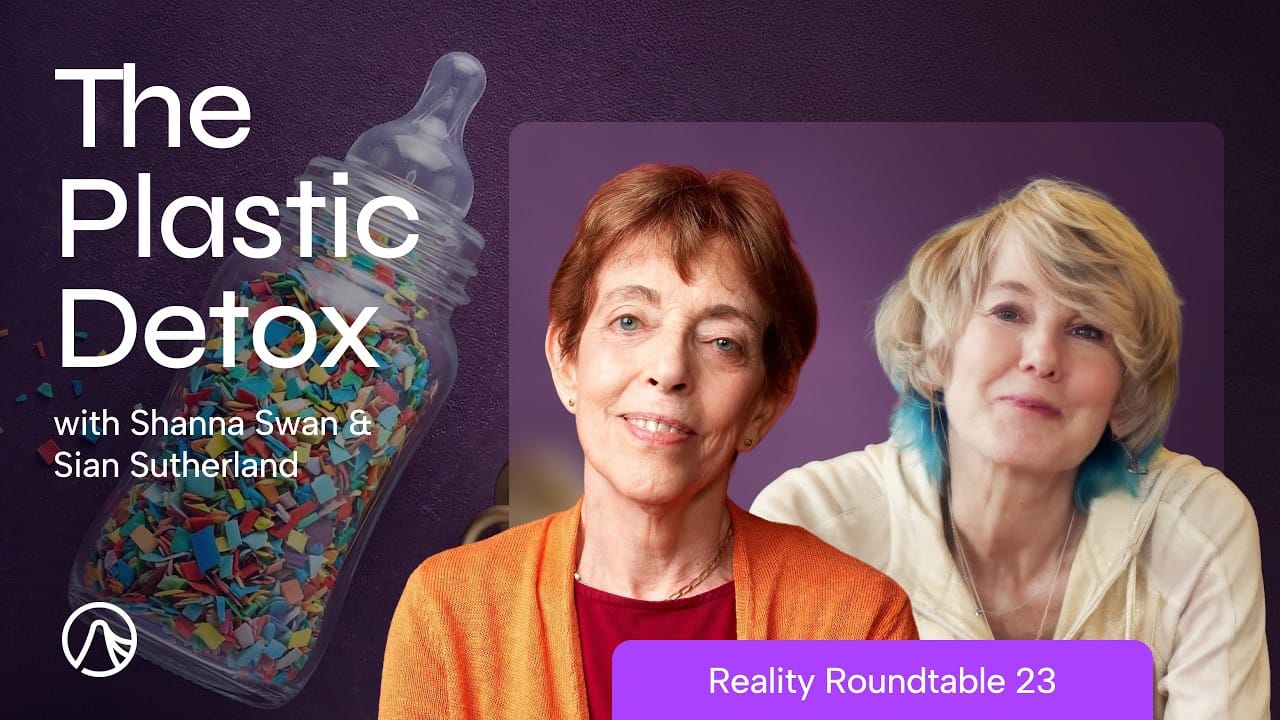
Amidst a decade of limited progress in plastic reduction, the new 'Plastic Free Babies' campaign seeks to harness deep parental concern to drive systemic change. The initiative focuses on minimizing babies' exposure to plastics and associated chemicals during the critical first 1,000 days of life, beginning with the highly symbolic plastic baby bottle.
This emotionally resonant campaign aims to shift the burden of responsibility from individual parents to industry and government, advocating for policy changes that ensure safer alternatives are widely available. By prioritizing the vulnerable developmental window from conception through early toddlerhood, the campaign aims to serve as a gateway to broader awareness, influencing consumer choices and regulatory action across a wider array of plastic products.
"We do care about our kids and we do care about their super important 1000 days of life… This is not a campaign that is about laying more guilt on new parents. This is about laying it firmly on the shoulders of industry and government."
Chemical Exposure in Early Pregnancy Linked to Genital Malformation and Shorter Lifespans
The health impacts of chemical exposure begin at conception, with the first three months of pregnancy identified as the most vulnerable period. Early exposure to phthalates during this crucial window can distort male genital development, a phenomenon directly correlated with shorter lifespans. These developmental distortions signal a broader systemic disruption that extends beyond reproductive health to overall physiological integrity.
This connection highlights that human biological outcomes, including life expectancy, are profoundly shaped by early-life environmental conditions. The pervasive nature of endocrine-disrupting chemicals means that the biophysical trajectory of an individual can be compromised before birth, establishing a fundamental challenge to population health and calling for a radical re-evaluation of chemical safety standards and environmental stewardship.
"The most vulnerable period in a person's life is the first three months of pregnancy… we saw that when there were more phthalates, there was a smaller penis and more testicular descent."
Plastics Crisis Inseparable from Climate Change, Rooted in Fossil Fuels
Plastics are fundamentally byproducts of fossil fuels, rendering the plastics crisis intrinsically linked to climate change. The interconnected problems of biodiversity loss, global heating, and toxic chemical contamination form a 'three-headed hydra' rooted in the extraction and consumption of oil, implying that these systemic challenges cannot be effectively addressed in isolation.
This perspective reframes the environmental crisis not as a series of disparate issues, but as a multifaceted expression of the human superorganism's energy throughput, overwhelmingly dependent on fossil resources. Any attempt to mitigate plastic pollution without confronting its petrochemical origins or its embeddedness within broader energy and material flows risks merely shifting the problem, rather than addressing the underlying biophysical constraints on human enterprise.
"Plastics are made of fossil fuel byproducts… you cannot separate this problem from climate change… it's like a massive systems story."
▶ Watch this segment — 1:06:31
Also mentioned in this video
- The plastic crisis serves as a gateway to the polycrisis, impacting… (0:00)
- Of hormonal health, indicating a continued decline in testosterone and sperm… (4:23)
- Shauna Swan identifies the primary sources of endocrine-disrupting chemical… (7:01)
- Declining fertility rates are a concern, highlighting the inversion of the… (8:04)
- The inclusion criteria for couples in 'The Plastic Detox' documentary, focusing… (10:07)
- Many women in the study were surprised to learn that fragrances contributed to… (15:25)
- Nate Hagens asks if anyone has ever created a pyramid ranking… (16:22)
- Shauna Swan clarifies that while sperm is created every 70 days, both male and… (20:09)
- The significance of 40 million sperm per milliliter as a minimum viable… (22:22)
- Less is known about female infertility due to the difficulty of accessing and… (26:23)
- Beyond fertility, couples in the intervention reported improved sleep, reduced… (27:51)
- Nate Hagens presses Shauna Swan for the number of successful pregnancies, but… (29:13)
- Shauna Swan agrees that a similar interventional approach could be used for… (29:56)
- Her experience working on the documentary as extremely satisfying, particularly… (31:31)
- The scientific community has not yet reacted to the documentary, but her team… (33:15)
- Other couples following a similar intervention would likely experience… (35:16)
- Shauna Swan asserts that individuals can significantly reduce their chemical… (43:04)
- The issue with modern chemistry, where new chemicals are rapidly created and… (44:57)
- A Plastic Planet's strategy of using a "cattle prod and lightning rod" approach… (49:31)
- Nate Hagens suggests that the issue of endocrine-disrupting chemicals is… (1:02:27)
- The immense opposition from the fossil fuel industry to reducing plastic use,… (1:06:01)
- Shauna Swan expresses hope in the collective ability of individuals to reduce… (1:09:05)
- The plastic crisis is a gateway to the polycrisis, impacting overconsumption,… (1:13:00)
- Shauna Swan reflects on the challenging yet rewarding experience of working on… (1:13:50)
- Nate Hagens thanks Shauna Swan and Sian Sutherland for their dedication and… (1:16:17)
Summarised from Nate Hagens · 1:18:33. All credit belongs to the original creators. Streamed.News summarises publicly available video content.