Original source: Eze Martínez
This video from Eze Martínez covered a lot of ground. Streamed.News selected 7 key moments and summarises them here. Everything below links directly to the timestamp in the original video.
A historic event proves sound can be a destructive planetary force, capable of altering geography, climate, and even art.
Krakatoa's 1883 Eruption Produced Loudest Sound in History
Krakatoa's 1883 eruption created the loudest sound ever recorded, reaching 172 decibels 160 kilometers away. The blast ruptured sailors' eardrums 64 kilometers distant and triggered tsunamis with waves over 40 meters, killing 36,000 people. Its global impact was profound. Atmospheric pressure waves circled the planet three and a half times, detected by barographs for five days. The eruption also caused a volcanic winter, darkening skies for months and painting vivid red sunsets that inspired artworks like "The Scream".
"Its explosion was so powerful it ruptured sailors' eardrums 64 km from the volcano. Barographs worldwide detected its sound for 5 consecutive days."
The Physical Limit of Sound: Why 194 Decibels is Air's Theoretical Maximum
A theoretical limit exists for sound intensity in air: 194 decibels. This threshold represents the maximum pressure difference between normal atmospheric pressure (101,000 pascals) and absolute vacuum. Beyond this point, energy becomes so immense the disturbance stops behaving like a sound wave. Exceeding 194 decibels transforms the phenomenon into a shockwave. Instead of just vibrating air molecules, a shockwave physically displaces them, transporting matter. This explains why major explosions, like Krakatoa's, create devastating effects beyond audible sound.
"Beyond that limit, we're no longer talking about sound; we're talking about shockwaves. Sound no longer travels through air, it displaces air molecules."
Sound Perception is a Deception: Human Ear Favors High Frequencies
Human volume perception is subjective and nonlinear; the ear hears high-pitched sounds more intensely than low ones, even at the same decibel level. This trait, likely an evolutionary survival mechanism for detecting distress calls or danger signals, shows our ear isn't an objective sound meter. This physics-perception discrepancy adds to another limitation: the human auditory range. We don't detect frequencies below 20 Hz or above 20 kHz. A sound can physically exist as an ultrasonic frequency but remain completely inaudible to us, highlighting the gap between physical phenomena and sensory experience.
"Humans are designed to hear higher-pitched sounds louder than lower ones, likely for survival."
Negative Decibels Possible: Minnesota Chamber Redefines Silence
The world's quietest place, an anechoic chamber in Minnesota, recorded sound levels as low as -24.9 decibels, proving negative volumes exist. The decibel scale defines zero not as total sound absence, but as the average human hearing threshold. Sounds below this intensity are physically real yet inaudible. These values reveal no theoretical lower limit to silence, unlike sound intensity's upper limit. As technology advances, sound-absorbing chambers will likely break more silence records, asymptotically nearing absolute vacuum.
"Zero decibels is the minimum humans hear. But just because it's inaudible doesn't mean it doesn't exist."
The Loudest Sound Possible: From Compressed Air to Black Holes
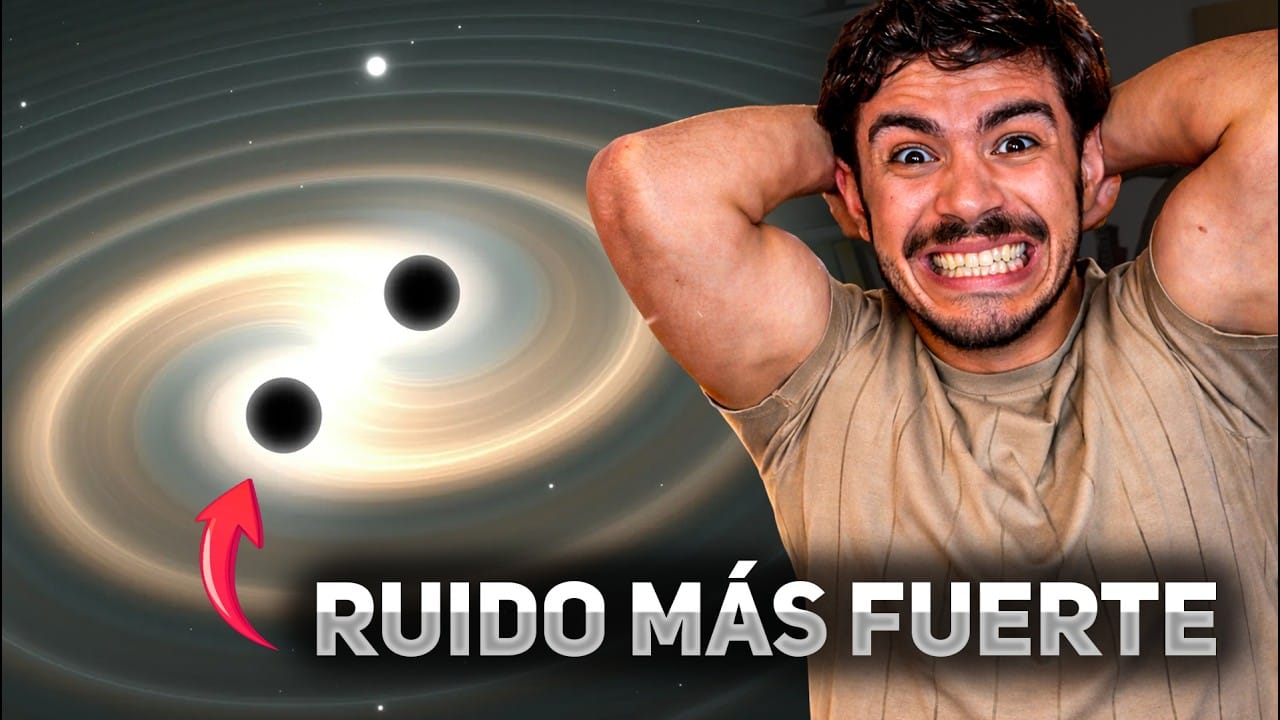
Exploring sound's theoretical limits, an extreme scenario: compressing one cubic meter of air to form a black hole would generate a 2027-decibel pressure wave. Yet, under such conditions, matter becomes plasma, then degenerate matter, unable to transmit conventional sound. A more Earth-relevant calculation envisions compressing the entire atmosphere (5.15 x 10¹⁸ kilograms) into one cubic meter. This would produce a 567-decibel sound, a theoretical maximum for the loudest sound on our planet.
"If we compress all atmospheric air into 1 m³, [...] your ears would register 567 decibels."
Sound is a Brain's Illusion: Pressure Waves Become What We Hear
Sound isn't an intrinsic world property; it's the brain's interpretation of pressure changes in a medium like air. These waves vibrate the eardrum, a motion transmitted through middle ear bones to the cochlea. There, fluid and specialized cells convert vibrations into electrical impulses, which the brain interprets as sound. This explains sound's absence in a space vacuum and why decibel measurement uses a logarithmic scale: a 10-decibel increase means ten times greater intensity. Like colors, the brain's interpretation of electromagnetic waves, sound is a neurological construct of pressure.
"Sound exists because we do. It's like colors: electromagnetic waves our brain interprets. Sound is similar."
Sound Test: Vuvuzela Outperforms Air Horn, Whistle in Noise Levels
A vuvuzela hit 111 decibels in a practical sound intensity test of everyday objects, outranking an air horn and a whistle, both at 106 decibels. Measurements used a sound meter app at a consistent distance for comparable results. The experiment also gauged a personal alarm (91 dB), a ratchet noise maker (88 dB), and a balloon pop (106 dB). Results show the vuvuzela, popular at sports events, generates higher sound pressure than other commonly loud instruments.
"111 decibels. I almost ran out of breath."
Also mentioned in this video
- Host introduces loudest and quietest sounds (0:00)
- Host and father test sensitive machine's sound (3:00)
- Host seeks lowest sound, visiting a library (3:30)
- Host experiments in quietest place: his bathroom (4:43)
Summarised from Eze Martínez · 16:43. All credit belongs to the original creators. Streamed.News summarises publicly available video content.