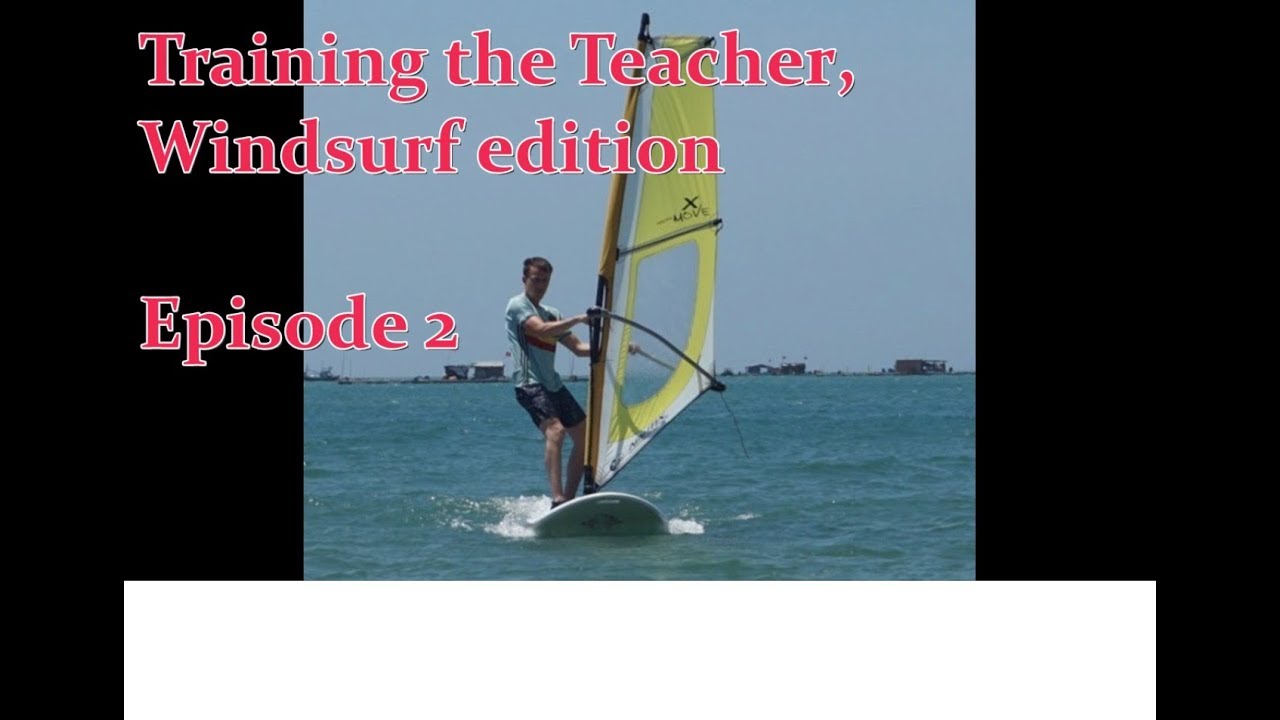
Original source: Matt-0 Teachings
This video from Matt-0 Teachings covered a lot of ground. 3 segments stood out as worth your time. Everything below links directly to the timestamp in the original video.
How teachers forget what it's like not to know something — and why that gap damages learning at every level.
Windsurfing Instructors Divided Over How to Introduce Beginners to the Sail
A debate runs through windsurfing instruction circles over whether new students should first experience the power position or the control position — two fundamentally different ways of holding and managing a sail. The argument touches on two principles that experienced coaches consider non-negotiable: new skills must be introduced in small, digestible steps, and instructors must actively recall what it felt like to be a complete novice, including the involuntary physical tension that shapes every early movement on the board.
Though the context is a niche water sport, the underlying pedagogy applies broadly — expert blind spots routinely undermine beginner instruction across disciplines, from music to coding.
"The instructor needs to know what's going on in the mind of the student, needs to remember what it feels like to be a beginner, and needs to know the body's reactions when they're learning something new."
Windsurfing Coach Claims Control-First Method Makes 70–80% of Beginners Independent Within Three Hours
Starting beginners in the control position — using a smaller sail with less power — allows most students to sail independently within two to three hours, according to one experienced instructor. That means staying upwind, steering deliberately, and recovering when things go wrong, without needing a coach nearby. Students who skip this foundation and learn power-first tend to struggle with basic upwind control even after five to ten hours on the water, requiring instructors to backtrack before progress can resume.
The pattern highlights a recurring problem in skill-based sports: advanced practitioners teaching beginners often optimise for the wrong goal, importing expert habits that actively slow foundational learning.
"I had no idea that you could go upwind that high — I feel so much better about the sail."
Body Tension, Not Wind Strength, Is the Hidden Enemy of First-Time Windsurfers
Even in light winds of five to six knots with a small sail, the vast majority of beginners instinctively pull the back hand too hard because their bodies are tense — stalling the sail and dragging them downwind rather than forward. Experienced windsurfers correct this automatically through a sequence of three or four distinct sub-skills, but they perform it so fluidly they rarely recognise it as multiple steps. The control position, by reducing the power in the sail, gives beginners the margin to learn those sub-skills — managing power, finding the upwind line, and staying self-sufficient — before speed is introduced.
The insight reframes beginner failure as a teaching design problem rather than a student aptitude problem.
"You're making a mistake if you go straight to the power position first."
Summarised from Matt-0 Teachings · 12:24. All credit belongs to the original creators. Streamed.News summarises publicly available video content.