🌐 Also available in: 🇫🇷 Français
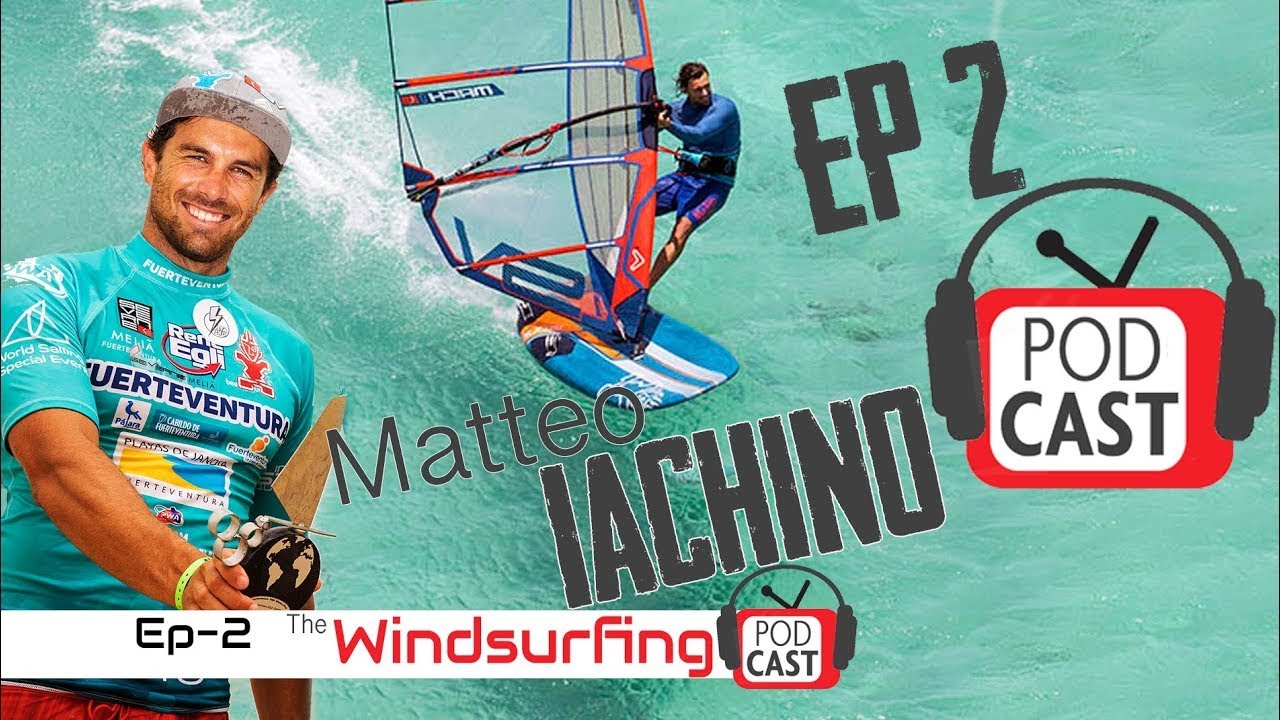
Original source: The WindsurfingTV Podcast
This video from The WindsurfingTV Podcast covered a lot of ground. Streamed.News selected 8 key moments and summarises them here. Everything below links directly to the timestamp in the original video.
When a rival publicly accuses you of cheating, how do you respond? The incident reveals the psychological warfare that plays out behind the scenes of a world title fight.
Matteo Iachino Addresses Pierre Mortefon's 2016 Accusations of Unfair Team Assistance
Matteo Iachino recounted his reaction to public accusations made by rival Pierre Mortefon during the 2016 world title race, in which Mortefon alleged in a French magazine that Iachino was receiving unfair on-course help from teammates. Iachino expressed his anger at the claims, which he deemed completely untrue, noting that the allegations even included a rider, Taty Frans, who was not part of his team.
The implications of this are that such public disputes can undermine a competitor's achievements and poison relationships within the small, tight-knit professional tour. It's about the notion that in a fiercely individual sport, the perception of unsanctioned team collusion is one of the most damaging accusations an athlete can face.
"You work so much to get to that result, and this guy just throws dirt about it. And he knows, actually deep inside, that it's not true."
The Individualistic Nature of Slalom Racing Makes Team Tactics Unfeasible, Argues Iachino
Matteo Iachino asserts that intentional team assistance during a professional slalom race is nearly impossible due to the discipline's sheer speed and technical difficulty. He argues that competitors are inherently individualistic and super-competitive, focused on their own results, contracts, and livelihood, making it unthinkable for a rider to sacrifice their own position to help a teammate.
We're seeing a dynamic where the theoretical concept of team play clashes with the practical reality of elite competition. The analysis serves to debunk a common criticism within the sport, reinforcing that modern slalom racing is a purely individual battle where every position is fiercely contested.
"I cannot imagine doing this, you know, because you are putting your value down, your contracts, your livelihood, your result. I don't care if it's if you're fighting for first or 21st."
Matteo Iachino Describes Mental Hurdles as Key to Winning Windsurfing World Titles
Matteo Iachino identifies immense mental pressure as the primary challenge in professional windsurfing, describing a tiered progression of psychological hurdles an athlete must overcome. He distinguishes between the stress of winning a single final, then an entire event, and finally the pressure of leading the world tour, each requiring a new level of experience and confidence to manage.
It's about the notion that an athlete's mindset can create a tangible, 'unbeatable' state. Iachino explains that once a competitor breaks through these mental barriers and enters a positive trend, their self-belief becomes a powerful, self-fulfilling force on the race course, turning them into a 'machine'.
"When you are on a positive trend, it builds up this thing in your mind that you are unbeatable in that moment... and that makes you unbeatable."
Iachino Defines Aggressive Racing Style: 'Overtake Me Clean'
Matteo Iachino clarifies his philosophy on aggressive racing, stating that his focus is on executing clean, decisive overtakes without making physical contact. He recounts instances where he became angry not at being challenged by competitors, but at rivals making dangerous moves that risked collision, especially when a world title was at stake in New Caledonia.
We're seeing a dynamic where unwritten rules of engagement are paramount among elite athletes. It's about the notion that while aggression is an accepted and necessary part of racing at the highest level, it must be tempered with respect and skill to avoid causing dangerous incidents on the course.
"I don't ask you if you are in front to let me pass. I ask you if you are in the back not to crash me. Just go around me."
▶ Watch this segment — 1:02:01
Matteo Iachino Recounts How Overtraining and Mental Stress Derailed 2015 World Title Bid
Matteo Iachino explained that the pressure of leading the world tour for the first time in 2015 caused him to overtrain excessively in the months before the final event in New Caledonia. This self-imposed physical and mental exhaustion was compounded by a pre-event press conference that heightened his anxiety, ultimately sabotaging his chances at the title.
The implications of this are that even for an elite athlete at the peak of their powers, psychological readiness is paramount. The experience demonstrates how the mental burden of being the favourite can become a destructive force, more detrimental to performance than any physical limitation or equipment issue.
"This actually destroyed me instead of helping me. I got there and I was stressed, I was super tired from the training ahead, I was not mentally ready."
Physical Toll of Mental Stress Led Iachino to Seek Psychological Support After 2015 Season
Following his intense 2015 world title campaign, Matteo Iachino suffered from severe stress that manifested in physical symptoms, including over a month of insomnia and persistent breathing difficulties. After a cardiologist found nothing physically wrong with his heart, he recognised the problem was entirely psychological and began opening up to his coach for support.
We're seeing a dynamic where the mental health of athletes is increasingly acknowledged as a critical component of performance and well-being. Iachino’s experience underscores the importance of addressing the psychological toll of elite competition, which can have tangible and alarming physical consequences if left unchecked.
"I went to a cardiologist because I was waking up with this pressure and I thought I had something bad in the heart. Then I realized it was all in my mind."
Matteo Iachino Analyzes Mix of Factors Behind Multiple Vice-Champion Finishes
Reflecting on his string of second-place world championship finishes since his 2016 title, Matteo Iachino attributes each near-miss to a different combination of factors rather than a single recurring issue. He points to equipment deficits in 2017, crucial on-course mistakes in 2018, and a mix of bad luck and mental stress in 2019, concluding that each season presented a unique challenge.
It's about the notion that anger, often triggered by uncontrollable events, can be the most destructive emotion in a title fight. Iachino explains that a moment of bad luck can introduce negativity that disrupts an athlete's mental balance, leading to further mistakes and ultimately derailing a campaign.
"Anger is probably the worst feeling you can have while you are fighting for something so important for yourself, because then the whole balance gets messed up."
▶ Watch this segment — 1:09:11
Iachino: Public Criticism of Former Sponsors Is Unprofessional and Harms the Sport
Matteo Iachino offered a strong critique of an interview by fellow professional Bernd Roediger, who publicly disparaged his former sponsor, Naish, as 'Corporate America' after being dropped from the team. Iachino argues that professional athletes should not publicly attack the brands that supported their careers, viewing it as an unprofessional act that yields no positive outcome for the individual or the sport.
The implications of this are about the unwritten codes of conduct in professional sports. Iachino suggests the timing of such criticism undermines its credibility, making it appear bitter rather than principled, especially in a small sport where negative publicity can be broadly damaging.
"You are kind of throwing dirt on the people that were actually believing in you and supporting your passions and making your dreams come true."
Summarised from The WindsurfingTV Podcast · 1:26:52. All credit belongs to the original creators. Windsurfing TV Podcast summarises publicly available video content.