🌐 Lee esto en Spanish →
Original source: Sede Universitaria Ciudad de Alicante
This article is an editorial summary and interpretation of that content. The ideas belong to the original authors; the selection and writing are by Streamed.News.
This video from Sede Universitaria Ciudad de Alicante covered a lot of ground. 6 segments stood out as worth your time. Everything below links directly to the timestamp in the original video.
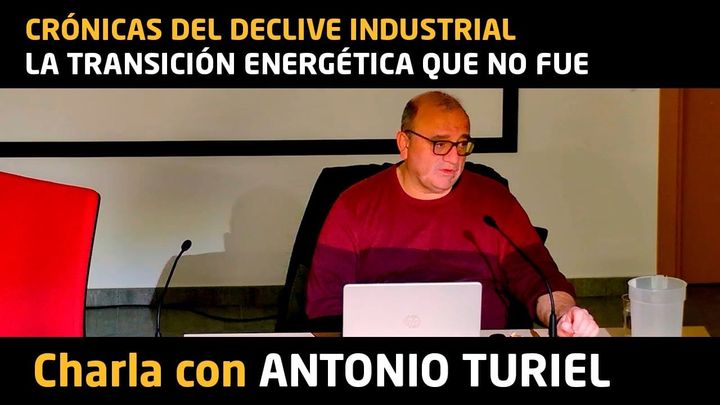
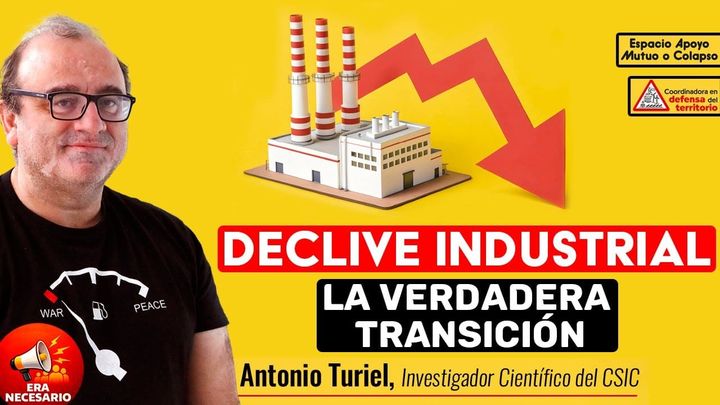
Is a prosperous society possible without constant economic growth? Antonio Turiel proposes a path that challenges the foundations of our system, suggesting that true wealth lies in sufficiency and human dignity.
Turiel: Infinite Growth is the 'Ideology of a Tumor'; Calls for Planned Degrowth
Antonio Turiel criticizes the current economic system as unsustainable, based on the premise of infinite growth on a planet with finite resources. He argues that while efficient renewable technologies exist that can meet the basic needs of the population, these cannot sustain the "ambition and greed of a few" nor the illusion of constant economic growth. According to Turiel, this model leads to an inevitable energy and materials crisis, exacerbating environmental problems such as pollution and climate change. The true solution, according to the physicist, lies in "planned and democratic degrowth" in developed countries, prioritizing human needs and democracy over economic ambition. He points out that the current path, far from enriching, is already impoverishing younger generations, citing high rents and precarious employment as examples. For Turiel, this social and economic shift is the only way to move from mere survival to a dignified life, where housing, jobs, and the possibility of forming a family are guaranteed.
"We have an economic system oriented towards infinite growth on a finite planet. That requires a growing consumption of energy and materials that are not truly available."
Antonio Turiel Warns of the 'Inexorable' Decline of Diesel and Non-Renewable Sources
Antonio Turiel expresses serious concern over the decrease in global diesel production, a vital fuel for key sectors such as transportation, agriculture, and mining. He notes that current production remains 15% below the peak levels recorded between 2015 and 2017. This drop is attributed to conventional crude oil, the most suitable for producing diesel, having peaked in production almost two decades ago, in 2005, and techniques like fracking not compensating for the demand for this essential distillate. The expert emphasizes that this situation is part of a broader decline affecting all non-renewable energy sources. According to data from the Energy Institute, conventional crude oil and uranium already surpassed their production peaks in 2005 and 2016 respectively, while gas and coal are nearing theirs. Turiel warns that while these sources still represent the vast majority of the world's primary energy (approximately 84.5%), they are entering an "inexorable terminal decline," a phenomenon predicted for over 50 years.
"Non-renewable energy sources... are reaching their maximum production process. And from here they begin an inexorable terminal decline."
New Oil and Gas Discoveries to be 12 Times Lower Than Consumption, IEA Reports
The annual discovery of new oil and gas fields has plummeted drastically, warns Antonio Turiel, citing a September report from the International Energy Agency (IEA). Historically, in the 1960s, approximately 90 billion barrels of oil and gas equivalent were discovered annually. However, in the last five years, this figure has fallen to approximately 7 billion barrels, of which only 3 billion are specifically oil, representing merely a twelfth of the annual global consumption, which totals 36 billion barrels. This disparity means that for three consecutive decades, the world has consumed more hydrocarbons than it has discovered, relying on reserves found in the last century. The IEA report reveals that 80% of oil fields and 90% of gas fields have already passed their production peaks. Turiel predicts that, even with investments to maintain existing fields and exploit known ones, global oil and gas production would be halved in the next 25 years, forecasting an unavoidable scarcity and a world already exhaustively explored.
"The world consumes 36 billion barrels each year... 12 times more is consumed than discovered."
Turiel Denounces IEA's 'Accounting Tricks' and Uranium Decline That Rule Out Nuclear Energy
Antonio Turiel accuses the International Energy Agency (IEA) of employing "accounting tricks" to conceal oil scarcity, by including "all petroleum liquids" in its metrics, components such as natural gas liquids (primarily propane and butane), which are gases at room temperature and not liquid fuels. According to the expert, the production of essential liquid fuels like gasoline and diesel peaked in November 2018 and remains 2-3% below those levels, despite U.S. efforts to increase extraction through fracking, a technique with rapid depletion and that does not produce the most versatile type of oil. Beyond oil, Turiel points out that uranium, another non-renewable energy source, experienced its extraction peak in 2016, consistent with geological forecasts, and has begun a rapid decline that would see its production halved in the next 20 years. This reality, coupled with nuclear energy representing a minimal portion (3.9%) of global primary energy and the "exorbitant" extraction costs of remaining reserves (such as those in Canada), rules out, according to Turiel, any viable future for large-scale nuclear energy.
"When something starts to become scarce, what isn't scarce are accounting tricks to disguise that something is scarce."
Spain Promotes Biogas Megaplants Due to European Directive to Supply Germany
Spain is being driven by European Commission directives, such as the Green New Deal and Repower Europe, to build biogas megaplants capable of processing up to 130,000 tons annually, a large-scale model that, according to Antonio Turiel, has not been successfully replicated elsewhere in the world, including Germany, where facilities are smaller and farm-level. This strategy, which has seen projects proliferate across Spain in a short time, desperately seeks to secure cheap energy to maintain the European industrial model, primarily benefiting countries like Germany at the expense of Spanish budgets and energy viability. Turiel criticizes the economic and energetic infeasibility of these large biogas plants, pointing out two main problems: the high energy costs associated with transporting enormous quantities of waste by truck, and the complex and often dangerous management of such waste, which can include everything from animal manure to carcasses, antibiotics, and heavy metals, compromising their performance. The expert suggests that, instead of a sustainable solution, this initiative represents a transfer of energy from the periphery to the center of Europe, in an attempt to alleviate the continent's energy scarcity.
"There is a desperation to obtain cheap energy to keep the European industrial model running, and this is the way to do it."
Antonio Turiel Warns That Energy Decline Is Already Causing Material and Medicine Shortages
Global energy decline is already manifesting in material and medicine shortages, according to Antonio Turiel. He explains that the reduction in diesel production, which remains between 10% and 15% below its 2015 peaks, is directly impacting supply chains. This translates into difficulties in obtaining certain medicines in pharmacies, stockouts in other countries, and problems in the production of fertilizers and other essential goods, demonstrating that the effects of the energy crisis are a present reality. Although Spain temporarily benefits from the "protection of the euro," Turiel warns that this coverage is fragile and could give way to the magnitude of the energy "storm." He emphasizes that society cannot choose to avoid this situation, but rather must decide how to adapt to it democratically and in a planned manner. The expert dismisses solutions such as deeper drilling of oil fields, explaining that, even if they exist, their low energy return on investment (EROI) makes them unviable, as the cost of extraction would exceed the benefit, leading to an inevitable loss of resources and money, unless financed through fiscal transfers.
"We cannot decide that we don't want to be in the storm. That's not within what you can decide."
Also mentioned in this video
- Antonio Turiel agradece la invitación y se propone ofrecer una perspectiva… (2:46)
- Antonio Turiel explica que la charla se centrará en la cuestión industrial,… (3:38)
- Antonio Turiel reitera que las fuentes de energía no renovables representan la… (24:07)
- Antonio Turiel explica que el coche eléctrico y el hidrógeno verde no son… (32:05)
- Antonio Turiel expone que la industria está virando hacia la biomasa y el… (34:44)
- Una persona del público plantea la dificultad de incentivar a las empresas en… (49:24)
- Antonio Turiel aclara que el decrecimiento se refiere a la esfera material, no… (52:08)
- La persona del público pregunta si se pueden buscar soluciones como excavar más… (1:02:11)
- Antonio Turiel explica que los yacimientos profundos no son rentables… (1:02:35)
- Antonio Turiel define las zonas de sacrificio como territorios destinados a la… (1:03:15)
- Antonio Turiel explica que el futuro requerirá que la gente se traslade fuera… (1:04:20)
- Antonio Turiel explica que la producción de biogás a partir de lodos de… (1:06:03)
- Antonio Turiel comenta que existe una extensa literatura científica sobre los… (1:08:19)
- Un oyente interviene para aclarar su concepto de agricultura de proximidad y… (1:10:35)
- Antonio Turiel responde que el problema con los lodos de depuradora en plantas… (1:13:01)
- Antonio Turiel aclara que la inteligencia artificial no está causando problemas… (1:15:23)
- Antonio Turiel responde a la pregunta de si los jóvenes pueden hacer algo ante… (1:17:42)
Summarised from Sede Universitaria Ciudad de Alicante · 1:20:45. All credit belongs to the original creators. Streamed.News summarises publicly available video content.
Streamed.News
This publication is generated automatically from YouTube.
Convert your full video library into a digital newspaper.
Get this for your newsroom →