🌐 Lee esto en Spanish →
Original source: Alborán TV
This article is an editorial summary and interpretation of that content. The ideas belong to the original authors; the selection and writing are by Streamed.News.
This video from Alborán TV covered a lot of ground. 6 segments stood out as worth your time. Everything below links directly to the timestamp in the original video.
Is our relentless pursuit of growth a societal disease? Discover why an expert compares our economy to an addiction and how a cultural "detox" could improve our quality of life.
Antonio Turiel: Society Suffers From 'Toxic Addiction' to Growth, Comparable to Alcoholism
Antonio Turiel asserts that modern society is trapped in an "addiction to growth" comparable to alcoholism, where the first step to recovery is recognizing the problem. He explains that, although current culture is deeply rooted in this ideology, it is possible to drastically reduce the consumption of resources like oil and food without compromising quality of life. He points out that 40% of global oil is used to transport fuels and 30% of food is discarded before consumption, indicating enormous room for efficiency.
For Turiel, the solution does not lie in miraculous technological advances, but in an urgent cultural shift away from the "toxic ideology of growthism." He insists that numerous practical solutions exist to optimize resource use, such as limiting private transportation or eliminating unnecessary goods transport. The real barrier is the lack of willingness to detoxify from a mindset that has been ingrained since childhood.
"What is killing us is growthism; that's what we won't abandon, and it's dragging us into the pit. Put down the bottle, kid, it's killing you."
Experts: Degrowth Is Inherently Anti-Capitalist and Demands Radical Redistribution
Antonio Turiel and Juan Bordera argue that the concept of degrowth is intrinsically anti-capitalist and requires a profound redistribution of wealth and resources. They emphasize that this stance has been recognized even by the Intergovernmental Panel on Climate Change (IPCC), whose reports mention the unsustainability of capitalism and cite degrowth and ecosocialist theorists. For them, degrowth without radical democratization and equitable distribution of resources would degenerate into "ecofascism," benefiting only a privileged few.
They propose a model of "horizontal degrowth" that seeks to broaden the social base, guaranteeing basic necessities for the population and reducing working hours. This would allow people to free themselves from "meaningless jobs" and dedicate more time to other activities, while reducing pressure on resources. They also advocate for measures against planned obsolescence to reduce consumption, demonstrating that this approach can improve quality of life and be faster and fairer than the current model.
"Degrowth is radically anti-capitalist by definition; almost all theorists who advocate for this idea are anti-capitalists."
▶ Watch this segment — 1:09:14
Juan Bordera Proposes Civil Disobedience and Citizen Assemblies as Keys to Degrowth
Juan Bordera suggests concrete solutions to drive the transition towards degrowth, starting with supporting outreach and combating media manipulation that demonizes the concept. He proposes using civil disobedience to highlight the seriousness of the situation, citing protesting scientists as an example. He also emphasizes the need for radical democratization through citizen assemblies, noting that these can be faster and fairer than traditional political processes.
Bordera cites the example of a state climate assembly in Spain which, with the participation of one hundred randomly selected citizens advised by experts, recommended 172 measures to the government, including the pedagogy of degrowth. He concludes with a hopeful message from the poet Benedetti, urging people to seize the current "autumn" as a period of reflection and action so that life can flourish after the inevitable "winter," recognizing that it is not the end of the world, but the end of a world.
"Radical democratization is also faster, in addition to being fairer; it's much quicker when it comes to making decisions, and much more effective for the situation we face."
Juan Bordera: Media Attacks on Degrowth Are a Sign of Progress and Awareness
Juan Bordera interprets the current media attacks on the concept of "degrowth" as a positive indicator of its growing visibility and advance in public consciousness, quoting the phrase "first they ignore you, then they ridicule you, then they attack you, and then you win." He insists on the importance of distinguishing degrowth from mere scarcity and advocates for the creation of citizen assemblies to discuss energy, food sovereignty, and economic inequality, arguing that collective intelligence is crucial to addressing these complex challenges.
Bordera compares the fight for degrowth to historical movements such as women's suffrage and African American civil rights, noting that these achieved rapid cultural and political changes through collective organization and disobedience. He highlights that active participation of citizens and experts in these assemblies can generate more resilient and just transition plans, accelerating the necessary transformation for a sustainable future.
"First they ignore you, then they ridicule you, then they attack you, and then you win. That is to say, we are now in the phase where they are attacking us because degrowth is becoming increasingly evident."
▶ Watch this segment — 1:22:26
Antonio Turiel Warns of Thousands of Deaths from Hunger and Cold in Europe This Winter
Antonio Turiel issues a somber warning about the immediate consequences of the current civilization model, predicting that thousands of people in Europe will die from hunger and cold this winter. He describes the situation as an "autumn of civilization" leading to a "very specific destiny" and stresses that Spain, although in a relatively better position due to its current supplies, will not be exempt from the indirect repercussions of the crisis on its neighbors.
Given this outlook, Turiel insists on the urgency of deep reflection and a democratic social debate on degrowth and the type of social model that must be built. He argues that if society does not take the reins of its own future and define it collectively, others will, resulting in "fall and destruction" instead of allowing life to "flourish" after this critical period.
"Thousands of people will die in Europe from hunger and cold. This is what will happen this winter."
Juan Bordera Warns Energy Transition is Driven by Lobbies, Threatens 'New Energy Colonies'
Juan Bordera emphasizes that the planet has reached its limits, implying that the future will be a different society, although potentially better if managed collectively. He criticizes how the energy transition is currently being piloted by large corporations and lobbies, citing examples of Germany seeking green hydrogen in Africa and the Iberian Peninsula risking becoming a "new energy colony" for northern Europe, exporting its renewable potential.
Bordera poses a crucial dilemma: either civil society takes control of this transition, or it will be managed by corporate interests that prioritize short-term economic gain, creating "sacrifice zones." He stresses the need for a democratized and territorial approach to ensure that the energy transition serves the interests of the population and the environment, instead of perpetuating models of exploitation.
"The energy transition presents us with a dilemma: either it is led by civil society, or it becomes an escape, because we will be leaving it to those who will manage it no other way than by seeking short-term economic gain."
Also mentioned in this video
- A Antonio Valero y el concepto de vivir en un mundo finito con deseos… (0:13)
- La presentadora argumenta que la crisis climática es una manifestación de un… (1:13)
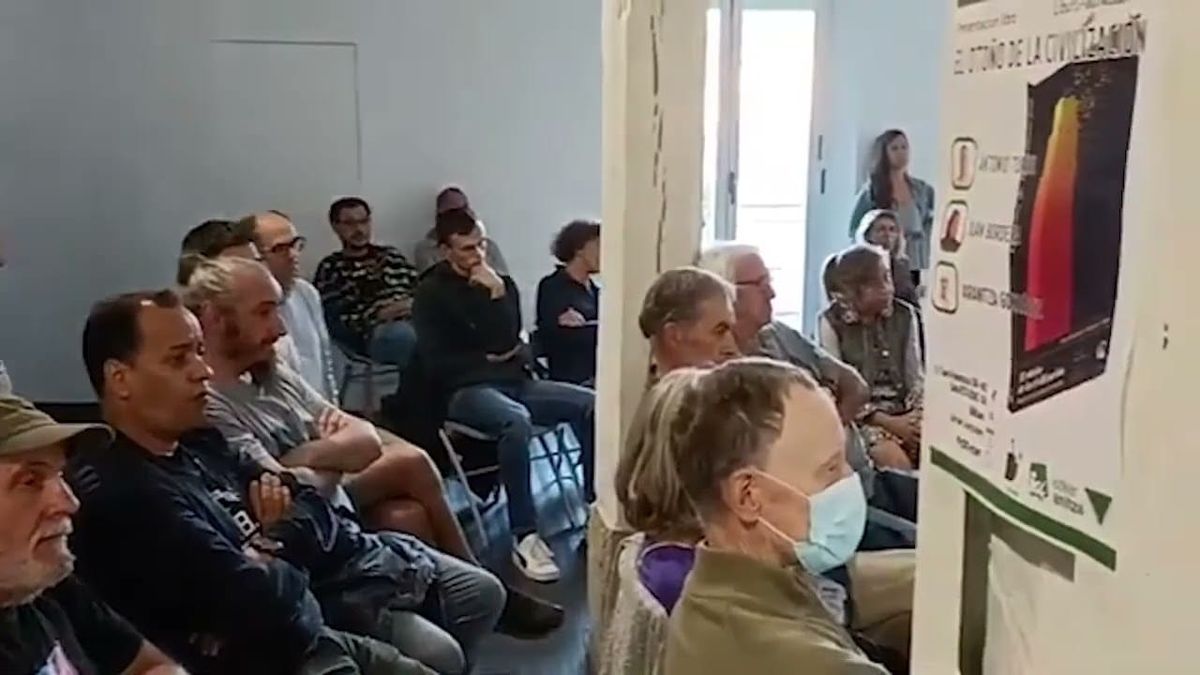
- La presentadora menciona el libro "El otoño de la civilización" de Juan Morrera… (2:26)
- Antonio Turiel agradece la invitación y explica que su libro "El otoño de la… (5:17)
- La estructura de su libro, señalando que la primera parte aborda el cambio… (8:29)
- Antonio Turiel critica el consumo excesivo de recursos, comparando el consumo… (9:47)
- Antonio Turiel explica cómo el sistema capitalista, al no poder satisfacer sus… (11:10)
- Antonio Turiel analiza los detalles de la crisis, señalando que los cuellos de… (13:17)
- Juan Bordera inicia su presentación sobre el contexto climático mostrando un… (17:33)
- Juan Bordera explica la interconexión de los sistemas climáticos de la Tierra,… (18:51)
- Juan Bordera denuncia la inacción climática, revelando la fuerte presencia de… (21:19)
- Juan Bordera señala que el sistema energético actual, basado en fuentes no… (24:36)
- Juan Bordera destaca la importancia de la gráfica que muestra el costo… (25:29)
- Juan Bordera analiza la paradoja de que, aunque las energías renovables se han… (26:56)
- Juan Bordera advierte sobre los límites de los materiales minerales necesarios… (28:08)
- Juan Bordera reitera que los límites del crecimiento se conocen desde hace 50… (32:52)
- Juan Bordera reflexiona sobre la necesidad de decrecer para evitar un futuro de… (34:18)
- Un asistente agradece la conferencia y expresa su preocupación por la gravedad… (43:32)
- Juan Bordera subraya que cada vez más figuras influyentes hablan de… (56:29)
- Un asistente agradece la charla y destaca la importancia de las propuestas, la… (59:51)
- Antonio Turiel recalca la importancia de vertebrar la comunidad para enfrentar… (1:02:19)
- Una asistente elogia la charla pero sugiere que el decrecimiento solo no es… (1:08:24)
- Un asistente, que trabaja en informática, pregunta qué tecnologías o sectores… (1:14:45)
- Antonio Turiel responde que la informática puede mantener ciertas capacidades… (1:16:16)
- Una asistente pregunta cómo se interrelacionan los estereotipos de género con… (1:27:05)
- Antonio Turiel reconoce la importancia de los roles de género en los problemas… (1:28:44)
- Un asistente pregunta a Antonio Turiel por qué participa en medios de… (1:34:15)
- Antonio Turiel explica que los medios lo llaman por su fundamentación técnica e… (1:35:06)
- La presentadora concluye la sesión, destacando que el objetivo del libro era… (1:39:36)
Summarised from Alborán TV · 1:41:28. All credit belongs to the original creators. Streamed.News summarises publicly available video content.
Streamed.News
This publication is generated automatically from YouTube.
Convert your full video library into a digital newspaper.
Get this for your newsroom →