🌐 Also available in: 🇪🇸 Español
Original source: DECODE con DaniNovarama
This video from DECODE con DaniNovarama covered a lot of ground. Streamed.News selected 8 key moments and summarises them here. Everything below links directly to the timestamp in the original video.
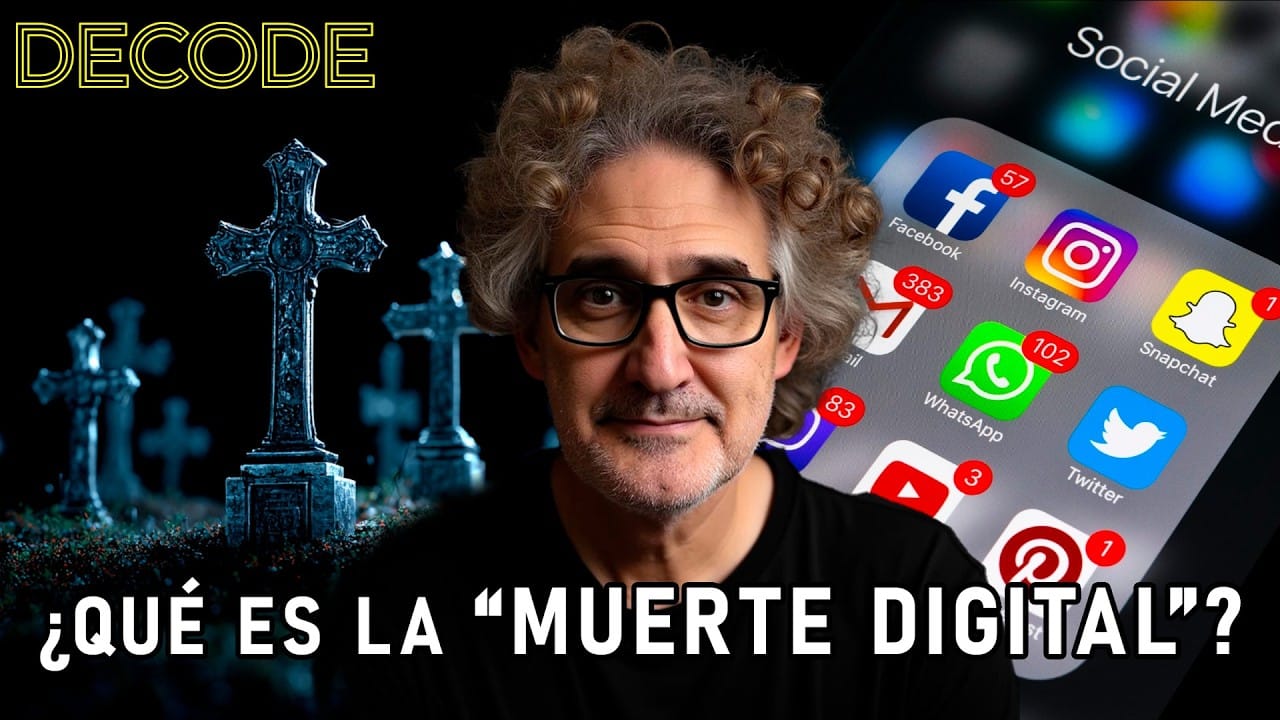
Your digital life can persist uncontrolled after you die. Organizing your digital legacy protects your assets and privacy — and spares your loved ones serious headaches.
The 3K Protocol: a guide to managing your digital legacy after death
Managing a digital footprint after death is complex. The 3K protocol offers a structured solution. The first 'K' covers 'keys' — clear instructions for accessing devices like smartphones and primary email accounts, ideally using numeric codes rather than biometric identifiers. It also means storing backup codes for two-factor authentication, a critical step to avoid security lockouts.
The second 'K' is the 'map' — a full inventory of every digital presence: bank and investment accounts, cryptocurrency wallets, email addresses, social media profiles, messaging apps, and subscriptions. This organization prevents asset loss and simplifies cancellations, turning a potentially chaotic process into a manageable task for loved ones.
"Think of your phone as the physical key to your digital world, and your email as the recovery key — it's essentially the backup plan."
'Digital immortality' poses serious emotional and financial risks
Digital immortality technology is advancing fast, offering chatbots that simulate conversations with the deceased and photorealistic avatars. Marketed as grief-relief tools, these products monetize emotional attachment through mechanisms like monthly subscriptions — turning bonds with lost loved ones into consumer products.
Emotional manipulation and financial risk are built into these technologies. Sustaining a fictional relationship with a digital copy can block healthy grieving and trap users in cycles of anxiety. At its core, the problem is the commercialization of pain and vulnerability, transforming death into a business opportunity at the expense of emotional well-being.
"Be careful — what seemed like science fiction five years ago can now be a genuine reality, where someone, in a fairly perverse way, builds digital versions of your loved ones for you to interact with and then monetizes that experience."
Digital legacy extends to confidential emails and financial assets
Managing a digital legacy must include confidential emails — particularly in professional settings, where designating a recipient ensures continuity and information traceability. Beyond correspondence, financial data represents the fifth and most sensitive digital layer, covering everything from recurring subscriptions to stock investments and cryptocurrency holdings.
Without proper documentation, significant assets can be lost permanently. Bills and payment obligations don't stop when someone dies. Undisclosed foreign bank accounts or crypto wallets — accessible only via a private key — can become unrecoverable, exposing a critical gap in modern estate planning.
"Once we die, the money keeps moving. If you haven't notified anyone of the death, those subscriptions don't stop — Netflix will keep charging."
Digital 'commands': clear instructions for post-mortem account management
The third component of the 3K protocol is 'commands' — explicit instructions for handling each digital asset after the owner's death. These can range from deleting a Twitter account or forwarding emails to a colleague, to preserving photos or converting a YouTube channel into a memorial. Clear directives prevent anxiety and conflict among heirs, who would otherwise face complex decisions alone.
Experts recommend storing this digital will in writing, ideally alongside the physical will, to ensure it can be found and carried out. Drafting one takes just a few hours and guarantees that a person's online footprint is managed — or erased — exactly as they wished.
"The idea is to leave clear instructions, because people will ultimately respect your wishes. If you don't state what those wishes are, you're forcing the people left behind to decide for themselves."
The digital age forces us to 'die twice': physically and online
In the 21st century, people face a double death — physical and digital. The sheer scale of personal data we generate demands clear rules for our digital legacy. Without them, platforms and algorithms take control, exposing us to scams, voice cloning, and uses we never intended. Inaction hands our post-mortem identity to commercial interests.
Absent those directives, our data can train AI systems, sustaining a digital presence that may disturb or harm those we leave behind. Physical death is unavoidable; digital chaos is not. Organizing this aspect of our lives is both a practical duty and an act of care for the people who survive us.
"If you don't set the rules, others will — and those others will be platforms, algorithms, and ultimately strangers whose only goal is profit. They will use your data however suits them best."
'Digital death' outlasts physical death — and the risks are real
Physical death has always been a definitive ending. Digital death is not. A person's identity and data persist indefinitely on social networks, bank portals, and other platforms, none of which are built to detect that a user has died. The result is a profile that keeps running — receiving notifications, accumulating connections, and remaining vulnerable to hacking and fraud.
While the body is gone, the digital self stays active, turning the deceased into a kind of 'digital ghost.' This reality makes it urgent to establish mechanisms for managing our online footprint — so that the end of a physical life can also mean a controlled, deliberate closure in the digital world.
"Death is a human category, a human experience — but all platforms see is a user and their connections."
Private chats and cloud files: the digital inheritance dilemma
The second layer of digital legacy covers private conversations — messaging chats and the like. The third is the vital archive: photos and videos stored in the cloud. Both raise complex ethical questions about whether family members have the right to access a deceased person's private life. There is real tension between family memory and respect for individual privacy after death.
The concern extends to how platforms use this data. Photos and videos can be used to train AI systems without the explicit consent of the owner or their heirs — opening the door to reconstructed images and voices of the dead, with serious ethical and emotional consequences.
"We should have the right to plan what happens to that data — data that is private, that is confidential."
The digital will: managing your legacy goes far beyond passwords
The growing digital footprint of modern individuals demands a digital will — a practical protocol for organizing what we leave behind. This is no mere list of passwords, which change or require two-factor authentication. It is a survival manual for loved ones who must navigate the aftermath of a death, preventing it from becoming an impossible mission.
The core need is a clear system guiding heirs on where assets are held, which services to cancel, how to recover information, and how to handle privacy. A digital will can be drafted in an afternoon. Like its physical counterpart, it aims to bring order to a deceased person's digital world through straightforward, actionable instructions.
"This digital will I'm about to propose isn't for you — you're gone, you've died. It's for those who remain, so they can handle the situation as well as possible."
Also mentioned in this video
- Introduction to digital death, a modern phenomenon (0:00)
- Digital platforms lack a standard way to handle user accounts after death (6:08)
- Initiatives like Apple's Digital Legacy and memory services are mentioned (8:51)
- A digital life map divided into layers is presented (12:50)
- Digital immortality and the risk of leaving no legacy are addressed (32:00)
- The fourth danger layer: involuntary deepfakes using personal data (39:09)
Summarised from DECODE con DaniNovarama · 45:37. All credit belongs to the original creators. Streamed.News summarises publicly available video content.