🌐 Lee esto en Spanish →
Original source: ARBA
This article is an editorial summary and interpretation of that content. The ideas belong to the original authors; the selection and writing are by Streamed.News.
This video from ARBA covered a lot of ground. 6 segments stood out as worth your time. Everything below links directly to the timestamp in the original video.
What would a society look like that prioritizes quality of life over unlimited growth, and addresses the energy crisis through simplicity and local autonomy? This approach challenges conventional ideas about prosperity and the future.
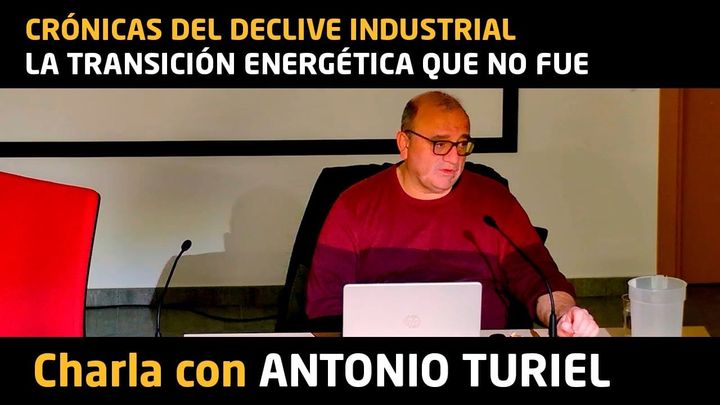
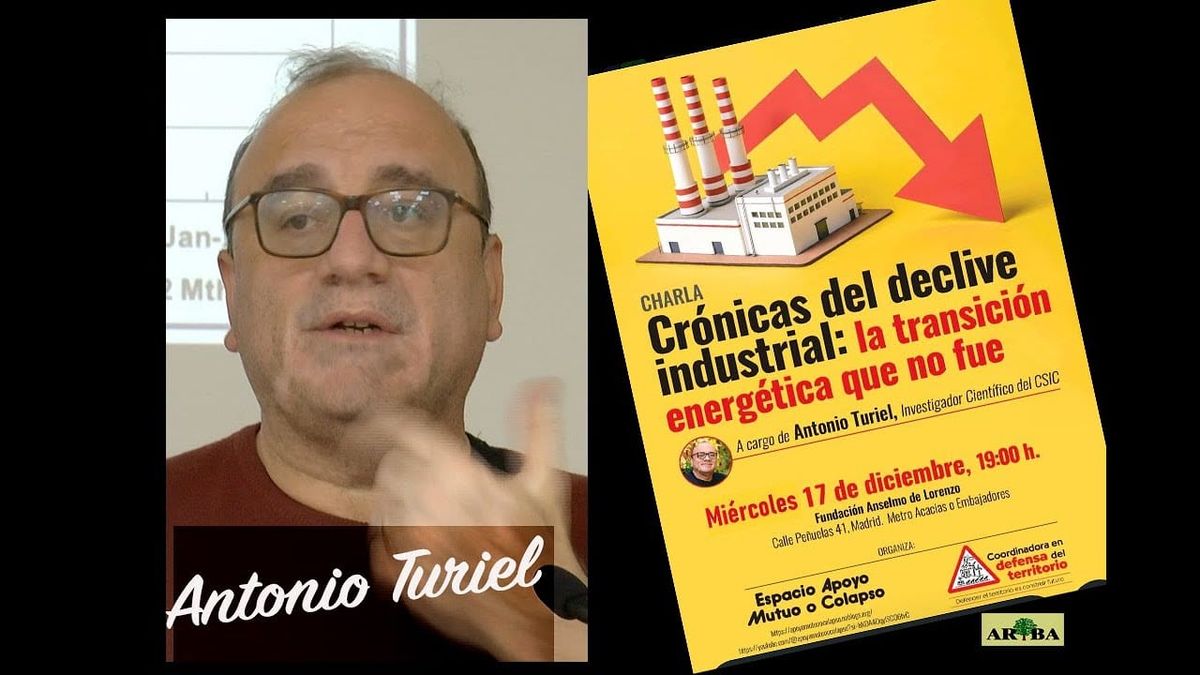
Antonio Turiel Proposes Degrowth and Human-Scale Energy Amid Industrial Model Failure
Antonio Turiel, an energy expert, proposes an alternative energy transition model based on non-electric systems, utilizing proven human-scale technologies. These systems, which make better use of renewable energy and do not depend on scarce materials, would have a lower environmental impact and generate local wealth. He argues that this vision requires living with the rhythms of nature, rejecting the notion of infinite growth on a finite planet. Turiel emphasizes that Spain could achieve food sovereignty and maintain a similar quality of life by consuming a tenth of current energy and materials, if waste and planned obsolescence are eliminated.
Faced with the impoverishment of society, especially among young people, Turiel advocates degrowth as the only logical and practicable path for overdeveloped countries. His proposal seeks to plan a reduction in energy and material consumption to sustainable levels without diminishing quality of life, offering in return dignified work, housing, and the possibility of starting a family. He criticizes the obsession with GDP growth as comparable to the “ideology of a tumor,” quoting biologist Edward Abbey.
"The proposal of degrowth is to say, look, you won't be rich, but you will be able to have dignified work, you will be able to have dignified housing, you will be able to start a family if you wish, and you will be able to have a life worth living, not just mere survival."
Expert Warns of Europe's 'Plan B' Energy Strategy, Implying Sacrifice of the South
Antonio Turiel reveals that Europe is reportedly considering an energy 'Plan B' that would turn Southern European countries like Spain, Italy, and Greece into producers of biogas and biomass. This model, which he describes as a “sacrifice,” would involve burning waste and massive deforestation, using highly inefficient and polluting processes like Fisher-Tropsch to obtain liquid fuels. Turiel warns that promises of biogas sustainability are false, installations are not locally profitable, and biomass would destroy forest ecosystems, transforming these regions into deserts after soil acidification from planting fast-growing species like eucalyptus.
According to Turiel, this 'burn everything' strategy is part of the German industry's desperation to obtain cheap energy, following the failure of its initial bet on industrial electric renewables and green hydrogen. Additionally, he highlights the imminent diesel supply crisis, exemplified by the situation in Nigeria, one of Spain's main oil suppliers, whose instability could lead to fuel supply problems in weeks.
"Plan B is to burn everything, but in Southern Europe. That is, we are going to sacrifice Spain, Italy, Greece, these countries that are useless, where, unfortunately, we are."
Global Diesel Production Falls 15% Below Historic Peaks
Global diesel production has decreased by approximately 15% compared to its peak levels recorded between 2015 and 2017. This drop is attributed to conventional crude oil, the most suitable for diesel manufacturing, having reached its production peak 20 years ago, in 2005. Antonio Turiel warns that this is a clear sign that major non-renewable energy sources are entering an unavoidable 'terminal decline,' a phenomenon predicted more than five decades ago.
Diesel, described as 'the blood of our economic system,' is crucial for transport, agricultural machinery, and mining. Its scarcity is already causing economic and social problems in countries like Bolivia, with a risk of spreading to other regions of Latin America and beyond. Turiel emphasizes that while coal and natural gas have not yet peaked, conventional crude oil and uranium already have, confirming that the majority of the world's primary energy – 84.5% or even 91% according to other estimates – is on this path of decline.
"Diesel is the blood of our economic system. Diesel means transport, diesel means machinery in general and particularly agricultural, and diesel means mining."
Industrial Renewable Electricity Bubble Bursts Globally
Antonio Turiel states that the industrial renewable electricity bubble is 'bursting' worldwide, with large capitals fleeing investment and numerous solar and wind projects cancelled. This massive divestment is observed globally, with companies like NG closing projects and an Endesa report confirming the 'global bursting' of renewable investment. The expert points out that the numbers don't add up and that the limits of the business have been reached, leading companies to seek new strategies such as capacity services to stabilize the electricity grid.
Given the decline of the current model, companies are turning to artificial intelligence, which Turiel describes as 'a huge bubble' destined to burst sooner rather than later. Citing OpenAI's annual losses, which amount to 2.6 billion dollars, he argues that these new strategies entail more costs and an unsustainable business model, making electricity more expensive without generating actual energy production.
"Artificial intelligence, which they are now obsessed with, is a huge bubble that will end up bursting sooner rather than later."
Alleged 'Pact of Silence' to Conceal Energy Transition Problems
Antonio Turiel has denounced a 'pact of silence' among economic and political powers to conceal the serious problems of the energy transition and avoid jeopardizing European Next Generation funds. According to Turiel, a significant portion of these funds has been allocated to promote systems that have proven to be unviable or inefficient, such as electric cars and green hydrogen, presented as disruptive technologies. While the electric car is seen as a niche use, not suitable for the masses, green hydrogen has seen the cancellation of important projects, such as those by ArcelorMittal in Asturias and Repsol in Puertollano.
Turiel criticizes the inefficiency of green hydrogen as an energy vector, noting that half of the energy is lost in its production and that it is a corrosive, explosive, and difficult-to-contain substance. Furthermore, he highlights that electrical energy only accounts for 21% of global final energy consumption, leaving a large portion that is difficult or impossible to electrify. This situation, along with the poor state of strategic companies like Siemens Gamesa, reveals the fragility of the current energy strategy and the consequences of short-term thinking.
"Green hydrogen is a terrible energy vector; it's inefficient in its production, half the energy is lost, and it's also a corrosive, explosive substance with a high flame temperature."
Industrial Renewable Electricity Relies on Fossils and Suffers Structural Failures
Antonio Turiel points out that industrial renewable electricity, despite its lower carbon footprint, largely depends on fossil fuels for its construction and maintenance. From material extraction to manufacturing, installation, and decommissioning, all processes consume diesel, coal, and gas. This dependence drives up operational costs and causes companies in the sector to enter crisis when fossil energy prices rise, contradicting the idea of their energy self-sufficiency.
Structural problems and economic losses are evident
Also mentioned in this video
- Antonio Turiel agradece la invitación y explica que presentará una visión… (2:29)
- Se explica que la razón real del interés en la transición energética es la… (4:16)
- Se abordan las artimañas contables de la Agencia Internacional de la Energía… (11:25)
- Se discute la escasez de carbón, que se espera que alcance su máximo de… (14:50)
- Se explica que el agotamiento de las fuentes de energía no es repentino, sino… (22:30)
- Se analizan los límites biofísicos de la energía renovable eléctrica… (26:04)
- Se muestra que el consumo de electricidad en España, la Unión Europea y la OCDE… (37:50)
- Se discute el apagón eléctrico del 28 de abril, atribuyendo su causa última a… (41:24)
- Se critica la ocultación del fracaso de la transición renovable y se advierte… (49:00)
Summarised from ARBA · 1:06:48. All credit belongs to the original creators. Streamed.News summarises publicly available video content.
Streamed.News
This publication is generated automatically from YouTube.
Convert your full video library into a digital newspaper.
Get this for your newsroom →