🌐 Also available in: 🇩🇪 Deutsch
Original source: Mario Kümpel
This video from Mario Kümpel covered a lot of ground. Streamed.News selected 5 key moments and summarises them here. Everything below links directly to the timestamp in the original video.
When milliseconds separate victory from defeat, the subtle differences in equipment design can be monumental. How might a board that reduces physical strain redefine the limits of endurance and speed in competitive windsurfing?
V-Board Praised for Ease and High-Wind Potential in Windsurf Testing
During advanced windsurf board evaluations, a tester articulated a clear preference for the V-board design, citing its superior ease of handling, smoother ride, and reduced physical demand compared to the single concave alternative. This assessment highlighted the V-board's substantial potential, particularly in higher wind conditions, and underscored its suitability for long-distance racing, despite acknowledging the high quality of both prototypes. It is important to underscore that this preference for the V-board transcends mere subjective comfort, positing a distinct advantage in demanding race scenarios and high-wind environments. This analysis suggests a potential paradigm shift in board design, prioritizing user experience and fatigue reduction without compromising speed, which could significantly impact competitive windsurfing strategies and athlete endurance.
"This board makes it easier. It's definitely the easier board of the two. It drives good and it's much less harder on the body. Just smooth, you know. It has more potential in the high wind."
V-Board Selected for Production Following Blind Performance Tests
Following extensive blind testing of prototype windsurf boards, the V-board design was ultimately selected over the mono concave variant. This decision was predicated on the V-board's demonstrably superior comfort and ease of ride, which provided a significant advantage despite both boards exhibiting comparable top speeds during trials. From this perspective, the choice of the V-board underscores a strategic pivot towards optimizing rider experience and reducing fatigue in competitive windsurfing, rather than solely pursuing marginal gains in speed. This outcome suggests that the future of high-performance board design may increasingly integrate ergonomic considerations as a critical determinant of overall competitive advantage and athlete performance.
"I like the first one, the first board more. A little bit small differences, but the first one is just easier. It rides a bit easier I felt, and the speed that I got was similar."
New Windsurf Prototypes Feature Narrow Noses, Wide Tails, and 'Hyperspace Bonus Channels'
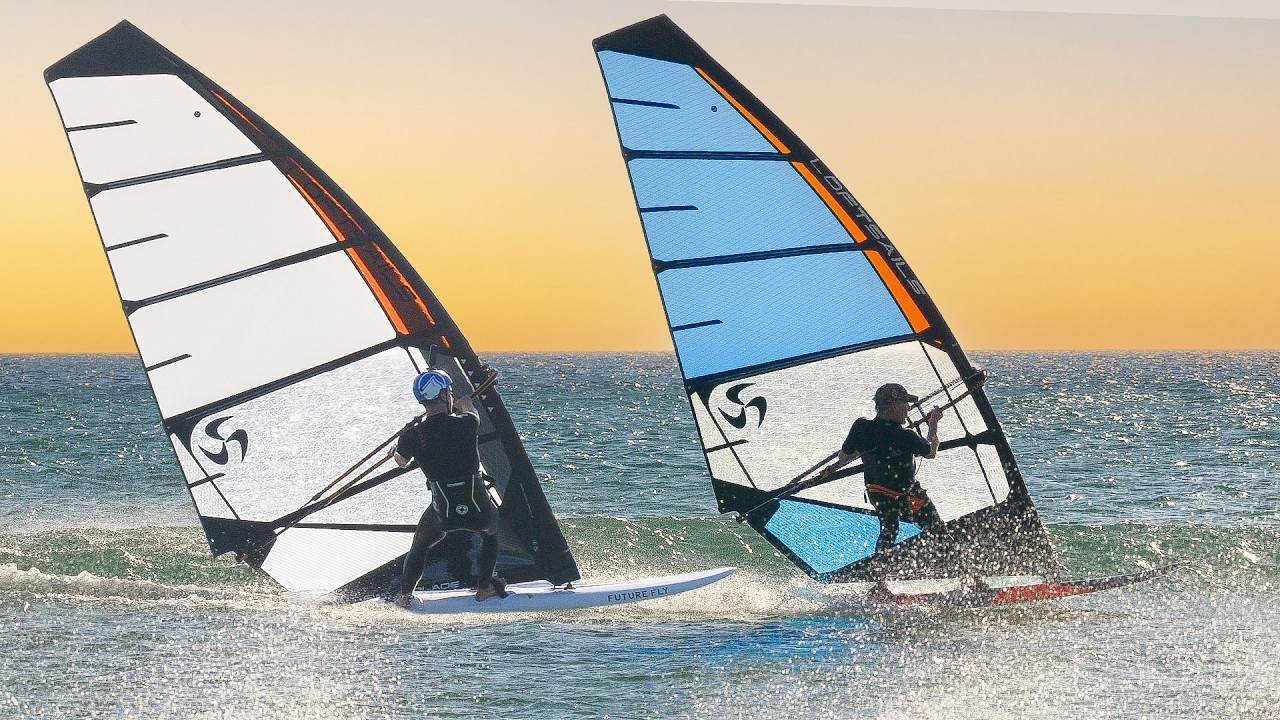
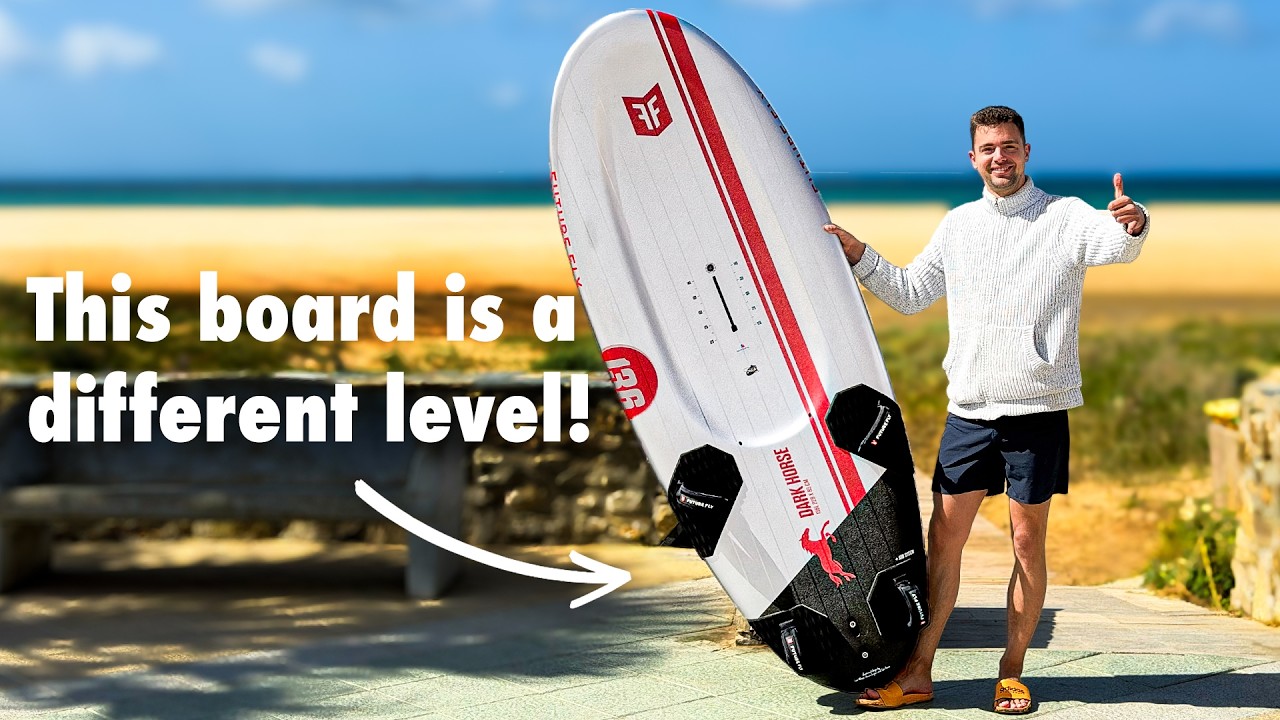
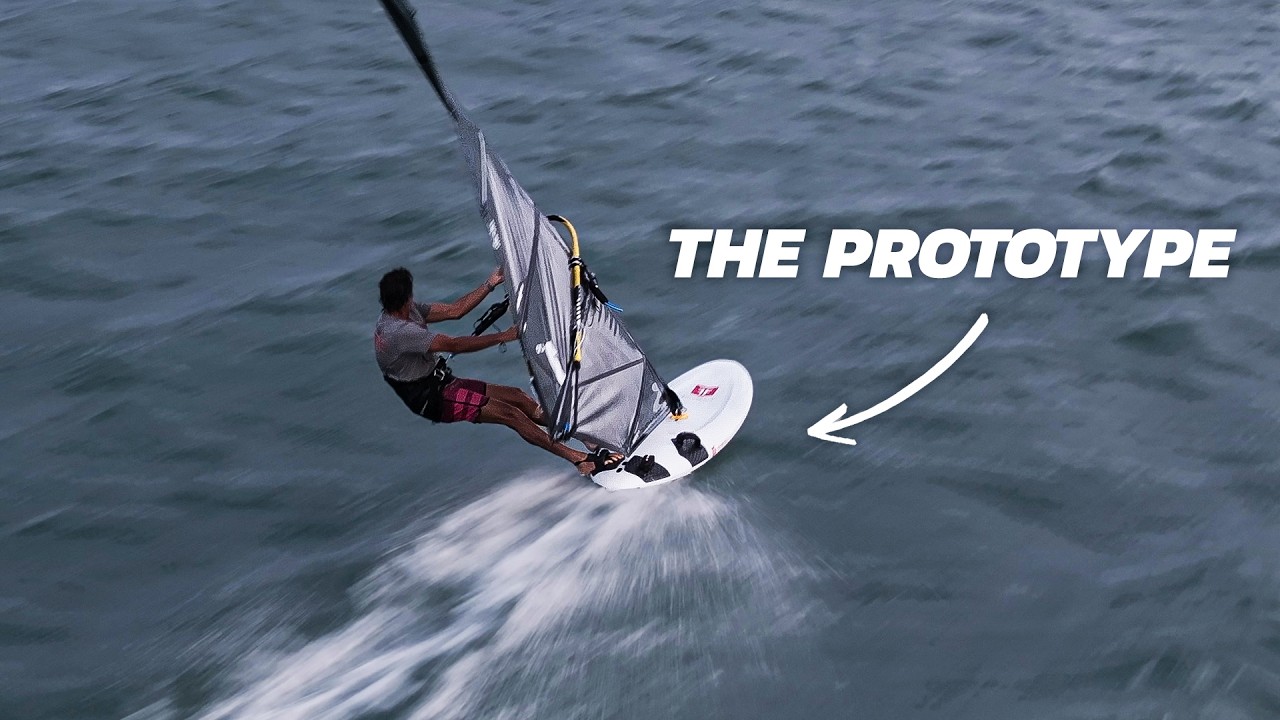
A team has commenced rigorous testing of two identical medium-sized windsurf boards, distinguished solely by their bottom shapes: one featuring a single concave and the other a V-shape. These prototypes incorporate several innovative design elements, including a relatively narrow, aggressive nose that transitions into a wider tail, aiming to enhance speed barriers and stability. Furthermore, these boards integrate "hyperspace bonus channels with air ventilation," a technology designed to create a unique hovering sensation over the water. This particular innovation, initially developed for larger boards, is expected to yield its most pronounced effect on these faster medium boards, where increased airflow through the channels can significantly alter the ride dynamics and potentially revolutionize hydrodynamics in competitive windsurfing.
"We have new technology, new innovation. Maybe you can see in the video that the nose is relatively narrow, a little bit of an aggressive nose rather than like a roundish bit wider nose and a little bit compared to the nose, it goes into a wider tail."
World Cup Rider Arnon Expresses Enthusiasm for New Slalom Windsurf Board
During a rigorous testing session, World Cup rider Arnon expressed profound excitement regarding one of the new windsurf prototypes, describing it as an exhilarating experience with immense speed potential. His feedback highlighted a unique and exciting new feeling for slalom windsurfing, characterized by a distinct departure from conventional board dynamics, particularly noting the narrow nose and wider tail. Arnon's enthusiastic endorsement and detailed observations underscore the potential for this innovative board design to introduce a new paradigm in competitive slalom windsurfing. The combination of its unique shape and the resulting ride sensation could provide a significant performance advantage, potentially influencing future design trends across the sport by prioritizing novel hydrodynamic properties.
"Super exciting. Like, it feels like so much potential with the speed. Like you can go like endless as much as you want, you know? It's just if you have the balls or not. And it's very different, you know, like everything is so different."
Windsurf Team Makes Predictions Ahead of Prototype Board Testing
Prior to the inaugural official test of two identical medium-sized windsurf board prototypes, the development team engaged in a discussion about their performance predictions, specifically contrasting the single concave and V-shape bottom designs. One team member tentatively speculated that the V-shape board might exhibit superior performance, highlighting the anticipation surrounding the initial evaluation. This predictive phase underscores the speculative nature of advanced sports equipment development, where theoretical advantages of design features, such as the V-shape's expected smoother ride, are put to the ultimate test against real-world performance. The ensuing trials are crucial for validating design hypotheses and guiding further refinements in pursuit of optimal competitive performance.
"I'll go with the V. Let's just hope they are good first."
Summarised from Mario Kümpel · 14:12. All credit belongs to the original creators. Mario Kuempel Press summarises publicly available video content.