🌐 Also available in: 🇫🇷 Français
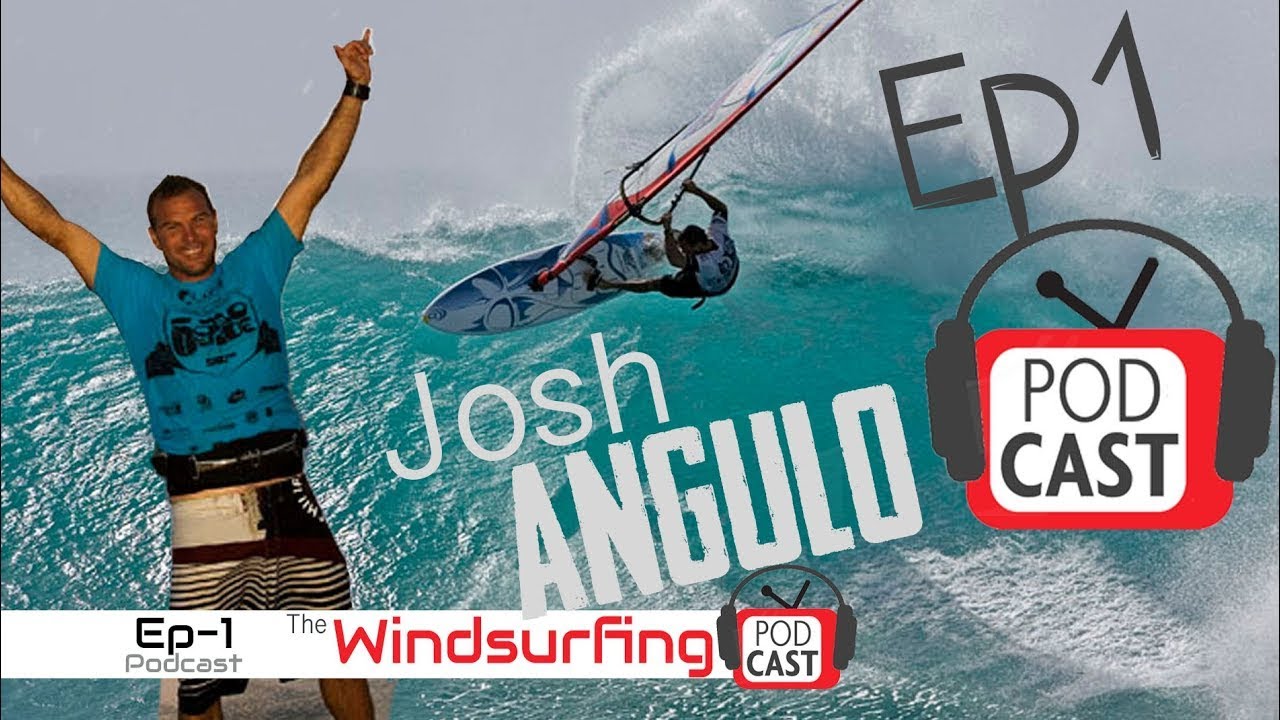
Original source: The WindsurfingTV Podcast
This video from The WindsurfingTV Podcast covered a lot of ground. Streamed.News selected 8 key moments and summarises them here. Everything below links directly to the timestamp in the original video.
A single competition can define an athlete's career, but what happens when it also redefines a country? Josh Angulo's story from Cape Verde shows how sport can become a vehicle for national development.
Josh Angulo Recounts Staging 'Best Contest to Date' in Cape Verde in 2007
Josh Angulo detailed the immense personal and logistical effort behind bringing the PWA tour to Cape Verde in 2007. He described simultaneously organising the event, securing funding, and competing at a high level, a process he calls "the most intense ever." The competition at Ponta Preta featured what he claims were the best conditions in the history of any windsurfing event, with two back-to-back days of perfect, mast-high waves.
The implications of this event extend beyond the sport itself. Angulo positions the contest as a turning point for Cape Verde's tourism and its government's perception of water sports, catalysing the careers of subsequent local world champions. We're seeing a dynamic where a single athletic event can reshape a nation's economic and cultural landscape.
"It was a turning point in this country and tourism. It was a turning point in the respect that the government and people in the country have for water sports."
Josh Angulo Won His 2009 World Title From His Apartment Watching a Live Ticker
Josh Angulo recounted the dramatic circumstances of his second world title win in 2009, a season he nearly abandoned. He explained that after feeling "mentally done" with competition, his wife's insistence that he had "one more title" drove him to continue. The championship was ultimately decided in Sylt while he watched a live text ticker from his apartment, learning of his victory only when his main rival, Kauli Seadi, was eliminated by Klaas Voget.
This moment highlights the psychological pressures at the elite level of sport. It's about the notion that victory is not just a matter of physical performance, but also of external support and the unpredictable nature of competition, where a career-defining outcome can unfold remotely.
"I became a world champion sitting in my apartment with my wife and my kid, you know, having a cup of tea. And so, we all danced around and cried and hugged and smiled and laughed."
Josh Angulo Credits Mental and Equipment Overhaul for First World Title in 2003
Josh Angulo detailed the mental and technical adjustments that culminated in his first world title in 2003. He described a shift in mindset away from his Hawaiian roots to embrace European-style competition, combined with dedicated training and technologically advanced custom boards. This strategic overhaul allowed him to secure results in challenging European venues like Pozo and Sylt, ultimately winning the championship on a countback against Bjorn Dunkerbeck.
The implications of this are about the evolution of a professional athlete. It's the notion that raw talent, especially one honed in a specific environment like Maui, must be adapted through rigorous strategic change to achieve success on the global stage.
"2003 was a year I willed my way to it. It was all mental. It was like I had this almost panic in the beginning of the year of like I have to win. I'm going to win no matter what."
Josh Angulo Details Brother Mark's Pioneering Influence in Maui's 'Exploding' Windsurfing Era
Josh Angulo recounted the formative years of windsurfing in Maui, highlighting the pioneering role of his family. He described how his brother, Mark Angulo, was an innovator who invented foundational moves like the goiter and the 360, setting a standard for radical performance. Mark's "loose cannon" style and raw talent, contrasted with the more "clean-cut" approach of rivals like Jason Polakow, defined the sport's creative explosion during that era.
We're seeing a dynamic where a small, concentrated community of athletes fundamentally shaped the trajectory of an international sport. It's about the notion that this "iron sharpens iron" environment in Maui became the crucible for modern wave sailing, with innovations driven by familial and friendly rivalries.
"Mark was at the forefront. He was the only guy that came along that was kind of as badass as Mark was Polakow. Mark was that just loose cannon. Nobody could touch him."
Windsurfing's 'Golden Era' Featured Big Contracts and Appearance Fees, Says Josh Angulo
Josh Angulo reflected on the "rock and roll" golden era of professional windsurfing, a time of significant financial reward and mainstream popularity. He described a period when top windsurfers earned as much or more than professional surfers, negotiating large contracts and collecting substantial appearance fees at major events. This contrasts starkly with the current market, which he characterises as a "tricky" business with small margins and high equipment costs.
The implications of this shift reveal the economic lifecycle of a niche sport. We're seeing a dynamic where a sport's commercial peak, fueled by broad appeal and sales, can recede, forcing a fundamental change in what it means to be a professional athlete in that field.
"Your sponsors are like, 'Oh, we're going to pay you X amount.' And you're like, 'No, I want X amount plus.' And they're like, 'Yeah, okay, fine. Let's do it.' It's not like nowadays."
Angulo Attributes Style Differences With Brother Mark to Physicality and Father's Advanced Board Shaping
Josh Angulo explained the stark differences between his power-based sailing style and the "flicky," move-oriented approach of his older brother, Mark. He attributed this divergence to physical traits, such as their respective weights and stances, but primarily credited the advanced custom boards shaped by their father. These boards, he noted, were so responsive that they removed equipment limitations and allowed each brother to develop a completely unique expression on the water.
This is about the notion of how technology and biology intersect to create athletic artistry. We're seeing a dynamic where superior equipment doesn't create uniformity, but rather enables greater individuality and stylistic divergence even within the same family.
"I remember windsurfing when you get dialed in on your Angulo board, it was like you don't think about you have a board under your feet. You're just one... you just go wherever you want to go."
Angulo Reflects on 2012 Season, Citing Lack of Focus Amidst Family and Business Demands
Josh Angulo looked back on his 2012 slalom season as a year of missed opportunity, despite having equipment he considered "ahead of its time." Riding for 4.7 Sails with advanced fins, he was highly competitive but trained for fewer than 10 days that year. He attributes his inability to capitalize on his speed to the overwhelming demands of his business ventures and family life, which prevented the "single-minded" focus required for a title run.
The implications of this touch on the core challenge of a modern athlete's career. It's about the notion that elite performance is not sustained by talent and technology alone, but requires an all-consuming focus that becomes increasingly difficult to maintain when balanced against external life responsibilities.
"When you have a family and you have to make other money outside of windsurfing... you have to do other work. It's just a lot of balls in the air. I didn't have the focus."
▶ Watch this segment — 1:06:51
Josh Angulo Names His Top Five Windsurfers of All Time, Including Rival Nick Baker
In a quick-fire round, two-time world champion Josh Angulo named his personal list of the top five windsurfers of all time. The list includes expected legends like his brother Mark Angulo, Jason Polakow, Bjorn Dunkerbeck, and Robby Naish. However, he concluded his list with the surprising addition of former rival Nick Baker, acknowledging that while Baker "bugged the crap out of" him, he was an exceptional and underrated talent.
An athlete's personal ranking reveals more than just a list of greats; it offers insight into their own competitive psychology. We're seeing a dynamic where respect is forged through intense rivalry, leading to an appreciation for competitors who once served as antagonists.
"He kind of bugged the crap out of me, but the kid ripped, you know what I mean? And he's a super nice guy. So, at the end of the day, I'll throw him in my top five."
▶ Watch this segment — 1:22:00
Summarised from The WindsurfingTV Podcast · 1:28:03. All credit belongs to the original creators. Windsurfing TV Podcast summarises publicly available video content.