Original source: Nate Hagens
This video from Nate Hagens covered a lot of ground. 21 segments stood out as worth your time. Everything below links directly to the timestamp in the original video.
For the first time in legal history, an insect has been granted the right to exist. The ruling in a small Peruvian municipality may set a template for protecting entire ecosystems through the organisms most central to their function.
Peru Municipality Grants Legal Rights to Stingless Bees in World First
The municipality of Satipo, in the central Amazonian region of Peru, has enacted a local law recognising the inherent rights of stingless bees to exist, thrive, and regenerate — the first time any insect anywhere in the world has received such legal protection. The measure, spearheaded by Amazon Research International, targets a species that most of the world has never heard of, yet which ranks among the planet's oldest bee lineages and serves as the Amazon's native pollinator.
The biophysical logic behind the ruling cuts deeper than symbolism. Stingless bees travel no more than 100 to 200 metres from their hives, making their survival entirely contingent on an intact, florally diverse rainforest. Legal personhood for the insect is, in effect, a structural defence of the ecosystem that sustains it — a local act whose logic, if replicated across jurisdictions, begins to reshape how the broader rights-of-nature movement addresses non-charismatic, invertebrate species.
"A small step for mankind, a giant leap for the web of life."
Uncontacted Amazonian Man Walks Six Days Barefoot to Find Food as Climate Disrupts Forest Resources
A man from an uncontacted community in the Amazonian region of Cusco walked six days barefoot to request food from a neighbouring group — a journey that crystallises what biophysical disruption looks like at the human scale. Animals are retreating to higher altitudes seeking cooler conditions, fish are disappearing from rivers, contamination is spreading into areas remote from its source, and soils are drying at depths and distances that confound conventional expectations. The people experiencing these cascading losses contributed negligibly to the energy throughput that caused them.
The incident is not an isolated anecdote but a data point in a pattern of ecological unravelling that strikes hardest at populations operating at the margins of subsistence. It illustrates the asymmetry at the core of the climate problem: the communities with the smallest metabolic footprint — those whose livelihoods depend most directly on the biological productivity of intact systems — absorb the earliest and sharpest costs of a crisis generated almost entirely elsewhere in the human superorganism.
"People in the Amazon are some of the ones that feel the strongest changes to climate change by being the ones that have contributed the least to it."
Conservation Without Economic Viability Fails, Amazon Researcher Argues
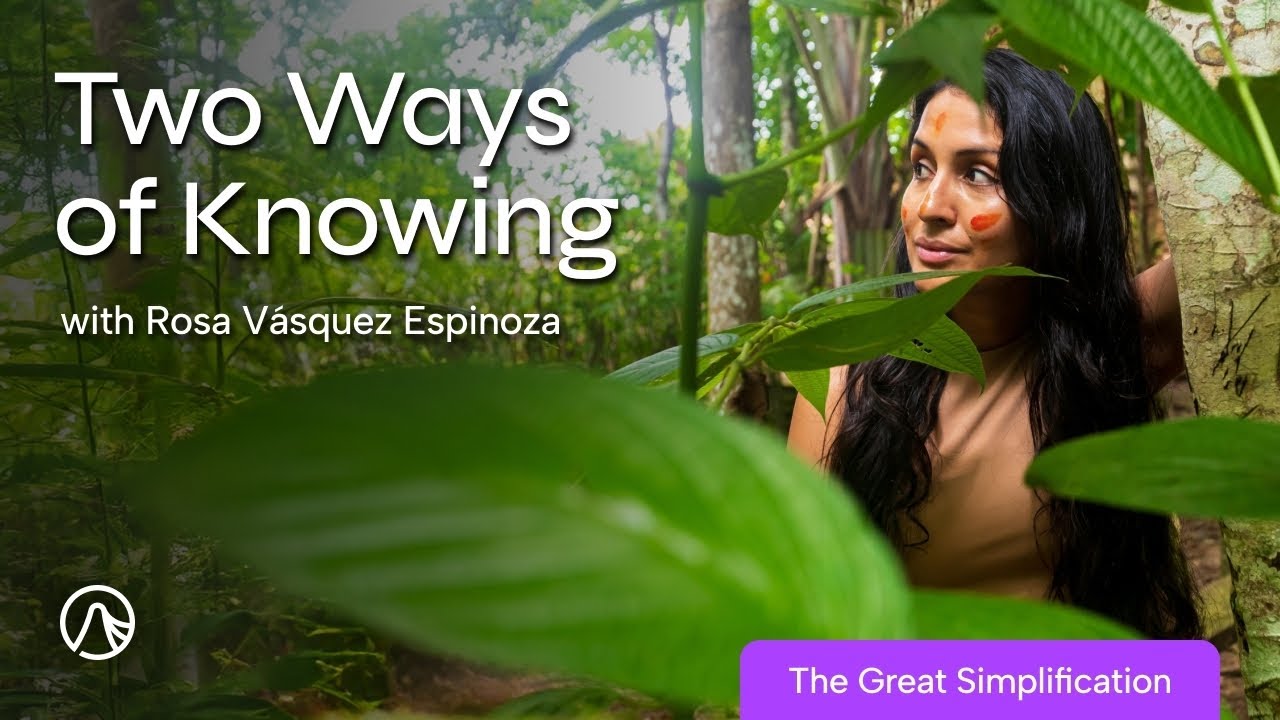
Millions of dollars poured into Amazonian conservation projects have repeatedly failed, according to Rosa Vásquez Espinoza, because they treated ecological protection as separable from basic human economic need. Her organisation, Amazon Research International, arrived at a different model through direct experience: sitting with indigenous leaders and asking what solutions they had already identified. From that process emerged the decision to use scientific research to establish the medicinal value of stingless bee honey, which raised the honey's market price and created income streams that made forest preservation economically rational rather than merely aspirational.
The argument maps onto a structural truth that runs through every conservation context: human behaviour is constrained by biophysical necessity before it is shaped by values. A community that cannot feed its children will convert forest to farmland regardless of its ecological awareness. Conservation frameworks that ignore this constraint do not fail because of bad intentions — they fail because they are architecturally incomplete, designed without accounting for the baseline energy and resource requirements of the people they depend on to succeed.
"What can you do if you do not have food to eat to feed your children? Goes back to basic human level."
Researchers Launch Study Into Animal Self-Medication, Seeking Medicinal and Reforestation Insights
A new research project launched by Amazon Research International, in collaboration with scientist Eleanor Freeman and Ashaninka indigenous partners in Peru, is investigating how animals self-medicate — a field where documented examples include elephants using tree bark to induce labour and chimpanzees applying specific leaves to regenerate skin tissue. The research domain, most extensively studied to date in Africa and Asia, remains almost entirely unexplored in Amazonian wildlife, including jaguars and various primate species known to seek out particular resins and plants.
The inquiry carries implications that extend well beyond pharmacology. If animal behaviour encodes medicinal knowledge about particular plant species, that knowledge could inform which species should anchor reforestation efforts — a convergence of wildlife biology, human medicine, and ecosystem restoration that conventional disciplinary boundaries tend to keep separate. It is precisely the kind of systems-level question that emerges when indigenous observation and formal science are brought into genuine dialogue rather than maintained as parallel, non-communicating tracks.
"Could that guide reforestation that is not just good for a jungle, our planet, and people, but for animal health?"
▶ Watch this segment — 1:14:44
Amazonian Indigenous Leaders Feel Climate Shifts Acutely While Questioning Outside World's Role
Indigenous communities across the Peruvian and Brazilian Amazon hold layered, often contradictory attitudes toward the industrialised world. Semi-nomadic families express genuine curiosity about technologies as basic as washing machines, while leaders with sustained contact with the outside are increasingly direct in their questions about whether distant societies bear responsibility for the ecological changes they observe daily — seasonal disruption, animal migration, and resource depletion that arrive without invitation and without compensation.
That combination of curiosity and structural grievance reflects a deeper asymmetry. The energy throughput of the global economy reorganises climatic and biological systems at planetary scale, and the costs are distributed in inverse proportion to the benefits. Communities at the edge of industrial reach — those whose resource base is intact forest rather than fossil-fuel infrastructure — function as the most sensitive instruments for registering overshoot, while retaining almost no leverage over the processes driving it.
"Is it true that these places are causing the changes we're seeing here?"
AI Camera Traps Reveal Andean Bear in Ashaninka Territory, Expanding Conservation Evidence Base
Camera traps equipped with AI identification tools, deployed in Ashaninka territory in Peru at roughly 1,000 metres above sea level, captured footage of an Andean bear — a species not previously known to inhabit that area at that altitude. The discovery came during a July field trip by Amazon Research International and immediately expanded the community's documented roster of endangered species, which is directly relevant to their ability to secure conservation funding and legal protections. The same system has enabled mapping of stingless bee distributions across the Amazon, helping communities plan and extend beekeeping networks.
The case argues against the framing that positions indigenous knowledge and modern science as competing or mutually exclusive systems. The camera trap result was possible precisely because local knowledge of terrain and animal behaviour guided placement of the equipment. Neither the technology alone nor the indigenous knowledge alone would have produced the same outcome. The implication for conservation methodology is structural: the unit of inquiry should be the integrated knowledge system, not either of its components in isolation.
"Indigenous knowledge and systems and societies are also benefited."
Stingless Bee Hives That Once Took 30 Minutes to Find Now Require Six Hours of Trekking
Indigenous communities in the Peruvian Amazon report that stingless bee hives, once reachable within 30 minutes of walking into the forest, now require five to six hours of trekking to locate — a shift that became apparent during the COVID-19 pandemic, when stingless bee honey emerged as one of the two primary traditional remedies used to treat symptoms across Amazonian communities in Peru. The collapse in accessibility reflects compounding pressures: deforestation reducing available nesting habitat, and rising human demand for honey that was previously harvested at modest, sustainable rates.
Amazon Research International responded by constructing the first systematic map of wild stingless bee hive locations across the Amazon, identifying the tree species the bees prefer for nesting in order to monitor deforestation of those specific trees and propose reforestation schemes calibrated to bee habitat requirements. The effort also generated the quantitative data necessary to qualify stingless bee species for formal conservation red-listing — a bureaucratic threshold that conditions access to international protection and funding mechanisms.
"We used to take 30 minutes into the jungle to find a wild hive and now it can take 5 hours, 6 hours of trekking into the jungle to even find that first hive."
Eight Camera Traps Guided by Indigenous Knowledge Track Jaguars and Tapirs More Effectively Than Conventional Grid Systems
A new project in indigenous-led wildlife monitoring is producing results that challenge standard methodology. Conventional camera trap surveys of Amazonian ecosystems typically require hundreds of cameras arranged in metric grid patterns — an approach that is both expensive and poorly suited to the irregular terrain of dense rainforest. Amazon Research International is instead placing eight cameras at positions identified through indigenous knowledge of animal movement, water sources, and territorial behaviour. The results include documented footage of tapirs, giant armadillos, jaguars, and Andean bears — species notoriously difficult to record even with well-resourced conventional surveys.
The project, being prepared for peer-reviewed publication, proposes this as a standalone scientific methodology. Its significance extends beyond cost efficiency. It demonstrates that the information content of indigenous ecological knowledge is high enough to compensate for orders-of-magnitude differences in equipment — a finding with direct implications for conservation work in biodiverse regions where funding constraints are structural rather than temporary.
"The answer is indigenous methods."
Stingless Bees' Short Range Makes Forest Preservation Economically Rational for Indigenous Farmers
Unlike the honeybee, which can forage up to two kilometres from its hive, most stingless bee species travel no more than 100 to 200 metres, and some are limited to 20 metres or less. This biological constraint means that a functioning stingless bee colony requires an intact, florally diverse rainforest in immediate proximity — which creates a direct economic incentive for indigenous farmers to maintain that forest rather than convert it. Communities that had begun expanding cacao cultivation, and were aware that further scaling required clearing more trees, are now factoring stingless bee income into the calculation and finding the mathematics of forest retention increasingly competitive.
Research conducted by Amazon Research International found that stingless bee pollination increases yields of certain native and local fruit crops by 44 percent — a figure that reframes the bee from a honey-producing asset into a productivity multiplier for the entire agricultural system. The ecological and economic incentives are, in this case, structurally aligned: maintaining floral diversity to sustain the bees simultaneously benefits soil health, water retention, and atmospheric function. Complexity, here, has benefits that compound.
"If I am able to get more stingless bees I'm also able to get more fruits — stingless bees help increase the crop by 44% yield. That is massive."
Researcher Identifies Climate Defeatism as Greater Threat Than Climate Change Itself
Rosa Vásquez Espinoza names the spreading cultural narrative that climate action is futile — that it is too late, that there is no point — as her primary source of concern, more than any specific ecological threshold or tipping point. She draws a counterpoint from the communities bearing the sharpest consequences of ecological disruption: remote Amazonian groups facing water scarcity, collapsed fisheries, and accelerating forest loss who nonetheless maintain social cohesion, continue communal celebration, and extend hospitality to outsiders. That persistence, she argues, constitutes a form of evidence against defeatism.
The distinction matters systemically. Defeatism functions as a self-fulfilling contraction of the solution space — it withdraws human agency from problems that remain, by most ecological measures, partially tractable. The gap between what is known about biophysical constraints and what is actually done about them is already large. A cultural norm that treats that gap as unbridgeable makes it larger still, foreclosing the local, incremental actions that aggregate, over time, into structural change.
"More scared of is of this constant narrative that we should just give up, there's no point. It's too late."
▶ Watch this segment — 1:13:35
Amazonian Tobacco Plant Revered as 'Guardian' Proves to Be Effective Mosquito Repellent
Among the Ashaninka people of central Peru — the largest indigenous group in South America — a tall specimen of Nicotiana rustica, a potent ancestral relative of commercial tobacco, is positioned as a guardian plant at the centre of family encampments. The spiritual designation, which Vásquez Espinoza initially parsed as protection against human threats, resolves under scientific scrutiny into something more layered: the smoke from the plant is a demonstrated natural repellent for mosquitoes, likely protecting against malaria and other vector-borne disease. Larger predators may also be deterred by persistent smoke, and the plant's long cultural presence may itself confer psychological benefit through the placebo mechanisms that accompany intergenerational trust.
The example is instructive as a model for how indigenous knowledge encodes empirical information in non-scientific registers. Across thousands of years of iterative observation — the same process that constitutes science under different institutional conditions — populations identified the practical properties of plants and embedded that knowledge in cosmological and spiritual frameworks that ensured its transmission. Unpacking such frameworks rarely reveals purely superstition; it more often reveals at least one thread of functional truth that shaped the survival outcomes of the communities that carried it.
"I do think there's many different connotations, some associated purely to the spiritual protection, but that may have come from the fact that those people were not getting as sick from things like malaria."
Ashaninka Co-Author Scientific Paper on Toxic Frogs Eaten as a Delicacy
Amazon Research International has produced a scientific paper on toxic frogs consumed as food by the Ashaninka people of Peru, co-authored with an Ashaninka community member — a collaboration that began not with a formal research proposal but with a community member asking whether a practice their people had long maintained might be of scientific interest. The exchange exemplifies a pattern Vásquez Espinoza has found consistent across Amazonian communities: scientific inquiry, far from being viewed with suspicion, tends to be welcomed as a form of curiosity that mirrors the community's own.
The dynamic matters because it challenges the assumption that integrating indigenous knowledge into formal science requires navigating an adversarial or protective relationship. The communities her organisation works with increasingly reach out proactively, having learned that scientific attention can document, validate, and amplify practices and ecological observations that would otherwise remain invisible to the institutions — funding bodies, conservation agencies, government ministries — whose decisions shape the conditions those communities live within.
"Hearing about the word science or this type of different system of knowledge triggers the same kind of human curiosity in the communities there."
Systems Thinking Deficit in Western Science Costs Opportunities in Species Discovery and Climate Solutions
Conventional scientific methodology, structured around disciplinary specialisation and reductionist analysis, systematically misses what Vásquez Espinoza characterises as attunement — a holistic, relational awareness of how organisms and systems interact across scales. By excluding knowledge systems that have accumulated precisely this kind of integrated understanding over thousands of years of close observation, mainstream science narrows its own perceptual bandwidth. The costs, she argues, are concrete: unidentified species, overlooked climate adaptation strategies, undiscovered health interventions, and degraded water systems.
The critique is structural rather than cultural. No individual scientist is indicted; the architecture of how research questions are framed, funded, and published tends to reward narrow precision and penalise the kind of wide-boundary thinking that indigenous ecological knowledge embodies by design. The Amazon's biological complexity — the same complexity that makes it a critical regulator of global climate and hydrological systems — is precisely the kind of system that resists adequate characterisation by any single knowledge tradition operating in isolation.
"We are missing out from not incorporating more systems of knowledge — a sense of being attuned with the rest of the world and the systems thinking, the interconnected nature of our planet."
Malaria Drug Artemisinin Traces Its Origins to Ancient Chinese Medicine Records, Highlighting Unresolved Biopiracy Debate
The antimalarial drug artemisinin — recognised with a Nobel Prize in Medicine awarded to Chinese researcher Tu Youyou in 2015 — emerged not from synthetic chemistry but from a systematic review of ancient Chinese medicinal records. When laboratory methods had exhausted their capacity to identify a malaria cure, Tu Youyou consulted historical plant documentation describing treatments for symptoms consistent with malaria, extracted the active compound from one such plant, and produced a life-saving medicine. The case illustrates how formal science has repeatedly drawn from traditional knowledge repositories without establishing mechanisms for attribution or compensation.
In the Amazon, that dynamic plays out in real time. Vásquez Espinoza describes reviewing hundred-page pharmaceutical patents derived from Amazonian plant compounds and finding no mention of sustainable harvesting, no retribution to source communities, and no acknowledgement of the knowledge systems that identified the plants as therapeutically relevant in the first place. The rights-of-nature movement, which her organisation actively pursues, is partly a structural response to this absence: if nature and the communities embedded in it have no legal standing, the extraction of biological knowledge carries no legal cost.
"There has been already many cases of current medicines that have either been inspired by or directly derived from Amazonian plants that have no method of retribution back."
Stingless Bee Conservation Framework Targets Coffee, Cacao, and Avocado Pollination Chains
Amazon Research International's stingless bee conservation methodology — mapping wild hive locations, identifying preferred nesting trees, monitoring deforestation of those trees with government partners, and proposing bee-friendly reforestation — is designed from the outset to be transferable to other species and ecosystems. The organisation began with stingless bees because they sit at the intersection of traditional medicine, indigenous cultural identity, and the global food supply: these bees pollinate coffee, cacao, avocado, and blueberries, crops consumed daily at industrial scale in markets entirely disconnected from the Amazonian systems that sustain them.
The framework makes visible a chain of material dependence that market pricing renders invisible. A cup of coffee does not carry a price signal reflecting the ecological integrity required to sustain the pollinator that enabled the fruit to set. Stingless bee conservation, in this sense, is not a niche ecological concern but an entry point into the broader problem of how the human enterprise accounts — or fails to account — for the biological substrates on which its energy and food throughput depends.
"Let's I we started with stingless bees because it was such a no-brainer — it's such an important part of traditional medicine, but so deeply embedded in indigenous culture, and it had this critical role in pollinating some of the most important crops that you and I enjoy every day."
Camera Footage of Giant Armadillo Prompts Indigenous Community to Launch Conservation Education
When Ashaninka park rangers and community leaders in Peru watched camera trap footage showing a living giant armadillo for the first time, the reaction was not merely surprise — it triggered an immediate recalibration of behaviour. Community members who had known of the species only through physical traces, a half-eaten carcass left by a jaguar, began discussing alternatives for those still hunting armadillos for food. The footage of jaguars congregating around salt licks led hunters to reconsider their own movements in those areas. The discovery that an IUCN red-listed Andean bear was also present in the territory added a formal conservation argument to what had been cultural and ecological intuition.
The pattern illustrates a neglected mechanism of conservation: visual evidence, mediated through the emotional and cultural knowledge a community already holds, can shift behaviour more effectively than external instruction. The stories of creation and the oral histories that Ashaninka elders had transmitted about these animals gave the camera footage an immediate frame of meaning — converting data into something that moved people to act.
"It just triggered all of these stories of creation, the indigenous storytelling that they had heard from their grandparents."
Conservation Success Traced to Listening and Cold Messages, Not Institutional Access
Amazon Research International built its network of scientific collaborators, indigenous partners, and conservation advocates primarily through unsolicited outreach — cold messages sent to researchers, lawyers, and community leaders with no prior connection. Vásquez Espinoza estimates that roughly one in ten such messages produces a response, but that those responses have progressively expanded the organisation's collaborative circle. The practical advice she offers to those seeking to replicate the model is structural: prioritise listening over presentation, and resist the tendency to arrive at a community or a meeting with predetermined solutions to impose.
The methodology reflects a deeper epistemological stance. Solutions to complex, locally-specific ecological and social problems are not usually imported from outside; they are surfaced by creating conditions in which people with different knowledge systems can speak and be heard on equal terms. The difficulty is not conceptual — most people understand the principle — but behavioural. The institutional and professional incentives that shape how scientists, lawmakers, and conservation professionals conduct themselves tend to reward speaking over listening, and urgency over patience.
"The solutions are there. It's just a matter of taking our time to find that common language where we come and meet equally on equal footing."
▶ Watch this segment — 1:03:11
Biofluorescent Life Discovered in Amazon's Dense Canopy, Where Light Scarcity Drives Novel Communication
In regions of the Amazon where the forest canopy is dense enough to block most ambient light, conditions analogous to the deep ocean appear to be driving the evolution of biofluorescence — the biological production and emission of light — as a communication mechanism among wildlife. Amazon Research International has begun encountering examples of this phenomenon in fieldwork, though systematic documentation remains in early stages. The same regions are also yielding new species discoveries at a rate that reflects how little of the Amazon's biological complexity has been formally characterised.
The observation carries a structural implication for conservation prioritisation. Biodiversity assessments conducted under conventional sampling methods tend to undercount species in areas of extreme habitat complexity, particularly dense-canopy zones where standard survey techniques are least effective. The Amazon's most species-rich and least-documented areas may also be those most rapidly affected by the deforestation and climatic disruption that simplifies habitat structure — compressing the time available to document what will be lost before it is gone.
"There are areas of the Amazon that the canopy is so dense that it doesn't really allow for much light, and that creates conditions that evolutionarily and genetically pushes wildlife to communicate in different ways — kind of like what happens in the deep ocean."
▶ Watch this segment — 1:07:07
Amazonian Communities Facing Ecological Collapse Still Dance Around Fires — and Researchers Take Notice
Remote Amazonian communities that are losing access to clean water, experiencing fish stock collapse, and living through accelerating forest degradation continue to gather for communal celebration and extend hospitality to outsiders. Vásquez Espinoza draws a reasoned inference from this: if populations absorbing the most severe and unearned costs of ecological overshoot maintain social cohesion and forward orientation, the case for defeatism among those with far greater material and institutional resources to act is substantially weakened.
The observation is not merely inspirational. Resilience at the community level is itself a biophysical and social capital resource — one that erodes under sustained stress. The communities that currently demonstrate it are operating on ecological margins that are tightening. Their capacity to maintain that resilience is time-bounded in ways that the broader question of climate response is not, which gives the window for effective action a specificity that aggregate global metrics tend to obscure.
"If they can keep hope, so we can."
▶ Watch this segment — 1:12:00
Chemical Signals in Soil and Air May Link Human Brain Chemistry to Ecosystem Health
The scent of soil after rainfall — petrichor — is not merely pleasant; it carries chemistry produced by soil microbes that research has shown to measurably alter human brain chemistry. Vásquez Espinoza situates this finding within a larger, mostly unmapped domain of chemical communication between ecosystems and the organisms moving through them. Fungal networks connecting trees underground, now scientifically confirmed and already being applied in forest regeneration, were considered implausible two decades ago. Dogs detecting human emotional states through pheromone signatures is now documented. The implication she draws is that the chemical dialogue between the human organism and intact ecosystems is far richer than current science has characterised.
The argument has structural weight beyond its novelty. If human neurological and physiological states are partially regulated by chemical signals from intact biological systems, then ecosystem degradation carries costs to human health that are not captured in any existing accounting framework. The human enterprise runs on energy, but it also runs on biological integrity — and the systematic simplification of ecosystems may be withdrawing inputs whose value remains invisible precisely because the measurements do not yet exist.
"There is a lot more communication that happens in the natural world between wildlife ecosystems and us through chemistry that is unknown."
▶ Watch this segment — 1:16:59
Genetic Evidence Shows Cacao Was Selectively Bred Across the Amazon Thousands of Years Ago
Genetic analysis has confirmed that cacao did not spread naturally across the Amazon — it was deliberately selected and bred by human populations over thousands of years, a process that constitutes genetic engineering conducted without laboratory infrastructure. The same logic applies to the controlled use of fire documented from 40,000 years ago, which required systematic, iterative application to shape plant growth in specific areas. Vásquez Espinoza argues that the trial-and-error, observation-and-hypothesis cycle that produced these outcomes is structurally identical to what modern institutions call science — the difference is institutional recognition, not epistemological character.
The argument has implications that extend beyond historical revision. If the accumulated ecological knowledge encoded in indigenous practice represents the output of thousands of years of rigorous experimentation, then its dismissal by conventional science carries real costs — in biodiversity conservation, in
Summarised from Nate Hagens · 1:22:28. All credit belongs to the original creators. Nate Haggens summarises publicly available video content.