Original source: La Base
This video from La Base covered a lot of ground. Streamed.News selected 8 key moments and summarises them here. Everything below links directly to the timestamp in the original video.
Conflict results redefine nuclear deterrence. Iran's lesson could spur proliferation as the only sovereignty guarantee against major powers.
Público Analysis: Iran Wins Resilience Battle, Forces US into Unvictorious Peace
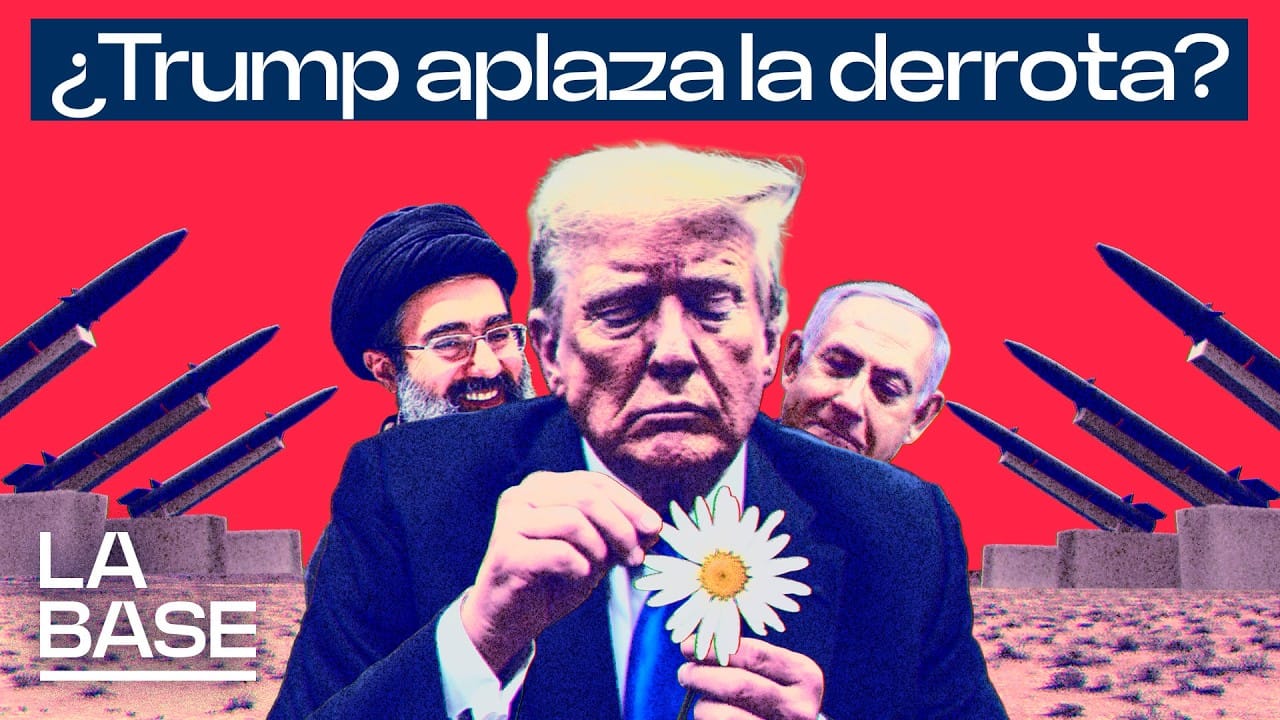
Iran outlasted the US in a three-month conflict, forcing the Trump administration into a precarious peace without victory, according to a Público analysis by Juan Antonio Sanz. Despite military and infrastructure losses, Tehran dictated negotiation terms. Washington remains militarily bogged down, its international image eroded by a strategy that primarily benefited the US oil industry.
The strategic implications extend beyond the battlefield. Iran learned a harsh lesson: North Korea-style nuclear weapons would have deterred US attacks. This realization radicalizes the Iranian regime, which may now view nuclear ambitions as its sole guarantee of sovereignty against stronger powers, fundamentally altering regional balance.
"Despite military and infrastructure losses, Iran dictated negotiations. Its symmetric war strategy left Washington militarily mired and its international image battered."
GOP Figures Slam Potential Deal Strengthening Iranian Regime
US military action, intended to spark regime change, may have strengthened Iran's theocracy by empowering hardline factions against Washington and Israel. Despite targeted attacks on Iranian leadership, the power structure endured. The New York Times reports a hardline military elite now leads Iran, a foreseeable outcome of external aggression.
This paradox drew criticism from prominent Republicans like Ted Cruz, Lindsey Graham, and Mike Pompeo. They argue a leaked deal would be a "disastrous mistake," cementing Iranian control over the Strait of Hormuz, enabling nuclear development, and irreversibly shifting regional power—a "nightmare for Israel."
"If this results in an Iranian regime receiving billions, enriching uranium, developing nukes, and effectively controlling the Strait of Hormuz, that outcome would be a disastrous mistake."
Report Details Possible Deal Favoring Iran's Stance
A plausible agreement, reflecting current power dynamics, would grant Iran significant concessions. Key points include ending regional wars, including in Lebanon, releasing billions in frozen funds, and potential war reparations. It would also lift the US naval blockade, followed by a gradual, coordinated opening of the Strait of Hormuz.
This scenario would also mean US forces withdrawing from Iran's vicinity and future negotiations on their regional presence. In return, Tehran would make nuclear concessions similar to the Obama-era pact—effectively a return to a known framework, not a significant strategic surrender.
US, Iran Maintain Red Lines in Race Against Time
The Trump administration seeks a swift deal with Iran. It aims for a nuclear disarmament success and restored oil flow through the Strait of Hormuz, hoping to avoid electoral damage from rising prices. However, Washington wants these outcomes without dismantling its sanctions regime, complicating negotiations. Tehran remains firm on its own red lines. It refuses concessions without frozen assets released and will not abandon its ballistic missile program, which has proven a strong deterrent. This highlights irreconcilable interests driving the talks.
Hawks, Israel Pressure Fractures US Stance on Iran
US-Iran negotiations expose deep internal divisions in Washington. The Trump administration faces hawk pressure, which firmly opposes any deal lifting sanctions or freeing Iranian assets. Hawks view such concessions as an unacceptable sign of weakness for US foreign policy, which has used sanctions as its primary punitive tool for decades. This tension worsens due to a core strategic contradiction: the US demands terms from Iran typical of a defeated nation, like denuclearization and renouncing war reparations. Yet Tehran retains its capacity to choke the Strait of Hormuz. Israel's pressure further complicates the scenario, undermining Washington's autonomy and pushing away any chance of concessions.
"The US demands conditions from Iran typical of a defeated nation, [...] but this clashes with the reality that Iran can still choke Hormuz."
US Opposition Mounts to Iran Deal Perceived as Defeat
A potential Iran deal faces growing disapproval in the United States. Democratic-leaning media, like CNN, frame it as harmful to national interests. Meanwhile, Fox News attempts to project calm and support Trump’s strategy, but even its language hints at a "bad deal," a narrative now dominating public debate. Opposition isn't limited to Democrats; it's also rising among critical Republican factions, as reported by El Heraldo. Lawmakers and Trump allies question concessions and the justification for the military offensive if the outcome strengthens the Iranian regime. This deep internal political fracture weakens the White House's negotiating stance.
"Republican lawmakers criticize US concessions and question the justification for launching the military offensive in February [...] if the regime ultimately appears strengthened."
Iran Conflict's Outcome 'Devastating,' Exposes US Weakness
The Iran conflict proved 'devastating' for the U.S., exposing its weakness over strength in political decisions and military operations. Washington's prestige in the Middle East and Asia plummeted. A deep rift emerged with European allies, whom the U.S. tried to pull into an unjustified war. This strategic setback surpasses even the chaotic 2021 Afghanistan withdrawal. More than just negotiations, the conflict damaged U.S. hegemonic credibility. Washington failed to impose terms on a resilient regional power.
"Not even the shameful 2021 Afghanistan withdrawal [...] approaches the setback this Iran crisis will mean for Washington's foreign policy."
Israeli Pressure Hardens US Demands, Stalling Iran Talks
Washington-Tehran talks stalled after 'extreme pressure' from Israel and Zionist factions drastically shifted the U.S. stance. Following initial rapprochement, the White House demanded Iran surrender all ammunition reserves for minimal sanctions relief and partial asset release. The final breaking point was Israel's demand for full military freedom in Lebanon, unacceptable to Iran, which seeks a regional ceasefire. This shift shows how an external actor can impose red lines in bilateral talks, frustrating peace efforts.
"The Israelis also ended up demanding freedom of action in Lebanon, a key point where the Iranians refuse to yield, and clearly, the negotiations [...] have not prospered."
Also mentioned in this video
- Donald Trump cambió su postura sobre el acuerdo con Irán, inicialmente… (0:00)
- Mientras Axios (cercano a Marco Rubio) reporta una tregua de 60 días para… (0:45)
- Israel estaría presionando contra el acuerdo, reservándose el derecho a… (1:40)
- La Unión Europea y el Reino Unido apoyan a Estados Unidos e Israel, pidiendo… (2:21)
- Irene Zugasti explica que las negociaciones entre Estados Unidos e Irán se… (4:26)
- Aclara que, a pesar de los anuncios de Estados Unidos, no hay un acuerdo de paz… (5:19)
- La estrategia de Trump de "imponer el frame" para una victoria diplomática y… (7:19)
- Senadores republicanos y analistas conservadores criticaron el posible acuerdo… (8:43)
- La diplomacia iraní bloqueó la alternativa de un alto el fuego parcial,… (11:26)
- Trump tuiteó con un tono agresivo, burlándose de los demócratas, los… (12:21)
- Se critica la actitud de la Unión Europea, especialmente la de Úrsula Von der… (13:01)
- Un experto iraní explica que la toma de decisiones en Estados Unidos muestra… (14:18)
- Manu Levin comenta sobre los titulares de prensa que muestran a Trump cambiando… (14:50)
- Manu Levin detalla cómo la prensa sugiere que Tel Aviv ha frenado el acuerdo… (16:02)
- Manu Levin cita titulares de prensa que insinúan la posibilidad de un "mal… (17:10)
- Manu Levin concluye que no solo Israel trabaja contra el acuerdo en los… (21:21)
- Benjamin Netanyahu conversó con Trump, expresándole su descontento con la… (26:03)
- Eduardo García analiza el colapso del posible acuerdo entre Estados Unidos e… (26:49)
- Eduardo García revela que los israelíes y el lobby sionista bloquearon el… (28:12)
- Eduardo García analiza un tuit de Trump donde exige a los países que firmen los… (29:30)
- Eduardo García explica que el Líbano fue un punto central de desacuerdo, ya que… (30:31)
- Eduardo García desglosa el supuesto memorando de entendimiento entre Estados… (31:45)
- El presentador pregunta a Eduardo García cómo sería un acuerdo lógico entre… (33:44)
- Eduardo García concluye que la Casa Blanca se enfrenta a la paradoja de que… (35:56)
- Naya Sanzo explica que los Acuerdos de Abraham, promovidos por la… (37:24)
- Naya Sanzo explica que los Acuerdos de Abraham marcan una división entre los… (38:04)
Summarised from La Base · 41:01. All credit belongs to the original creators. Streamed.News summarises publicly available video content.