Original source: La Base
This video from La Base covered a lot of ground. Streamed.News selected 8 key moments and summarises them here. Everything below links directly to the timestamp in the original video.
Petro's decision marks a turning point in Colombian foreign policy. It reflects a growing divide between the Global South and Western powers over the conflict in Palestine.
Colombia severs diplomatic ties with Israel over 'genocide' in Palestine
Colombia's Gustavo Petro government formally cut diplomatic ties with Israel in May 2024. Petro stated Colombia cannot be complicit or silent regarding what it calls genocide, war crimes, and violations of international humanitarian law against Palestinians. This decision followed a systematic breakdown of bilateral relations, including Israel's suspension of security exports to Colombia and the recall of its ambassador.
The move positions Colombia as a leading Global South critic of the Netanyahu government, realigning its foreign policy to defend international law. It marks a fundamental shift in the nation's historical alliances, challenging its traditional subordination to U.S. and Israeli geopolitical interests in the region.
"Colombia cannot be complicit or remain silent by maintaining diplomatic relations with a government that behaves this way and faces such grave accusations of committing genocide, war crimes, and violations of international humanitarian law."
Petro's foreign policy solidifies regional sovereignty, challenging US interference
Gustavo Petro's government defines its foreign policy by prioritizing Latin American sovereignty and rejecting hemispheric subordination to the United States. This includes normalizing diplomatic and trade relations with Venezuela, taking a firm stance against U.S. regional aggression, and actively promoting integration through forums like CELAC. Colombia has also provided humanitarian aid and energy cooperation to Cuba, while condemning the economic blockade and threats of military intervention.
This represents more than mere bilateral adjustments; it's a strategic reorientation for Colombia, historically a key U.S. ally. Petro's actions aim to rebuild a Latin American bloc capable of addressing its own challenges without external oversight, directly challenging the Monroe Doctrine's foundations.
"To me, someone who invites an invasion of their own country is a despicable person. A traitor."
US warned to use new intervention strategy to manipulate Colombian elections
U.S. intervention in Latin America has evolved from military coups to a sophisticated array of tactics: financial sanctions, media operations, and preemptive delegitimization of electoral processes. Colombia is currently its primary target. Senator Bernie Moreno's statements, hinting at a potential non-recognition of Colombian elections, fit this pattern, designed to manipulate election outcomes and safeguard Washington's strategic interests.
This offensive aims to neutralize any political project, like Gustavo Petro's, that breaks Colombia's historical subordination to Washington. The goal isn't to protect democracy but to foster a permanent climate of suspicion. Any left-wing victory can then be labeled illegitimate, fraudulent, or dangerous, perpetuating a form of modern-day coup.
"The goal is not to protect Colombian democracy, but to condition its outcome to be acceptable."
CNN campaigns for candidate Abelardo de la Espriella
CNN actively promotes presidential candidate Abelardo de la Espriella, portraying him as a political "outsider" with uncritical coverage. Interviews resembling campaign ads allow de la Espriella to present himself as the answer to insecurity, health crises, and corruption. The candidate explicitly aligns with U.S. drug policy, vowing to restore and deepen ties with Washington if elected. This media coverage shows how international corporate media influences Latin American politics. De la Espriella positions himself to re-establish subordination, revealing underlying power dynamics.
"That relationship gets fixed the day the current government leaves. Once elected, I make a call, and those ties are re-established with greater depth."
Iván Cepeda alleges Trump interference in Colombian elections
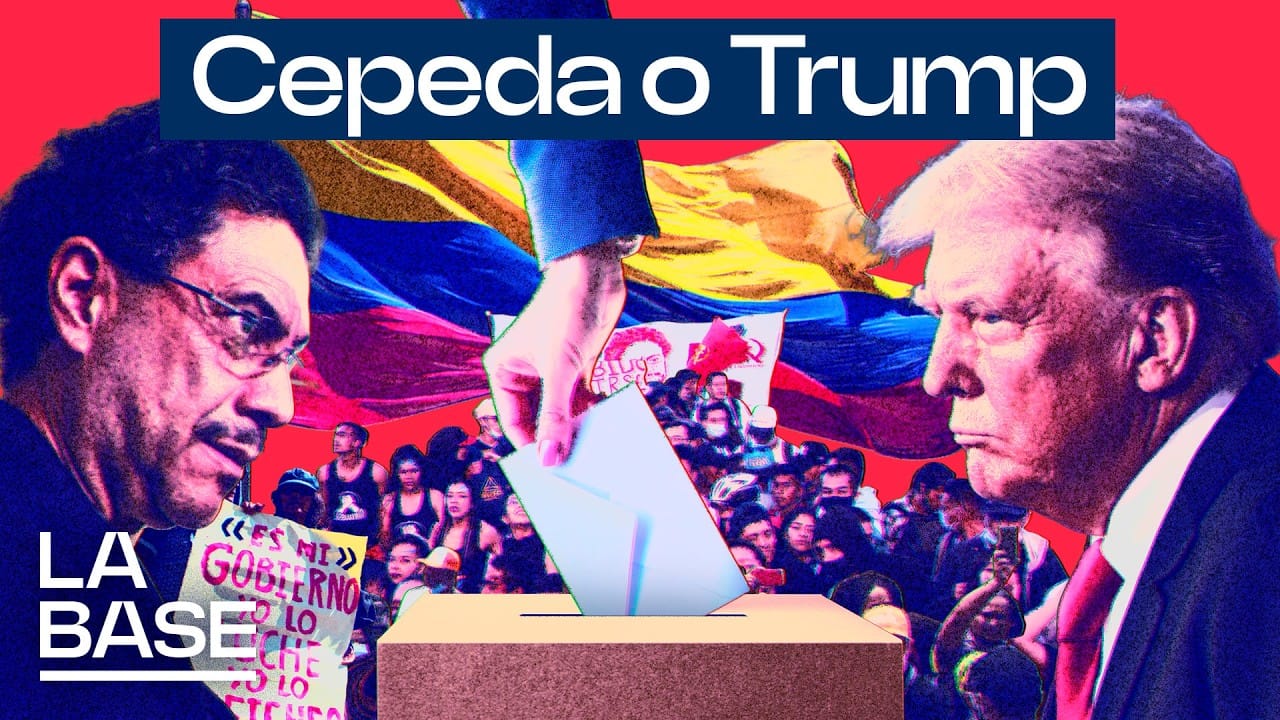
Presidential candidate Iván Cepeda claims the Donald Trump administration tries to sway Colombia's 2026 elections. He cites Trump's repeated, unproven accusations branding President Gustavo Petro a "narcotraficante," aiming to influence public opinion. Colombia's far-right, led by ex-President Álvaro Uribe, reportedly amplifies these claims. Cepeda alleges this interference is part of a coordinated regional strategy tied to Washington's national security doctrine. He questions the legitimacy of the U.S. "anti-drug crusade," noting its support for figures with alleged drug ties. The true goal, he states, is to prevent sovereign political projects from consolidating.
"We clearly warn that the U.S. government tries to influence our elections by all possible means."
New right-wing "coup" strategy in Latin America detailed
Latin America's right wing employs a sophisticated "new coupism," replacing military force with a systematic political-media strategy. This operational manual begins by constructing a narrative of institutional fragility. It follows with amplifying selective accusations, diplomatic warnings, and economic fear campaigns. The final step, if election results are adverse, is to establish a fraud narrative to preemptively delegitimize any left-wing victory. This strategy centers on a continental digital manipulation machine, funded by business sectors and political operators linked to the global new right. The strategic goal: not just to win elections, but to create permanent suspicion, preventing popular majorities from consolidating political projects that challenge control of natural resources and national sovereignty.
"They seek to create a permanent climate of suspicion where any left-wing victory appears illegitimate, dangerous, or fraudulent."
ABC, El País Validate US Interference as 'Anti-Drug Fight'
International media, including Spain's ABC and El País, are accused of validating the White House's narrative: US intervention in Colombia is a legitimate anti-drug fight. This discourse justifies aggressive US foreign policy in the hemisphere, including direct support for candidates and media campaigns like Operation Jupiter, to influence Colombian elections. The operation aims to frame actions against sovereign governments as justified for a "greater good," exposing escalating US imperialism and direct interference in Latin American democracies.
"In Palestine, it's a fight against terrorism; in Iran, a fight against nuclear weapons proliferation. And the new Monroe Doctrine is a fight against drug trafficking."
Infobae, El País Accused of Promoting Trump's Agenda in Colombian Elections
Infobae and El País are accused of aligning with Washington's agenda, aiming to sway Colombian elections toward pro-Trump candidates. These outlets delegitimize the left, framing renewed US attention as an "opportunity" for "pragmatic" (subordinate) nations, not interference. This coverage rebrands "foreign intervention" as a "bilateral tie," normalizing dependency. They serve US geopolitical interests, actively promoting an outcome that ensures Washington's hemispheric control.
Also mentioned in this video
- Se informa sobre los cierres de campaña de los candidatos presidenciales en… (0:01)
- Se contextualizan las elecciones presidenciales de Colombia como un episodio… (0:37)
- Pablo Iglesias presenta el segmento sobre Colombia, donde se analizará la… (4:47)
- Eduardo García introducirá un análisis sobre las líneas maestras de la política… (5:50)
- Irene Zugasti abre su sección de la Base de Datos, enfocada en las compañías de… (6:37)
- Se presenta un análisis de las encuestas electorales en Colombia, destacando… (7:12)
- Irene Zugasti analiza la campaña de Paloma Valencia, candidata del Centro… (8:10)
- Se analizan los apoyos de Abelardo de la Espriella, destacando la influencia… (12:29)
- Se discuten los apoyos de Iván Cepeda, candidato del Pacto Histórico,… (16:01)
- Iván Cepeda hace un llamado a los colombianos en el exterior para que acudan… (17:39)
- Manu Levín compara las elecciones colombianas con el lema "Braden o Perón" de… (18:07)
- Una situación fiscal deteriorada y una seguridad comprometida en Colombia,… (33:06)
- Iván Cepeda subraya su distancia de la "política del espectáculo" y su negativa… (37:04)
- La sección "Clima de guerra" y expone la política exterior de Gustavo Petro, la… (37:56)
- Se concluye que durante el gobierno de Petro, Colombia ha logrado una… (49:58)
- John Forero explica que el ambiente electoral en Colombia es enrarecido, con la… (50:59)
Summarised from La Base · 53:26. All credit belongs to the original creators. Streamed.News summarises publicly available video content.