🌐 Lee esto en Spanish →
Original source: NOW 97.9 FM
This article is an editorial summary and interpretation of that content. The ideas belong to the original authors; the selection and writing are by Streamed.News.
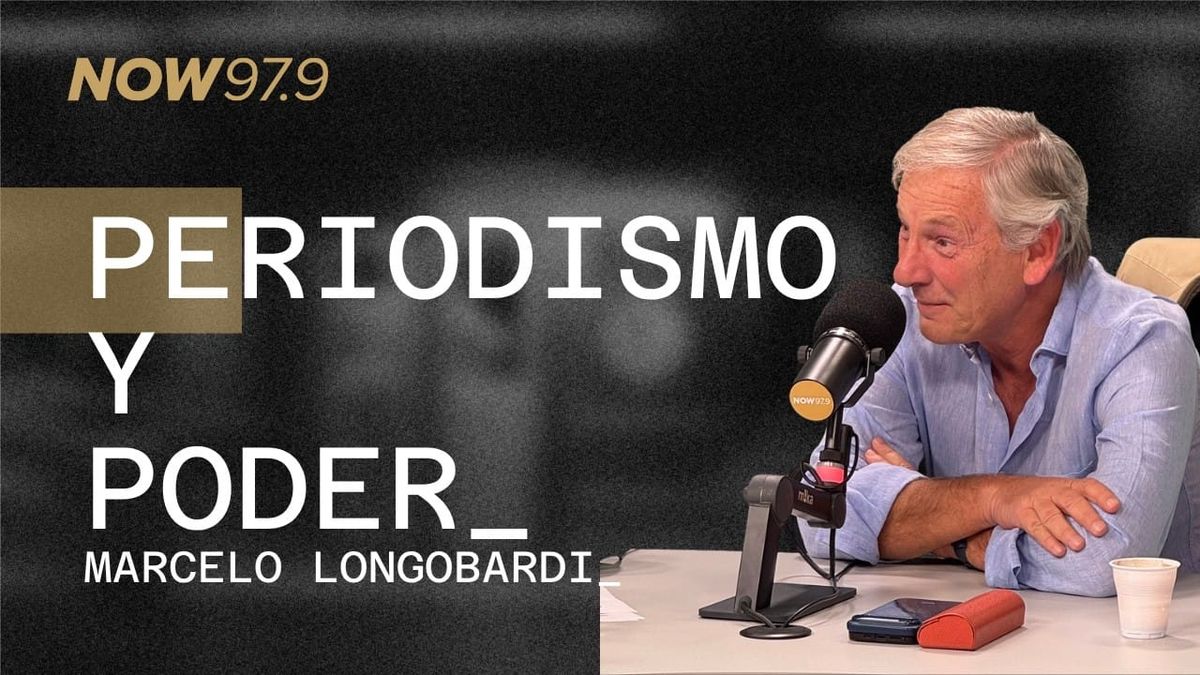
This video from NOW 97.9 FM covered a lot of ground. 6 segments stood out as worth your time. Everything below links directly to the timestamp in the original video.
Discover how a difficult episode from Marcelo Longobardi's adolescence, marked by school bullying and expulsion, led him to find his first job and a reunion that defied the passage of time.
Marcelo Longobardi Reveals School Expulsion for Bullying and an Unexpected Reunion
Renowned journalist Marcelo Longobardi shared a formative episode from his youth, recounting how he was expelled from Don Bosco school at age 15, in his third year, due to an act of rebellion and forging his father's signature. Longobardi revealed he had been a victim of bullying at that school, an experience that deeply affected him. Years later, he unexpectedly encountered one of his former bullies, who congratulated him on his radio success, an interaction that highlighted the persistence of those old emotional wounds. Longobardi's experience underscores how childhood traumas can endure, shaping identity and personal drive even into adulthood, often fueling success as a form of self-affirmation. His story also highlights the surprise of chance encounters, such as when he ran into accountant Capurro, who gave him his first job at 15 and, decades later, still carried his original hiring record as a cherished memento.
"Those wounds take years, and one often sees people in therapy dialoguing or acting in an imaginary conversation with those who hurt them."
Marcelo Longobardi Links Humble Origins and Incomplete Schooling to Imposter Syndrome
Marcelo Longobardi attributed his persistent "imposter syndrome" to his humble origins and the fact that he did not complete high school, having been expelled in his third year. Despite achieving a distinguished professional career, including being a member of CNN and the National Academy of Journalism, the renowned host revealed that a part of him always felt his work was not good enough. His experience living in the Once neighborhood and his parents' status as lower-middle-class employees fueled this insecurity. This confession offers an intimate look at how childhood circumstances can cast a long shadow on self-perception, even for highly successful public figures. Longobardi's internal struggle, who describes himself as someone who "fled" his past, resonates with the universal experience of trying to overcome limitations imposed by origin and expectations, demonstrating that external recognition does not always alleviate personal doubt.
"I've achieved quite a few things in my life, coming, as it occurs to me, from, well, from the street, from a humble family. And I managed, let's say, if I have to evaluate myself from a positive perspective, which is very difficult for me, I'd say, well, I finally became a member of CNN, I'm a member of the National Academy of Journalism."
Marcelo Longobardi Criticizes 'Low Quality' and 'Political Operations' in Current AM Radio
Marcelo Longobardi expressed his deep disillusionment with the current state of Argentine AM radio, which he described as "horrible" and a "disgrace" due to its low quality, vulgarity, and monothematic content. The journalist lamented the impossibility of exploring diverse topics beyond politics and economics and denounced the predominance of political operations that, according to him, transform journalists into "actors of the political system." As an example, he recalled episodes of musical censorship at Radio Rivadavia, where he was prohibited from using songs like "Andrea Bocelli" or Soda Stereo's "Prófugos," under the argument that they were not liked in certain neighborhoods or conveyed political messages. Longobardi's criticism reflects a broader concern about the deterioration of the public media space, where depth and diversity yield to immediacy and partisan agendas. His perception that there is no longer room on traditional radio to "tell stories and narrate them beautifully" is a wake-up call about how media can lose its ability to enrich cultural debate and connect with audiences on a deeper level.
"I am very angry with the decline in quality, with the vulgarity, with the flatness, with the monothematic nature of public debate, with the political operations."
Marcelo Longobardi Defends Decision to Leave Radio Despite Criticism and Discontent with Current Journalism
Marcelo Longobardi reflected on his bold decision to leave his leadership position at Radio Mitre in 2021, a move many considered a mistake. The journalist acknowledged that his subsequent experiences at CNN in the United States and then at Radio Rivadavia, from which he was fired after disputes with President Javier Milei, were plagued with challenges. However, he defended his choice, stating that he did not want to keep making "the same jokes for 30 years" or replicate the same routine that he found boring and unsatisfying. Longobardi's perspective illuminates the tension between the security of a consolidated career and the desire for personal and professional renewal. His strong criticism of current journalism, which he labels "intolerable" and "shameful" due to its levels of political manipulation, reveals a commitment to ethical principles that led him to take risks, even if it meant facing adversity.
"Today's journalism, where the system in which I coexisted, I find intolerable."
Marcelo Longobardi Delves into 'Imposter Syndrome' and Its Impact on His Pursuit of Perfection
Marcelo Longobardi explained in depth how he suffers from "imposter syndrome," a psychological phenomenon that, despite his consolidated career and audience records, makes him feel that his work is constantly deficient and that "one day people will realize." The journalist revealed that this feeling of insecurity, which he attributes in part to not having completed his secondary education and his humble origins, drives him to extreme perfectionism to compensate for what he perceives as his shortcomings. Longobardi's openness about this internal struggle resonates with the experience of many successful people who, despite their achievements, carry doubts about their worth. His account highlights the paradox of how a deep insecurity can, paradoxically, foster an tireless pursuit of excellence, transforming a personal vulnerability into a driving force for professional achievement.
"One believes everything they do is very bad and that one day people will realize. Now, what that produces is a kind of fanaticism for perfection, as if to conceal it."
Marcelo Longobardi Compares His 'Suffering' as a Journalist Under Milei and Kirchner Governments
Marcelo Longobardi compared his experiences as a critical journalist under the administrations of Javier Milei and the Kirchners, stating he had "suffered under both." He explained that, although Milei's government "quickly liquidated" him from Radio Rivadavia in 2024 after a critical interview with Hugo Moyano, his stance made him an "uncomfortable" figure for the president, as he spoke from an ideological quadrant where Milei seeks votes. In contrast, he described the 12 years of Kirchnerism as a period of constant persecutions and espionage, recalling how his private conversations were recorded and their content delivered directly to Néstor Kirchner. Longobardi's comparison highlights the different tactics of pressure that political power can exert on media in Argentina. His testimony underscores the vulnerability of independent journalists who refuse to be "part of a chorus of parrots," revealing how criticism can lead to direct professional consequences, either through rapid dismissals or through prolonged campaigns of harassment and surveillance.
"I suffered under the Kirchners every year. And those guys, I even worked at Mitre with Mancilla Street barricaded because we expected a violent incursion. And they put me through hell: persecutions, espionage."
Also mentioned in this video
- Marcelo Longobardi, un periodista con 25 años de liderazgo en la radio, visita… (0:00)
- Su experiencia actual en YouTube, donde disfruta de una gran libertad para… (0:56)
- Longobardi explica que su canal de YouTube aún no es rentable y se mantiene… (2:29)
- Longobardi explica su decisión de dejar la radio para buscar nuevos desafíos,… (11:58)
- Marcelo Longobardi discute su crítica al gobierno de Milei, al que no considera… (33:05)
- Marcelo Longobardi expresa su admiración por Rafael Grossi como una figura… (40:29)
Summarised from NOW 97.9 FM · 43:43. All credit belongs to the original creators. Streamed.News summarises publicly available video content.
Streamed.News
This publication is generated automatically from YouTube.
Convert your full video library into a digital newspaper.
Get this for your newsroom →