🌐 Also available in: 🇪🇸 Español
Original source: Fast & Curious
This article is an editorial summary and interpretation of that content. The ideas belong to the original authors; the selection and writing are by Streamed.News.
This video from Fast & Curious covered a lot of ground. Streamed.News selected 4 key moments and summarises them here. Everything below links directly to the timestamp in the original video.
Have you ever wondered how internal competition — even within the same team — can be fiercer than the battle against outside rivals? This account reveals how elite riders navigate these complex power dynamics.
Internal rivalry at Repsol Honda: Every rider as their own individual team
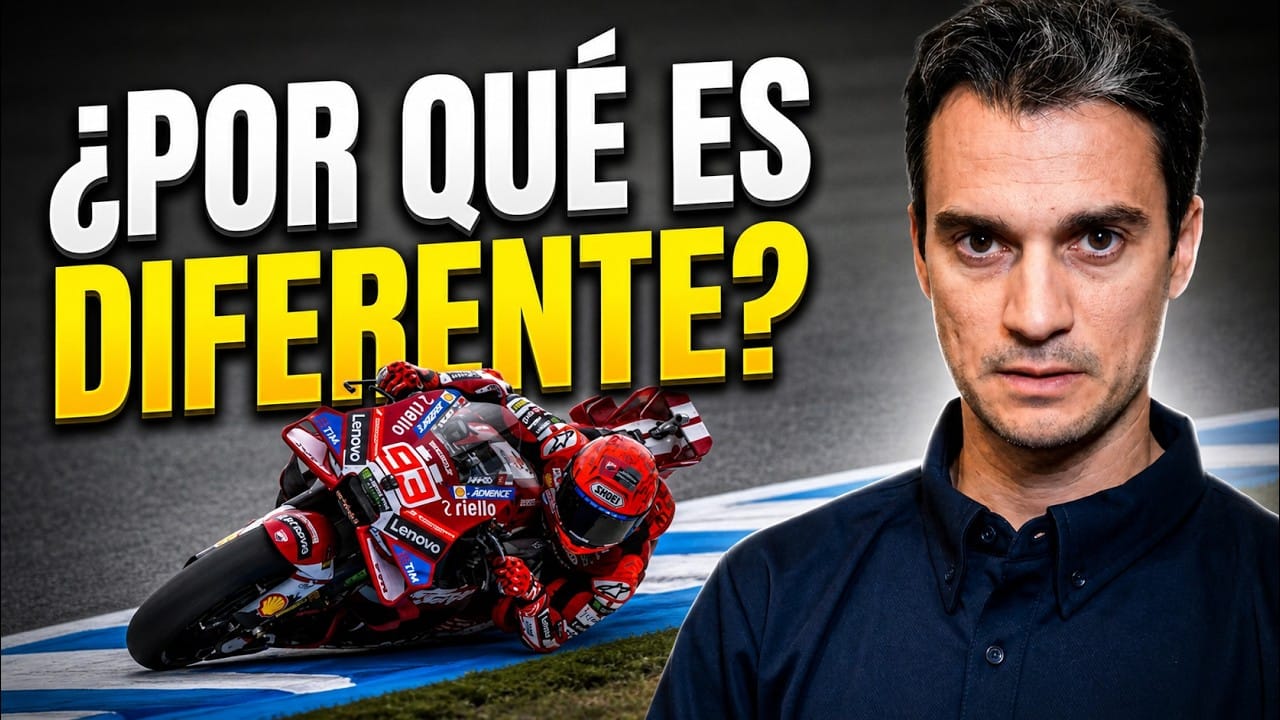
Dani Pedrosa reveals that within the Repsol Honda team during his era, the dynamic was one of individual competition rather than collaboration. Each rider and their crew operated autonomously, each focused on being the fastest and outperforming their teammate, since doing so granted priority in decision-making and motorcycle development. Beating your teammate came first — even before taking on rivals from other manufacturers.
This intense internal rivalry meant that the winning rider gained greater influence over the bike's evolution, shaping its design and specifications toward their own riding style. This approach stands in stark contrast to the collaborative culture seen in modern teams such as Aprilia, Ducati, and KTM, where teamwork is far more explicit.
"Your first rival isn't the one from another brand — it's the one in your own garage. Because if you beat your teammate, you're going to get some priority in the decision-making, you're going to have more of a voice."
Marc Márquez's 'fearless' riding style, according to Dani Pedrosa
Dani Pedrosa describes Marc Márquez's riding style as 'very brave,' defined by attacking corners at the highest possible entry speed — even if that initially meant going too deep. Márquez would prioritise a fast entry and then adjust mid-corner to correct his line, always searching for a way to exit cleanly even after arriving overcooked.
This approach runs counter to conventional motorcycle racing wisdom, which advises riders to 'be patient on entry to get a good exit.' Márquez's ability to never concede a corner as lost on the way in allowed him to gain crucial advantages, forcing rivals to take greater risks to recover the precious tenths of a second he had already banked.
"He was always trying to find a way to get a good exit even after arriving too hot. And when he managed that at certain points on the track, well, he was already pulling away from you."
Dani Pedrosa and Marc Márquez: Two opposing approaches to risk in MotoGP
Dani Pedrosa explains that his approach to MotoGP racing was always to build gradually, prioritising risk management given the severe physical toll of every crash. Unlike Marc Márquez — who could suffer multiple falls in a single weekend and still stand on the podium — Pedrosa could not afford an early-race injury that might end his championship campaign.
Márquez operated with a mindset of going all-in from the start and dialling back only when necessary, while Pedrosa would begin at around 90 per cent and only raise the stakes at critical moments. This difference in risk management, imposed in part by Pedrosa's physical limitations, represented a significant mental challenge for him — one that left him longing for the same freedom to push the limits that Márquez seemed to enjoy.
"Every time I crashed, I got hurt. I couldn't afford five crashes in a weekend and then finish on the podium. That was simply unthinkable for me. Marc did it."
Marc Márquez's Influence on Honda's Motorcycle Development
Dani Pedrosa explains that Marc Márquez's influence on Honda's motorcycle development was not immediate upon his arrival, as Márquez initially acknowledged his lack of experience in machine development and remained "very neutral" during his first two or three years. During this period, Pedrosa was able to continue developing the bike and carry weight in certain decisions.
However, once those early years had passed and Márquez had accumulated championships and experience, his say in decisions grew significantly. With greater experience and success behind him, Márquez began dictating which components best suited his riding style, gradually shaping the Honda around his preferences.
"Once those three or four years had passed, Marc kept winning, and with more experience under his belt, he started having more of a say in which parts worked for him."
Summarised from Fast & Curious · 7:50. All credit belongs to the original creators. Streamed.News summarises publicly available video content.
Streamed.News
This publication is generated automatically from YouTube.
Convert your full video library into a digital newspaper.
Get this for your newsroom →