🌐 Lee esto en Spanish →
Original source: Marcelo Longobardi
This article is an editorial summary and interpretation of that content. The ideas belong to the original authors; the selection and writing are by Streamed.News.
This video from Marcelo Longobardi covered a lot of ground. 6 segments stood out as worth your time. Everything below links directly to the timestamp in the original video.
The collapse of the Hormuz truce in less than a day illustrates why modern wars are so hard to stop: each side negotiates outward while its own domestic politics pushes in the opposite direction.
Strait of Hormuz truce collapses in under 24 hours as ship attacks and seizure of Iranian freighter reignite conflict
What appeared on Friday to be a historic agreement unraveled within hours. Iran had announced the reopening of the Strait of Hormuz — through which up to 150 vessels passed daily before the conflict — conditional on Israel halting its attacks on Lebanon. Markets celebrated, oil prices fell and stocks climbed. But Netanyahu ordered the bombing campaign in southern Lebanon to continue, Iran denied having agreed to surrender its enriched uranium stockpiles, and the Revolutionary Guard attacked a British oil tanker and a French cargo ship with speedboats. The United States responded by seizing an Iranian vessel and ordering the confiscation of any Iranian tanker on the high seas. The strait closed again, with some 20,000 merchant sailors trapped inside since February.
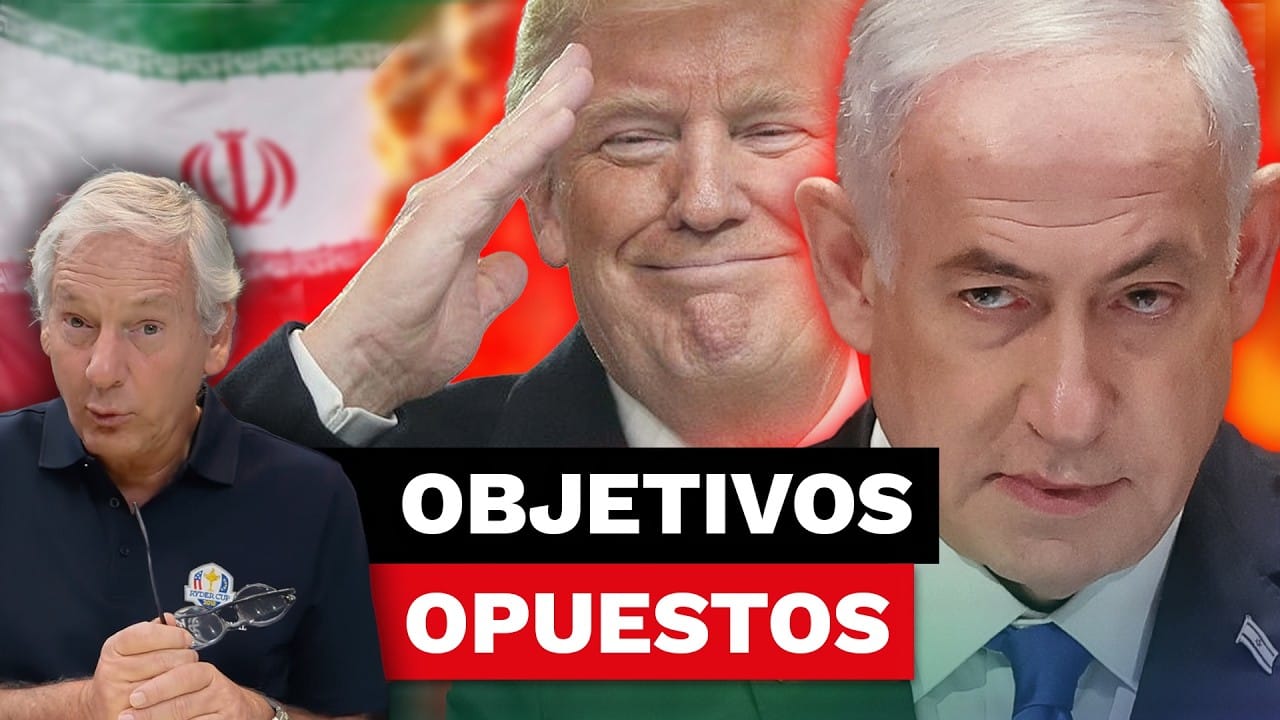
The episode exposes a structural rift both between allies and within each camp. Trump needs an exit from the conflict for electoral reasons — with midterm elections approaching — while Israeli public opinion is pushing Netanyahu in the opposite direction. Inside Iran, the foreign minister and the parliamentary speaker are negotiating, but the Revolutionary Guard is sabotaging any understanding. With fresh rounds of talks scheduled in Pakistan and a Trump ultimatum set to expire within hours, the risk of a major escalation is immediate.
"Trump wants out of the war, Israel wants to stay in the war — and that makes any deal extremely difficult."
▶ Watch this segment — 1:10:25
Global energy crisis and Ukraine war funding: the consequences of the Hormuz closure spread across three continents
The closure of the Strait of Hormuz is triggering a domino effect with concrete and far-reaching consequences. Australia has warned its population of possible fuel rationing, describing the situation as the worst energy shock in history. In Europe, aviation fuel reserves are estimated at just two weeks if the strait remains closed. To compensate for the loss of Iranian oil, Trump extended the sanctions waiver on Russian crude — a move Ukrainian President Volodymyr Zelensky said amounts to directly financing Moscow's attacks on his country. Russia, for its part, declared a Spanish company that supplies components for Ukrainian drones a military target, formally extending the declared scope of the conflict to European soil.
Ukrainian Colonel Vadim Sukharevskyy, widely regarded as a national hero, warned in an interview that the war is closer to Europe than many governments realize. Against that backdrop, Spanish Prime Minister Pedro Sánchez seized on growing European disillusionment with Trumpism — accelerated by the political downfall of Viktor Orbán in Hungary — to position himself as a critical voice, going so far as to call on the European Union to sever ties with Israel. The domestic politics of each country, from Washington to Madrid, are now shaping the course of a global conflict with immediate energy and military consequences.
"Every dollar paid for that oil means new attacks and new deaths in Ukraine."
▶ Watch this segment — 1:24:25
Caputo hits back with insults, denying he proposed a political pact to shore up Argentina's economic plan
Journalist Jorge Liotti reported in La Nación that Economy Minister Luis Caputo raised the idea in a government meeting of striking a political deal with provincial governors — pledging not to compete in their electoral territories in exchange for legislative support for the economic program. The government's response was swift and intemperate: Caputo dismissed the story as "completely false" on social media, while President Javier Milei, speaking from Israel, called those behind the article "filthy trash" — language strikingly similar to what he had used the previous week against journalist Joaquín Morales Solá. Karina Milei reportedly made clear her disagreement with Caputo's position, and officials close to the president interpreted his remarks as an endorsement of his sister's stance.
The dispute goes beyond the insults. Caputo traveled to Washington amid negotiations with the International Monetary Fund, which could approve a $1 billion disbursement for Argentina in May. At the same time, he confirmed there will be no tax reform or tax cuts this year — a signal that directly contradicts one of the stated pillars of the government's competitiveness plan. Public debt stands at nearly $484 billion, though its relative weight depends on the exchange rate used to measure GDP, a figure the host himself describes as a convenient fiction.
"Here's the filthy trash lying again."
Real wages fall in Argentina as IMF economist warns of risks in Milei's dogmatic approach
February data from INDEC confirm that registered wages rose 1.8% in a month when inflation ran at 2.9%, representing a real loss of purchasing power. The deterioration is set to deepen in March, when inflation climbed to 3.4% without wages keeping pace. Formal private sector employment grew in only four provinces, all tied to mining, oil or gas projects — Jujuy, Neuquén, San Juan and Santiago del Estero — while the remaining 20 districts recorded stagnant or falling employment. Analysts consulted by specialist media consider it unlikely that inflation will drop below 2% per month in the medium term.
Against this backdrop, economist Alejandro Werner, former IMF Western Hemisphere director, published a direct warning to the government: he would prefer three more years of high but sustainable inflation over an accelerated reduction that produces an unbearable recessionary impact. The statement clashes head-on with Milei's strategy of holding a rigid course without adjustments. Meanwhile, the closure of the main plant of a well-known biscuit brand in San Juan due to weak consumer demand, and the government's failure to transfer court-ordered funds to national universities, are adding pressure to an economic picture that looks increasingly fragile on its social indicators.
"It is worth taking three more years to bring inflation to single digits than to get there in one year through a reduction that proves unsustainable over time."
Starmer faces crisis in UK after lying to Parliament over ambassador Mandelson's ties to Epstein
British Prime Minister Keir Starmer is facing a serious political crisis after it emerged that he appointed Peter Mandelson as ambassador to Washington despite the politician's documented links to Jeffrey Epstein — and despite Mandelson reportedly having failed the national security vetting required for the post. The scandal deepened when Starmer told Parliament that Mandelson had passed those checks, a statement now widely interpreted as a deliberate lie to the legislature. In the British political system, misleading Parliament is an exceptionally grave offense and can bring down a government.
Meanwhile, in the United States, the Trump administration is pushing electoral roll changes ahead of the November elections that could strip the vote from divorced women and transgender people, on the grounds of discrepancies between registered names and those appearing on identity documents. The mechanism could affect between 20 and 30 million voters, the majority of them opposed to Trump. Both stories illustrate a shared pattern: leaders facing domestic difficulties resorting to institutional maneuvers to hold on to power.
"Lying to Parliament in the United Kingdom is a catastrophic offense."
▶ Watch this segment — 1:35:01
US-Iran negotiations collapse over the weekend after initial market euphoria
What appeared on Friday to be a meaningful diplomatic breakthrough — the announced reopening of the Strait of Hormuz and commitments on Iran's nuclear program — evaporated within 48 hours. Financial markets had responded with enthusiasm: oil prices fell and stocks rose on the prospect of a de-escalation. But over the weekend Iran closed the strait again, its forces attacked British and French vessels, and the United States seized an Iranian cargo ship. Israel, for its part, resumed bombing in southern Lebanon despite commitments announced by Trump.
The Monday outlook combines an international crisis with immediate energy consequences and internal tensions within the Argentine government, including public disputes between officials and a complex judicial agenda. The rift inside Iran — between factions willing to negotiate and the Revolutionary Guard — and the contradiction between Trump's objectives and Netanyahu's configure a scenario in which a US presidential ultimatum is set to expire within hours with no agreement in sight.
Also mentioned in this video
- El conductor informa sobre la muerte del actor argentino Luis Brandoni a los 86… (0:00)
- El conductor analiza la imagen que publicó el presidente Miley identificándose… (7:13)
- El conductor repasa los indicadores económicos y financieros del viernes —tipo… (15:10)
- El conductor menciona brevemente el proceso de quiebra de Sancor y el cierre de… (35:56)
- El conductor informa que el gobierno no cumplió el plazo judicial para… (36:07)
- El conductor detalla la agenda judicial de la semana en el caso Adorni —con… (36:07)
- El conductor explica en detalle las seis causas judiciales del llamado AFAgate,… (43:05)
- El conductor menciona avances judiciales en otras causas (54:27)
- El conductor analiza el escenario político argentino de cara a las elecciones:… (59:54)
- El conductor informa sobre la visita del presidente Miley a Israel para el… (1:05:11)
- El conductor informa sobre los resultados pendientes de las elecciones… (1:32:09)
- El conductor informa sobre el inicio formal de la carrera para elegir al… (1:43:30)
- El conductor narra en extenso la historia de Ulises/Odiseo —la autoría de… (1:43:42)
- El conductor lee y responde correos de oyentes que comentan su trayectoria… (2:17:10)
Summarised from Marcelo Longobardi · 2:42:09. All credit belongs to the original creators. Streamed.News summarises publicly available video content.
Streamed.News
This publication is generated automatically from YouTube.
Convert your full video library into a digital newspaper.
Get this for your newsroom →