🌐 This article is also available in Spanish.
Original source: SpaceX
This article is an editorial summary and interpretation of that content. The ideas belong to the original authors; the selection and writing are by Streamed.News.
This video from SpaceX covered a lot of ground. 3 segments stood out as worth your time. Everything below links directly to the timestamp in the original video.
Satellite TV and government communications infrastructure is quietly being rebuilt at record speed. The pace at which one major operator is replacing its fleet shows how commercial space launch has matured.
SpaceX Launches Eighth Intelsat Satellite in Ten Months as Galaxy Fleet Renewal Accelerates
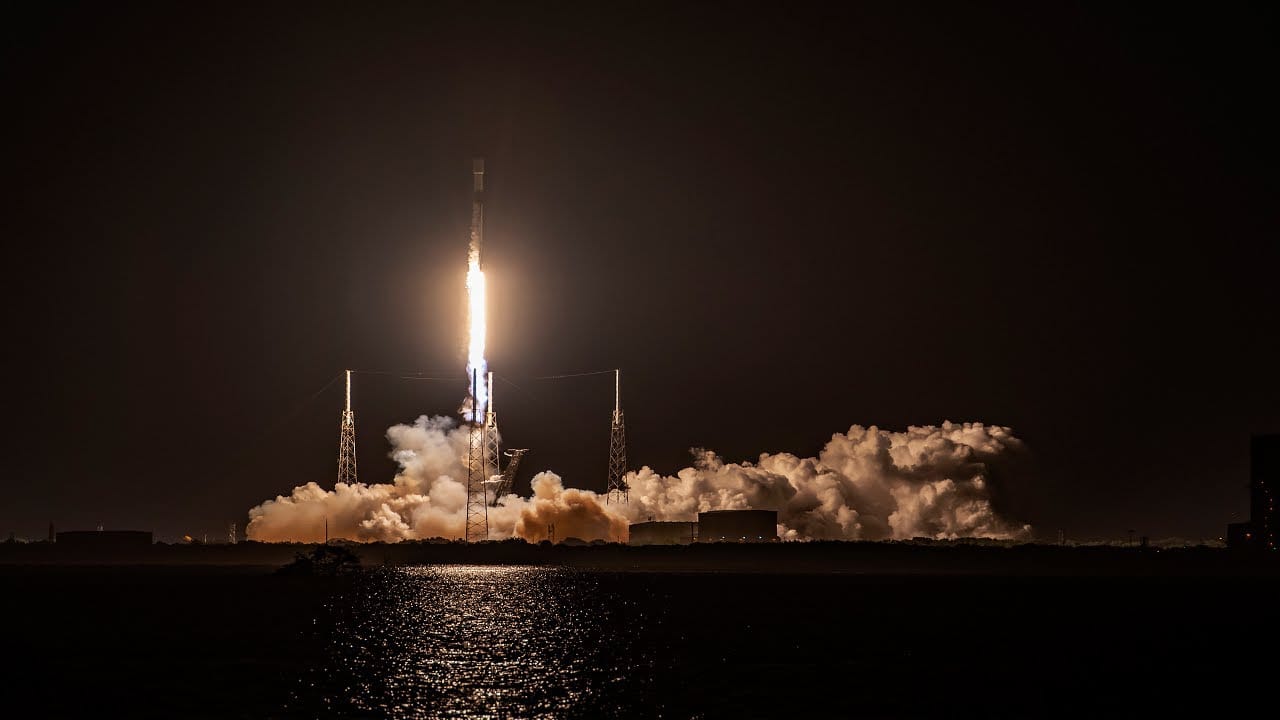
SpaceX carried Intelsat's Galaxy 37 Horizons 4 satellite into orbit aboard a Falcon 9 rocket, marking the eighth Intelsat launch in just ten months — a pace the company called unprecedented for the geostationary satellite industry. The spacecraft, built by Maxar, is jointly owned by Intelsat and JSAT International and will serve North American television, media, and telecommunications customers as well as mobility and U.S. government clients, with commercial service expected by October 2023.
The launch is part of Intelsat's broader Galaxy Fleet refresh, a systematic effort to replace aging satellites. The satellite replaces Galaxy 13 and carries two separate payloads: a C-band system for media customers over North America and a Ku-band system extending coverage into the Pacific Ocean. The volume of geostationary launches Intelsat has achieved in under a year signals how heavily large satellite operators are betting on Falcon 9 to execute rapid constellation upgrades.
"Eight geostationary satellite launches within ten months — this is unprecedented for the industry."
SpaceX Logs 213th Orbital Booster Recovery as Falcon 9 Lands on Drone Ship
A Falcon 9 first stage successfully landed on SpaceX's Atlantic drone ship following the Intelsat Galaxy 37 launch, becoming the company's 213th recovery of an orbital-class rocket booster. The landing followed a precisely sequenced re-entry burn, in which three of the booster's nine Merlin engines reignited to slow the vehicle from over 23,000 kilometres per hour before it descended through the atmosphere. The booster had previously flown on five missions, including a crewed NASA flight and a GPS satellite deployment.
The engineering logic behind the entry burn illustrates why reusability remains commercially significant: decelerating the booster before atmospheric re-entry reduces structural stress, making repeated flights viable. Each recovered booster allows SpaceX to avoid manufacturing a new first stage, directly cutting launch costs. Reaching 213 recoveries demonstrates that what was once an experimental capability has become routine infrastructure for the modern launch industry.
"Falcon 9 is the world's first orbital-class reusable rocket, and reusability allows SpaceX to refly the most expensive parts of the rocket — that in turn drives down the cost of space access."
Galaxy 37 Deployment Completes SpaceX's 251st Mission and 52nd Launch of 2023
SpaceX confirmed successful separation of the Galaxy 37 Horizons 4 satellite from its Falcon 9 upper stage approximately 48 minutes after liftoff, completing what the company logged as its 251st mission overall and its 52nd launch in 2023 alone. The deployment followed two upper-stage engine burns that placed the satellite on its intended transfer orbit toward a geostationary position serving North American media and telecommunications customers.
The cumulative figures underscore a launch cadence that would have been unimaginable for the space industry a decade ago. Reaching 52 launches in a single year — roughly one per week — reflects both the reliability of the Falcon 9 platform and the sustained commercial and government demand that now keeps it in near-constant operation. For satellite operators, government agencies, and competing launch providers alike, SpaceX's throughput has become the benchmark against which the rest of the industry is measured.
Also mentioned in this video
- The Falcon 9 rocket's structure, the first stage booster's flight history,… (8:29)
- Falcon 9 lifts off and the host provides live commentary on the rocket's… (17:05)
- Host welcomes viewers back, recaps the nominal mission so far, and narrates the… (43:22)
Summarised from SpaceX · 51:35. All credit belongs to the original creators. Streamed.News summarises publicly available video content.
Streamed.News
This publication is generated automatically from YouTube.
Convert your full video library into a digital newspaper.
Get this for your newsroom →