🌐 This article is also available in Spanish.
Original source: AI-Driven Marketer
This article is an editorial summary and interpretation of that content. The ideas belong to the original authors; the selection and writing are by Streamed.News.
This video from AI-Driven Marketer covered a lot of ground. 4 segments stood out as worth your time. Everything below links directly to the timestamp in the original video.
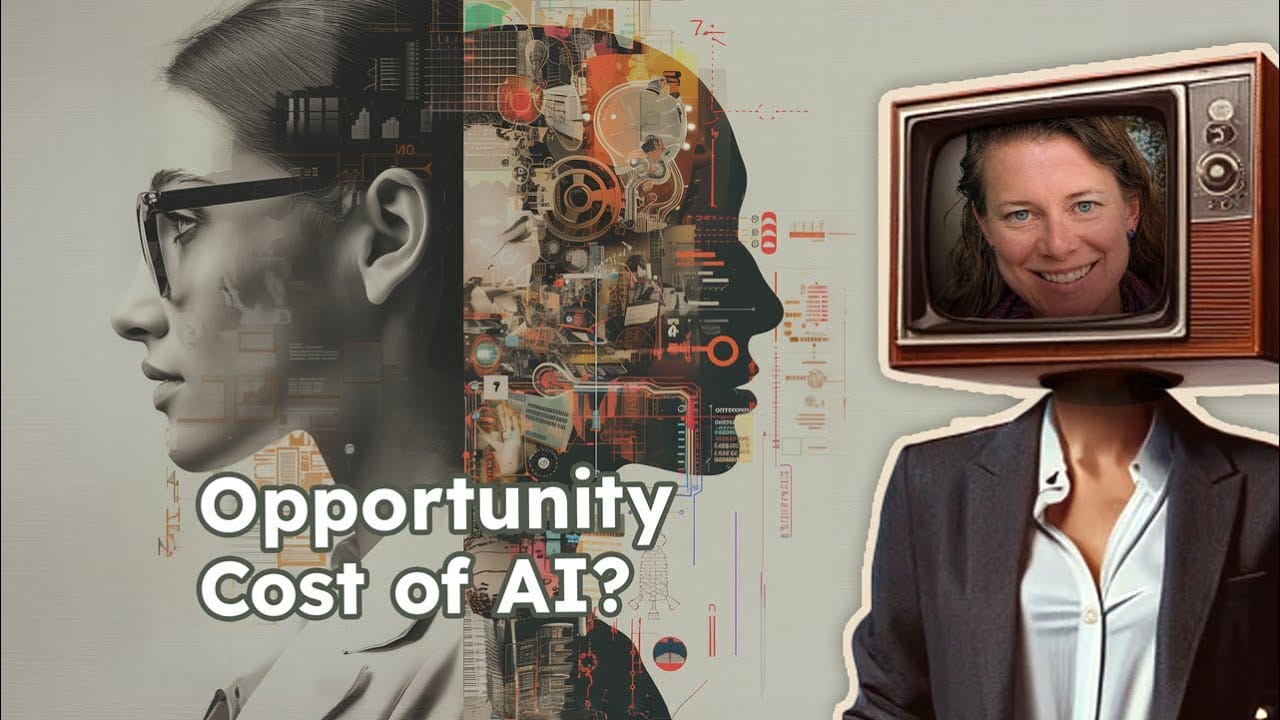
The hidden cost of AI at work may not be job losses — it may be the quiet erosion of mentorship, one skipped feedback session at a time.
Senior Marketers Face a Dilemma: Train the AI or Develop the Team?
Ashley Faus, drawing on 15 years of marketing experience, argues that the real cost of adopting AI is not the subscription fee but the hours a senior professional must spend translating deep expertise into written instructions a machine can follow. Her pointed question: why invest that time in a robot instead of in the junior colleagues you are supposed to be developing? The concern hardened into something personal when a colleague described being told by a senior manager to "just use ChatGPT" rather than receive mentorship — a moment Faus describes as feeling like being told "I'm going to train a robot instead of you."
The anecdote captures a tension that extends well beyond any single workplace. When organisations treat AI adoption as a substitute for human development, they risk hollowing out the mentorship pipeline that produces the next generation of senior experts — the very people who will eventually need to explain their craft to the next AI system.
"Why would I invest that time in the robot instead of in the humans on my team that I'm supposed to be investing in?"
The AI Job-Loss Fear Is Really a Healthcare Fear, Faus Argues
Ashley Faus reframes the anxiety around AI displacing workers, pointing out that when Sam Altman predicts AI will handle 95 percent of what marketers currently do, that is a statement about tasks, not headcount — and those are very different things. The deeper fear, she argues, is not boredom or obsolescence but the loss of employer-sponsored healthcare and the basic inability to meet fundamental needs, a structural problem that predates AI entirely. Humans, she notes, have always found new work after technological disruption; the crisis is the system that ties survival to a traditional job.
The argument shifts the AI debate from technology to social policy, suggesting that reskilling programmes and conversations about healthcare access matter more than predicting which roles disappear.
"They're not worried about being bored or looking stupid — they're worried that they can't fundamentally meet the lowest level of Maslow's hierarchy of needs."
Gen Z Is Tech-Fluent at Consuming, Not Producing — and That Gap May Matter for AI
A conversation about whether early AI adoption creates a lasting competitive advantage surfaces a counterintuitive observation: Gen Z's reputation for being tech-savvy does not automatically translate into workplace productivity. Having worked at a college, the host found that younger employees knew how to navigate platforms as consumers but needed explicit training to use the same tools professionally. Faus extends this with the floppy-disk analogy — digital natives never had to unlearn old mental models, which may make them faster at adopting genuinely new interfaces like AI voice commands. But the underlying skill that actually transfers, both agreed, is not technical fluency; it is the human capacity to understand an audience, build connection, and manage attention.
The exchange quietly punctures two competing anxieties at once: that older workers will be left behind by AI, and that younger ones will effortlessly leapfrog them.
"The underlying skill is not actually the tech — the underlying skill is the human connection."
A Two-Week Consulting Process Now Takes 30 Minutes — But the Payback Calculation Is Personal
A scenario-forecasting consultant who once spent two weeks per client building structured narratives around industry trends — mapping economic, social, and political trajectories across multiple variables — can now run the same process in 20 to 30 minutes using AI, and do it live in the room with the client. That compression is real, but Faus cautions that the decision to invest time building an AI workflow is itself a break-even analysis: how often do you repeat the task, how long does setup take, and when does the payback period actually arrive? For her own onboarding documents at Atlassian, where she once manually personalised meeting plans for a cohort of four new hires, the tedium was obvious — but finding, configuring, and prompting the right tools still risks costing more time than it saves.
The examples illustrate why AI's productivity gains are unevenly distributed: they arrive quickly for well-defined, repeatable processes and slowly — or not at all — for complex, context-heavy work that lives inside an expert's head.
"It really becomes this calculation of: is the amount of time I'm going to spend building a process worth the time I'm going to save later?"
Also mentioned in this video
- Ashley Faus and the host discuss the appropriate timing for Enterprise teams to… (0:00)
- Ashley Faus predicts that AI will find its place, similar to marketing… (3:50)
- A positive experience using ChatGPT to develop a five-step process for teaching… (11:27)
- Dave Ramsey's company uses AI internally for brainstorming and growth plans but… (16:40)
- Her process of refining AI prompts to generate session titles, noting that… (20:07)
- AI-generated clips often require manual adjustments, frequently being off by… (24:34)
- Implementing, vetting, and managing tech, and highlighting that AI adoption is… (45:27)
Summarised from AI-Driven Marketer · 50:16. All credit belongs to the original creators. Streamed.News summarises publicly available video content.
Streamed.News
This publication is generated automatically from YouTube.
Convert your full video library into a digital newspaper.
Get this for your newsroom →