🌐 This article is also available in Spanish.
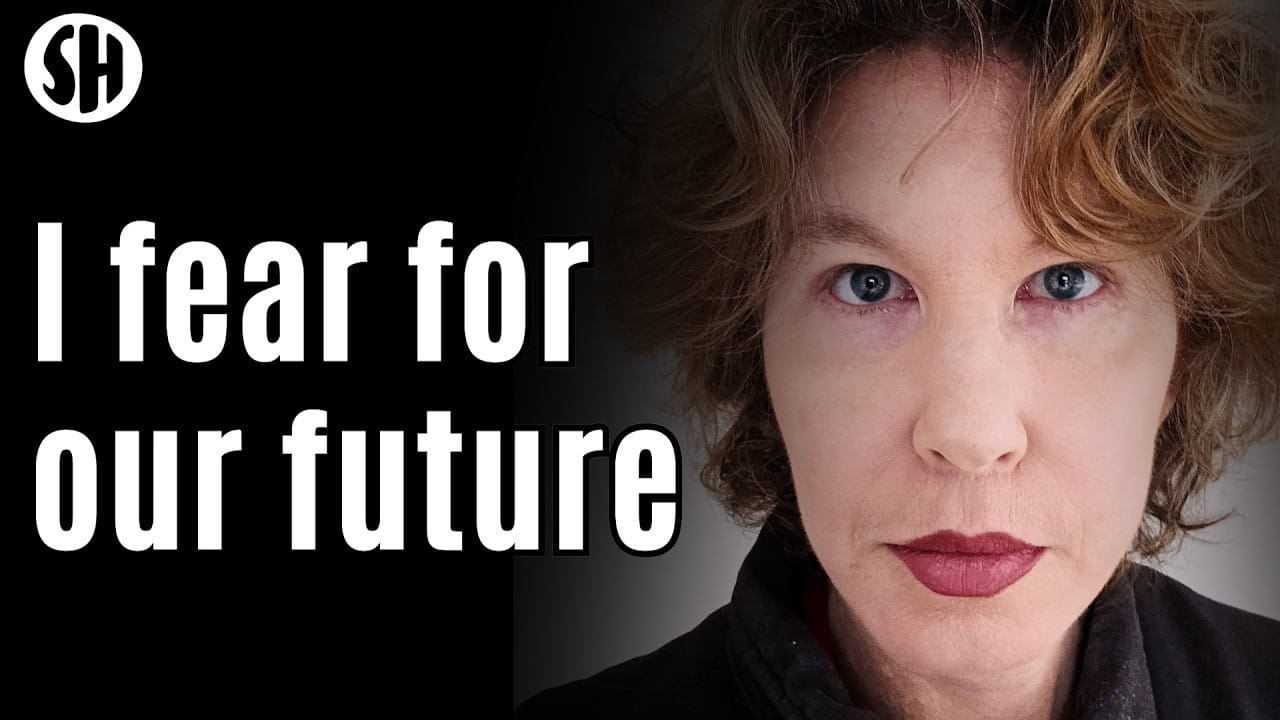
Original source: Sabine Hossenfelder
This article is an editorial summary and interpretation of that content. The ideas belong to the original authors; the selection and writing are by Streamed.News.
This video from Sabine Hossenfelder covered a lot of ground. 2 segments stood out as worth your time. Everything below links directly to the timestamp in the original video.
The case against climate inaction is increasingly being made not by environmentalists but by people worried about their retirement savings and economic stability. That shift in framing may be the most honest accounting of what's actually at stake.
Climate Goals Are Dead and the World Has Stopped Pretending Otherwise
The evidence of collective retreat on climate action has reached a tipping point, according to one commentator surveying recent events: fossil fuel nations are expanding output, major banks are abandoning climate pledges, the Trump administration has reversed federal climate policy, the UN Secretary-General has conceded the Paris Agreement temperature target is finished, and Bill Gates has publicly suggested the world move on. The cumulative picture, the speaker argues, is not a temporary setback but a genuine species-level abandonment of preventive action.
The argument draws its force from an economic framing rather than an environmental one. Just as a person who delays removing a tumor faces a far harder recovery later, civilisations that skip the relatively modest pain of an energy transition now will spend decades diverting labour, capital, and time to damage adaptation instead — a prolonged drag on the global economy with consequences that will compound across generations.
"We could make our lives a little bit more miserable now to avoid something worse down the line. That would be the smart thing to do. But we don't do that."
Climate Failure Reveals a Deeper Flaw: Market Economies Cannot Coordinate Global Problems
Viewed from a systemic level, the failure to address climate change reflects something more troubling than political will or public confusion — it exposes a structural gap at the heart of how modern civilisation organises itself. Market economies, the only mechanism capable of coordinating action across billions of people and hundreds of governments, were never redesigned to account for environmental costs. That left humanity's most powerful coordination tool actively working against the outcome societies claimed to want. Conferences and international agreements attempted to paper over the flaw without actually correcting it.
What makes this analysis alarming is its implication for every other large-scale challenge humanity faces. The speaker explicitly draws a parallel to artificial intelligence regulation, where market incentives are again racing ahead of any corrective mechanism. The one possible escape route, the speaker suggests, is AI itself: if advanced systems can raise humanity's collective problem-solving capacity, they might finally give civilisation the tools it needs to fix the coordination failure that climate change so nakedly exposed.
"The only reliable system the humans had for global coordination was working against them. They held conferences and meetings and tried to come up with plans and agreements. But they didn't realize that this problem couldn't be fixed with conferences."
Also mentioned in this video
- Climate action failed because the public was misled about the true economic… (1:30)
- The same collective intelligence failure seen in climate change also applies to… (5:47)
Summarised from Sabine Hossenfelder · 8:39. All credit belongs to the original creators. Streamed.News summarises publicly available video content.
Streamed.News
This publication is generated automatically from YouTube.
Convert your full video library into a digital newspaper.
Get this for your newsroom →