🌐 Also available in: 🇪🇸 Español
Original source: DECODE con DaniNovarama
This video from DECODE con DaniNovarama covered a lot of ground. Streamed.News selected 8 key moments and summarises them here. Everything below links directly to the timestamp in the original video.
Ever wondered where your old devices actually end up? This reality check shows the global consequences of everyday consumer choices — and how one person's 'obsolete' gadget becomes another's dangerous livelihood.
E-waste mountains: the brutal reality of planned obsolescence in Ghana
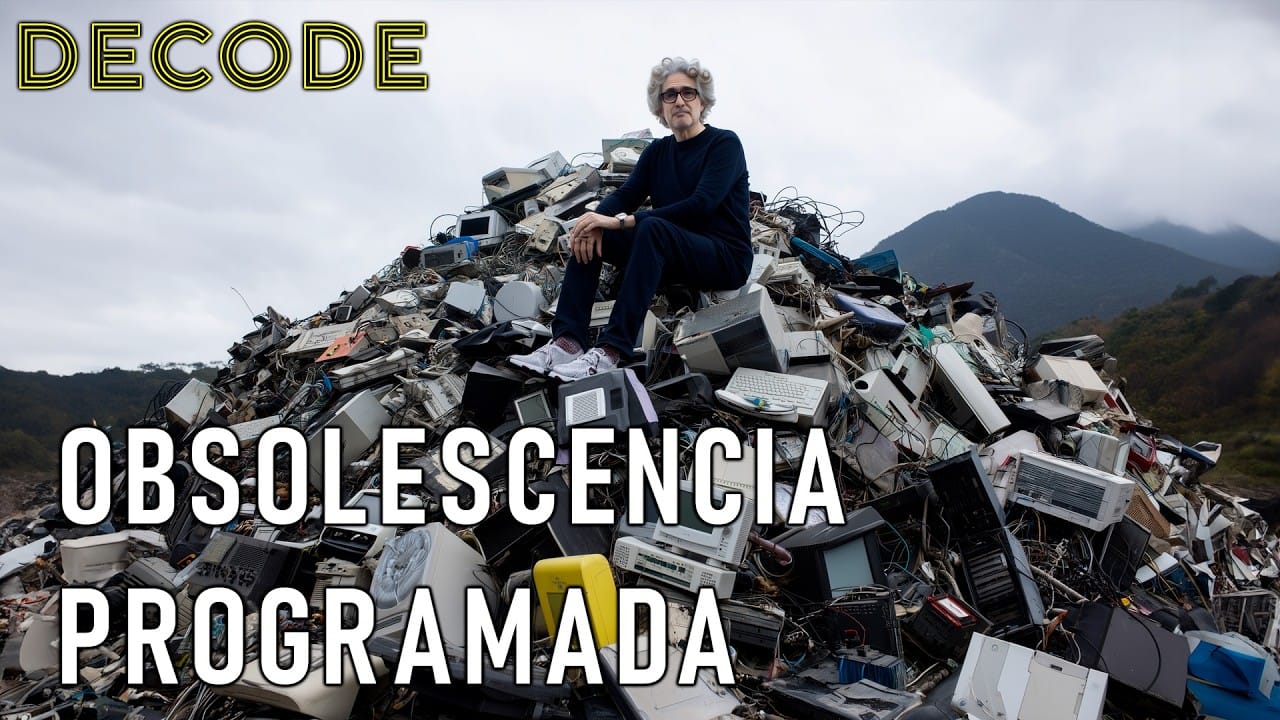
Planned obsolescence, especially in tech, generates massive waste that doesn't vanish — it piles up in places like Agbogbloshie, Ghana. This site has become one of the planet's largest electronic graveyards, where entire communities hand-dismantle devices to salvage metals, breathing toxic fumes while surrounded by the first world's discards. This is no anomaly. It is a built-in consequence of a system designed to convert products into trash as quickly as possible.
The dynamic exposes a deep global failure: consumption-and-discard cycles in wealthy nations directly damage the health and environments of poorer regions. Short product lifespans, engineered to drive rapid turnover, feed a waste spiral that remains invisible to most consumers yet inflicts devastating physical and social harm elsewhere.
"If products last less time, they become waste faster and we generate more waste. This isn't a side effect — it's the logical consequence."
Planned obsolescence lurks in software: the Windows Vista case
Software obsolescence is subtler — and more cynical — than physical wear. Instead of material breakdown, developers pile on unnecessary features that bloat interfaces, slow performance, and burden hardware, as Windows Vista made plain. Users are pushed to upgrade even when the previous version worked fine, under the cover of progress that is often superficial or nonexistent.
Microsoft with Word and Adobe with Photoshop both apply this playbook to justify new license sales. It is no accident that once-solid software becomes incompatible with new apps or operating systems, forcing artificial hardware refreshes and creating constant friction for consumers.
"When there's no real, tangible progress in what we actually need, it gets invented — features are added, the interface is complicated, the product is made bigger, heavier, hungrier for memory and CPU, slower to start. The product gets worse, but it also leaves you behind."
How brands use psychological tactics to lock in customers and degrade quality
Brands deploy three core psychological mechanisms to trap customers in consumption and obsolescence cycles. First, sunk cost: time and money already invested in a platform — Steam or Twitter, for instance — creates powerful inertia against switching. Second, habit: people prefer the familiar and resist the effort of seeking alternatives, a dynamic clothing brands exploit through non-standard sizing that makes switching painful.
The third mechanism is the most cynical — eliminating competition through aggressive early-stage pricing, as Uber demonstrated. Once rivals are swept away, companies operate as near-monopolies, free to let quality slide without losing customers. Locked-in users mean investment flows away from product innovation and into marketing, sustaining a cycle where loyalty is built not on excellence but on the high cost of leaving.
"Companies that want to can force us into a planned obsolescence cycle — and that closes the loop. First they make you fall in love. Then they build a habit. Then they trap you. And once they have you, they know you'll stay."
Companies degrade product quality to maximize profits, not durability
Quality is no longer a core goal for companies — it has become a variable optimized for profit. This is visible across clothing, technology, and furniture, where cheaper materials and designs deliberately limit product lifespan. The logic is simple: a product that lasts too long generates no repeat revenue, so companies build in obsolescence to drive repurchasing.
This model also ensures that repairs cost nearly as much as replacements, discouraging consumers from extending a product's life. Most modern goods are not designed to last — they are designed to work "well enough" until the consumer buys again. The root problem is that sales cycles now take priority over long-term customer satisfaction.
"Products aren't designed to last — they're designed to last just long enough to bring you back. That's the core idea behind planned obsolescence."
The modern business model drives obsolescence: recurring revenue over durability
Today's production and consumption system favors low-cost, high-turnover goods, converting sporadic sales into recurring revenue streams — a model that mirrors subscriptions. Companies would rather sell three €100 jackets over three years than one €300 jacket that lasts a decade, because predictable, regular income is easier to plan and scale around. This pushes companies to deliberately shorten product lifespans and lock consumers into constant repurchasing.
Durability has effectively become a liability for corporate finance. The goal is no longer to sell a product for life, but to enroll the customer in an endless acquisition cycle. From software to fashion, this logic has fully reshaped product design — prioritizing revenue recurrence over long-term functionality.
"Irregular revenue creates peaks and valleys that are hard to plan or predict. So companies changed the model. As much as possible, everything is now made to resemble a subscription."
Consumers have the power to stop planned obsolescence
The fight against planned obsolescence starts with consumers, who exercise a form of "democracy at the point of purchase." By deliberately choosing what to buy — or refuse to buy — individuals can directly pressure companies to change, just as informed consumer backlash helped cut palm oil production. Companies sustain these practices because consumers tacitly accept them.
Small individual choices add up to systemic change. The system is built to make us buy more and discard sooner, but consumer agency can break that cycle. Every purchase is a vote — one that can either entrench obsolescence or push companies toward more durable, sustainable products.
"Democracy in the 21st century is sometimes exercised at the point of purchase. When we buy — or stop buying — a certain type of product, that is the moment we squeeze companies into changing their practices."
The three phases of novelty dependency: from seduction to degradation
The novelty dependency cycle follows three predictable phases: infatuation, habit, and degradation. First, a product enters the market with appealing features that meet a real need, triggering an "infatuation" phase where customers rush to adopt it. Constant use then turns the product into a "routine," building a habit in which consumers invest time and data while brands lock them in through tactics like non-standard sizing.
The paradox: once a customer is captive and the habit is entrenched, the "degradation" phase begins. Companies take loyalty for granted, stop investing in product innovation, and shift resources to marketing — allowing quality to slip gradually. The product no longer needs to be excellent, just "good enough" to keep the customer trapped. Switching brands costs more, in effort or inconvenience, than tolerating the decline.
"The moment they have you hooked on their routines, that has value — a lot of value. Why? Because our habits are sticky; we struggle to break them. [...] They know they can degrade product quality and force planned obsolescence because they know they basically have you trapped."
The consumer paradox: why we accept product degradation
Most consumers tolerate gradual product decline because they behave as "satisficers" rather than "maximizers." A satisficer aims for a minimum acceptable level and stops there; a maximizer invests time and energy hunting the best option. The paradox is that even as products worsen, the pace and stress of modern life push most people toward satisficing — automating purchase decisions to conserve time and energy.
Companies exploit this tendency by reducing purchase friction and entrenching habits, confident that consumers won't optimize every choice. The deeper problem: knowing this, firms can lower quality incrementally and keep customers captive without ever striving for excellence. Planned obsolescence works precisely because the effort of finding an alternative outweighs the perceived benefit of a better product.
"The norm is that our lives are, let's say, very busy, very stressful... I'm not going to spend hours reading yogurt reviews or comparing cotton quality in trousers or researching every small purchase I make. It's impossible — my life is already full enough, busy enough, and stressful enough."
Also mentioned in this video
- Planned obsolescence and product degradation (0:00)
- Personal anecdote about superior quality of old coats (0:52)
- Planned obsolescence defined as intentional product design (3:39)
- Comparison of two airlines' strategies (32:45)
- Host shares personal brand loyalty example (38:02)
- The '1-2-3 recipe' for being a more responsible consumer (38:58)
Summarised from DECODE con DaniNovarama · 46:37. All credit belongs to the original creators. Streamed.News summarises publicly available video content.