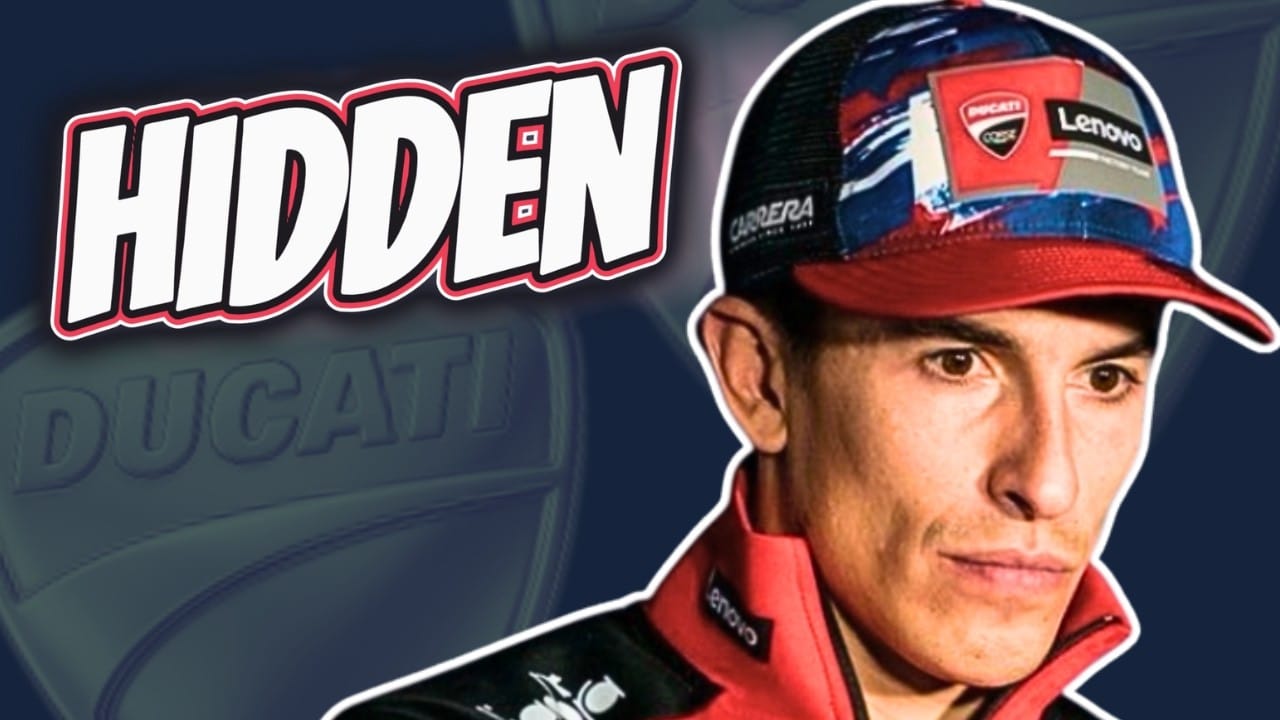
Original source: With Antone MotoGP
This video from With Antone MotoGP covered a lot of ground. Streamed.News selected 5 key moments and summarises them here. Everything below links directly to the timestamp in the original video.
The reigning MotoGP champion is hitting the reset button mid-season. It's a sign of a team in crisis, trying to fix a fundamental flaw before the title slips away.
Ducati Attempts Mid-Season Redesign of GP26, Signaling 'Conceptual Correction'
Ducati and its engineering chief Gigi Dall'Igna are attempting a fundamental redesign of the GP26 bike mid-season, a move described as a "conceptual correction" rather than simple refinement. The team is focusing on a new swingarm, ground effects, side wings, and software, along with changes to engine braking and front fork travel, indicating a deep-seated issue with the bike's core behavior.
This aggressive overhaul is a high-stakes gamble, as Ducati has limited time and concessions to implement such significant modifications. The urgency suggests the team believes the current GP26 concept is flawed and requires immediate, radical intervention to remain competitive for the championship.
"Ducati are no longer refining and retuning. They are trying to change the behavior of the GP26 mid-season. And that is a more than a conceptual correction."
Aprilia's Focus on Long Runs and Hot Conditions During Testing Pays Off
In a strategic departure from rivals, Aprilia's preseason testing prioritized long race simulations in the hottest part of the day rather than chasing single-lap speed. The team focused on understanding the Michelin rear tire's behavior over full race distances with minimal traction, aiming to gather clean data on the RS-GP's core characteristics under stress.
This philosophy has resulted in a bike with exceptional aerodynamics, cornering ability, and balance, arguably the best on the grid. Aprilia's methodical approach highlights a different, and potentially more effective, way to prepare for the demands of a full MotoGP season.
"They gathered clean data on how the bike behaved with minimum traction over full race distances."
Ducati's GP26 Suffers From Critical Front-End Issues Over Race Distances
Ducati's GP26 bike is revealing a critical flaw during full Grand Prix races: a lack of front-end confidence. The bike struggles to turn and complete corners, causing riders to lose faith in its handling. This instability compromises braking and corner speed, forcing riders into a detrimental riding style.
To compensate for the bike's unwillingness to turn, riders are forced to use the rear of the bike to help it rotate, a technique that reportedly "absolutely murders" the rear tire. This issue undermines the team's race pace and tire longevity, posing a major threat to its championship hopes.
"The real problem with the GP26 [is] front end confidence. The GP26 doesn't seem to want to turn and complete the corners."
Marc Márquez's Unique Riding Style May Have Hidden Ducati GP26's Flaws
Marc Márquez's singular ability to handle instability and low-grip conditions may have inadvertently masked fundamental problems with Ducati's GP26 during development. Described as the "greatest low-grip rider," Márquez can instinctively save front-end slides and tolerate a level of bike movement that other riders find unmanageable.
This suggests that what Márquez can survive on track is not sustainable for a championship-winning bike in the hands of other riders. His exceptional talent may have led Ducati's engineers to overlook deep-seated flaws that are now becoming apparent across the team.
"What Marc Márquez can survive may not actually be sustainable for a championship bike if he's not riding it."
Misleading Test Conditions at Sepang and Buriram May Have Masked Ducati's Weaknesses
Ducati's preseason testing strategy at Sepang and Buriram may have led the team astray. The constant running on these tracks created "artificially produced grip," which likely masked the GP26's inherent weaknesses over long race distances. While the bike appeared stable, analysts note that stability and tire preservation are not the same thing.
This has led to the critical assessment that Ducati may have developed its entire championship contender around track conditions that are not representative of a full season. The team built a bike for an ideal scenario that rarely occurs on the MotoGP calendar.
"Ducati may have just about built an entire championship bike around conditions that they won't race in every weekend."
Also mentioned in this video
- The Ducati GP26 appears vulnerable this year despite its speed, potentially due… (0:00)
- Of whether there is too much dependence on Marc Márquez and Pecco Bagnaia,… (3:55)
- Whether Ducati's testing program and Marc Márquez's ability to ride around… (8:05)
Summarised from With Antone MotoGP · 9:12. All credit belongs to the original creators. Streamed.News summarises publicly available video content.