🌐 Also available in: 🇫🇷 Français
Original source: Andy Roddick's Served Media
This video from Andy Roddick's Served Media covered a lot of ground. Streamed.News selected 8 key moments and summarises them here. Everything below links directly to the timestamp in the original video.
A devastating loss can sometimes reveal a player's greatest improvements. Frances Tiafoe's marathon exit at Roland-Garros is a perfect example of progress found in defeat.
Italian Men Make Historic Quarterfinal Run at Roland-Garros as Arnaldi Outlasts Tiafoe
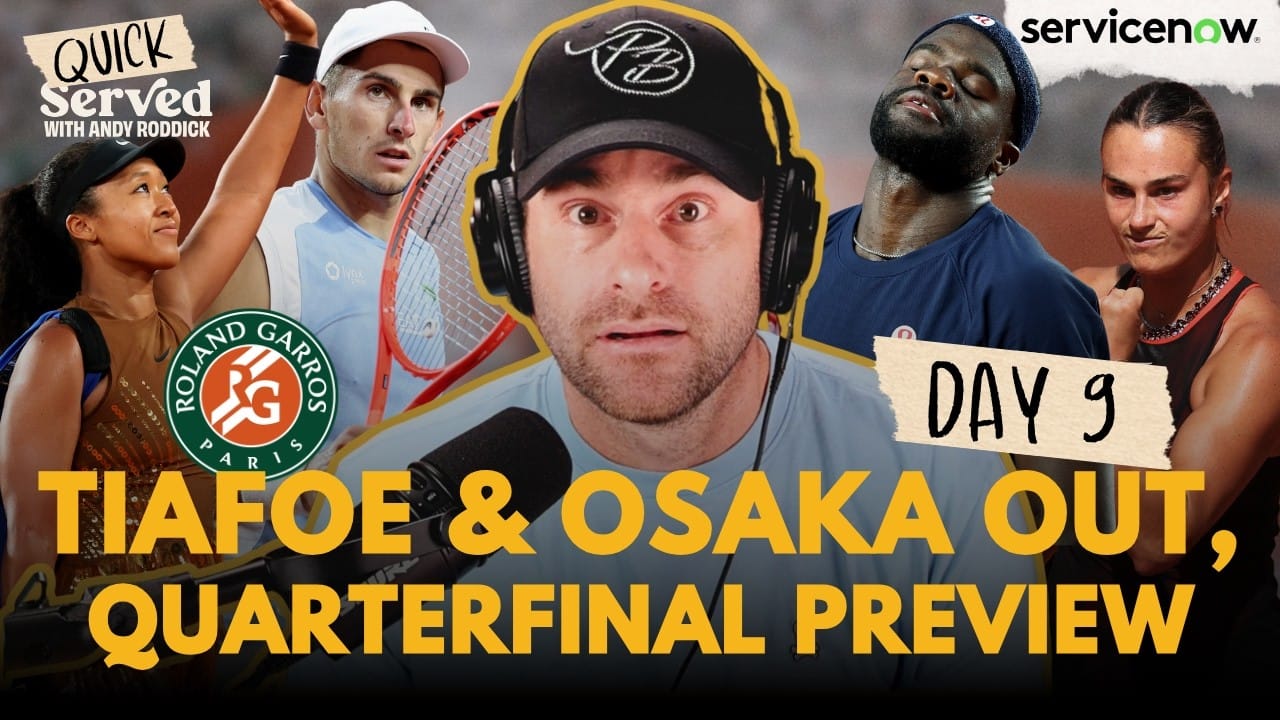
While Frances Tiafoe's five-and-a-half-hour loss to Matteo Arnaldi is a heartbreaker, it also showcases his significant physical gains over the past year. He now possesses the durability to compete in these marathon matches, even if the result stings; a year ago, he wouldn't have had the ability to last that long. It’s a brutal outcome, but he was prepared for the opportunity physically, even if the execution in closing wasn't there.
The loss highlights a larger story of Italian tennis, which achieved a historic milestone with three men—Flavio Cobolli, Matteo Berrettini, and Arnaldi—reaching a Grand Slam quarterfinal for the first time ever, and remarkably, doing so without their top player, Jannik Sinner. It’s a testament to the country's depth and a moment to respect the struggle and resilience shown.
"You didn't have this physicality in your body a year ago. You didn't have the ability to lose in five and a half hours because you were losing in 4 hours and 40 minutes. All you can do is kind of prepare yourself for the opportunity."
Unforced Error Count Reveals Key Difference Between Fonseca and Menšík
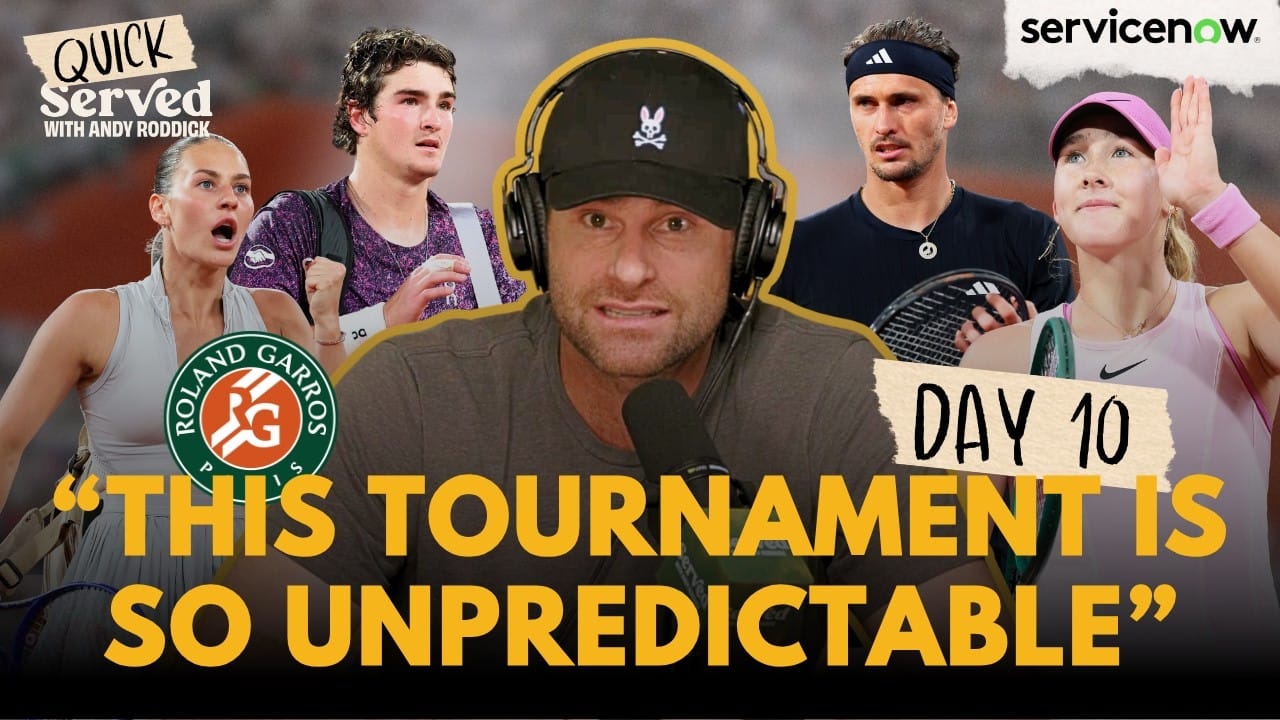
A deep dive into the stats ahead of the matchup between João Fonseca and Jakub Menšík reveals a telling discrepancy in their unforced error counts. Through four matches, Menšík has committed 224 unforced errors, a staggering 68 more than Fonseca's 156. This isn't just a stylistic difference; it's a reflection of the quality of their opponents. Fonseca has been tested against elite players who are masters at inducing mistakes.
That 70-plus error gap is significant. It suggests Fonseca has been playing cleaner tennis under greater pressure, which could be a decisive factor in their head-to-head battle. Maintaining that discipline will be crucial for him to secure a win.
Holger Rune's Return Game Faces 'Different Animal' in Zverev's Serve
The upcoming clash between Holger Rune and Alexander Zverev will likely be decided by one key battle: Rune's return against Zverev's serve. While Rune has shown he can inflict pain on serves by taking big cuts, Zverev's serve is a different animal. The question is whether Rune possesses a defensive 'stick save' return in his arsenal, like a Roger Federer or Andy Murray, or if he needs to take a full swing on every return to be effective.
For Zverev, facing a red-hot upstart like Rune might actually be freeing. Knowing he has to bring his best game from the start could prevent the kind of nervous performance he’s shown against less-heralded opponents, as his respect for Rune's current form is already high.
"I'm curious to see how he returns an absolute bomb consistently. He takes bigger cuts and he's able to inflict pain on serves, but Zverev's serve is a different animal."
Fonseca's Evolution From Flashes of Talent to Complete Player on Display
João Fonseca has fully converted any remaining skeptics with his performance, evolving from a player with flashes of talent to a more complete competitor. His elite ability to hit a 115-mph forehand winner at will is now complemented by a more nuanced game, as he’s mixing up paces, adjusting his return position, and showing impressive mental fortitude by focusing on the point-by-point process.
As he heads into his next match against Jakub Menšík, both players will be dragging after grueling five-set victories. However, Fonseca's newfound maturity and ability to think his way through matches, combined with his raw power, make him a formidable opponent who is no longer just about upside.
"No one can just hit a 115 winner on a forehand side at will, you know, without needing much time to set up. That is an elite talent. Now he's combining it with mixing up paces."
Grueling Five-Set Epics at Roland-Garros Underscore Tennis's Unique Physicality
This year's Roland-Garros has been a relentless showcase of physicality, reinforcing the argument that tennis is the hardest sport in the world. The sight of players enduring five-and-a-half-hour battles, isolated on court just days after another marathon match, highlights the unique mental and physical toll of the game. The ebbs and flows within that time are immense, and there's nowhere to hide.
Unlike in team sports, there's no relief. A player can't just pass the ball to a teammate to close out the game; they have to execute every single part themselves, from start to finish. You have to respect the struggle involved in these monumental efforts.
"Francis can't throw it into Shaq to post up to close the game out. Like, you got to do every part of this game yourself. And it's just really hard."
Sabalenka's Nuanced Game Overpowers Osaka in Hard-Hitting Clash
Aryna Sabalenka's victory over Naomi Osaka showcased the added layers she's integrated into her power-based game. In a matchup between two of the tour's biggest hitters, Sabalenka's ability to introduce nuance—like timely drop shots and more consistent serving—made the difference. She effectively turned the match into a hard-court battle on clay, giving Osaka a taste of her own medicine with relentless pace.
Meanwhile, the match between Anna Kalinskaya and Anastasia Potapova was a scrappier affair, with both players showing nerves as they recognized a major opportunity in a draw opened up by upsets. Kalinskaya ultimately edged out a tight win, but the tension was palpable.
"Sabalenka, it just feels like she has a little more nuance in her game now. Went to the drop shot a couple of times. Moves maybe just a touch better. Serves a little bit more consistently."
Physical Toll Evident as Tiafoe and Arnaldi Battle After Five-Set Ordeals
The fourth-round match between Frances Tiafoe and Matteo Arnaldi quickly became a war of attrition, with both players clearly feeling the effects of their brutal five-setters in the previous round. The physical toll of back-to-back marathon matches is a recurring theme at this year's tournament, turning later-round encounters into survival contests as much as tennis matches.
The challenge for players like Tiafoe and Arnaldi is managing their energy and avoiding the physical letdown that often follows a massive effort. In a Grand Slam, there's no time for recovery, forcing competitors to dig deep into their reserves just to stay on the court.
Cîrstea's Fearless Play in Final Year Sets Up Intriguing Clash with Andreeva
Sorana Cîrstea is playing some of the best tennis of her career in her final year on tour, thumping opponents with dominant scorelines like 6-0, 6-0 and 6-3, 6-0. Her upcoming match against the rising star Mirra Andreeva presents a fascinating contrast in pressure. Cîrstea is playing with complete freedom, as her "give-a-damn" meter is on empty in her farewell season.
This dynamic creates an inverse pressure situation compared to a match like Zverev-Rune, where the veteran feels the weight of expectation. Here, all the pressure is on the young up-and-comer, Andreeva, to perform, while Cîrstea* can swing away without consequence, making her incredibly dangerous.
"This Cîrstea leveling up in her last year. I mean, she is thumping people. She won a match 0 and 0. She won a match three and 0."
Also mentioned in this video
- Cerúndolo's tough fight, noting both players were exhausted from previous… (0:43)
- The hosts recall a humorous on-court altercation during Frances Tiafoe's… (1:49)
- Felix Auger-Aliassime's victory over Tabilo is highlighted, along with… (2:30)
- Cholinska's achievement as the seventh woman this century to go from qualifier… (7:09)
- Diana Schneider's unexpected win over Maddie Keys is discussed, followed by a… (8:25)
- The hosts humorously discuss how the 'give a shit' meter changes for players in… (12:28)
- The ongoing deuce in Tiafoe's match and consider ending the show to watch the… (13:00)
- The hosts discuss the awkwardness of Fabric Santoro asking Sabalenka to… (13:23)
- The host reveals that Frances Tiafoe lost his match in five sets after being up… (15:29)
- The host concludes by acknowledging the emotional ups and downs of tennis,… (20:16)
Summarised from Andy Roddick's Served Media · 21:04. All credit belongs to the original creators. Streamed.News summarises publicly available video content.