Original source: The Race MotoGP
This video from The Race MotoGP covered a lot of ground. Streamed.News selected 8 key moments and summarises them here. Everything below links directly to the timestamp in the original video.
When riders feel the official safety commission is a waste of time, it raises serious questions about who is truly responsible for their welfare on track. The problem isn't just one corner; it appears to be systemic.
MotoGP Safety Protocols Under Fire Amidst Claims of Institutional Negligence
A systemic disregard for rider welfare has been alleged, following a weekend where multiple safety issues were reportedly ignored. Instances cited include Jorge Martin and Pecco Bagnaia being permitted to race despite exhibiting concussion symptoms. This is compounded by reports that multiple riders no longer attend the official safety commission, viewing it as an ineffectual forum where their concerns are not addressed.
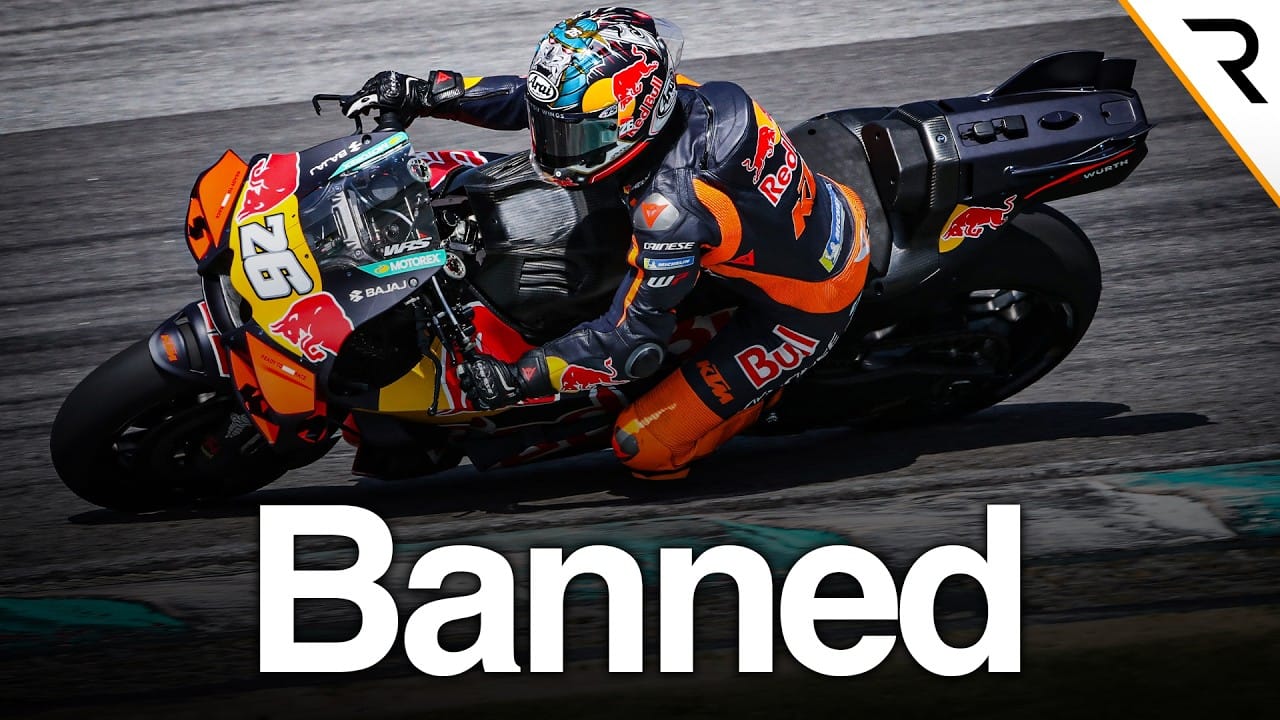
What is important to note is that these issues extend beyond individual medical decisions to long-standing infrastructural problems, such as the dangerous nature of Turn 1 at Barcelona, exacerbated by ride-height devices, and a lack of necessary track resurfacing. The situation has prompted unfavourable comparisons to the safety culture at notoriously dangerous events like the Isle of Man TT.
"We have multiple riders telling us that they don't bother going to the safety commission anymore because it's a waste of their time because no one listens to them."
Riders and Fans Questioned Third Restart After Rapid Turnaround Led to More Crashes
The procedure for restarting races after major incidents came under intense scrutiny, with criticism that the turnaround was too swift. This haste allegedly forced shaken and potentially injured riders back onto the circuit, creating conditions that contributed directly to subsequent incidents, including the crash that injured Johann Zarco. A number of riders were pelted by debris from the first crash and had little time to recover before the restart.
The consequence was a widespread sentiment, shared by approximately half the grid and many fans, that the third start was unnecessary and compromised rider safety. The situation highlights a potential disconnect between regulatory procedure and the human reality of recovering from traumatic on-track events.
"Half the grid, I would say, felt that the third start was unnecessary. That it shouldn't have happened."
Catastrophic Bike Disintegration in Acosta-Marquez Crash Highlights Barcelona Barrier Concerns
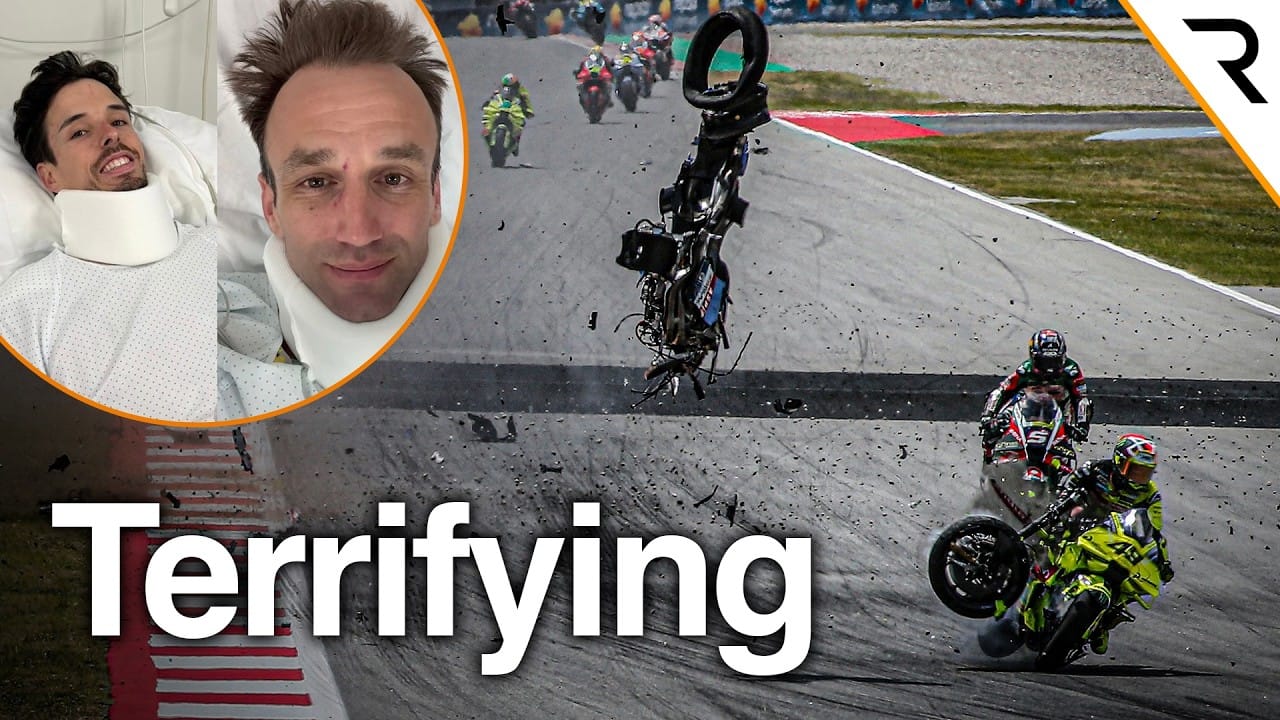
The first of two red flags was triggered by a high-speed collision involving Pedro Acosta and Alex Marquez, resulting in the catastrophic disintegration of Marquez's motorcycle. The bike shed its front wheel and other carbon fibre components, which were then struck by other riders, including Fabio Di Giannantonio. This incident renewed focus on standing concerns about the circuit's safety margins.
While the initial contact was deemed a racing incident, the violent aftermath drew particular attention to the proximity of the barriers in sections like Turn 12. It's a question of track safety that riders have reportedly discussed previously, but the dramatic nature of this crash has brought the issue into sharp relief.
"The bike then spat out a front wheel onto the track where it went into Fabio Di Giannantonio, in addition to all the sweet carbon fiber bits that went into everybody."
Alex Marquez Suffers Cervical Fracture, Zarco Breaks Fibula in Weekend of Severe Crashes
The physical toll of the chaotic Catalan Grand Prix became clear with confirmation of the injuries sustained by Alex Marquez and Johann Zarco. Following his high-speed incident, Marquez was diagnosed with a cervical fracture and a broken collarbone. Zarco, who was involved in the second red-flag incident, suffered a fibula fracture and unspecified knee ligament damage.
The severity of these injuries, which were announced after an agonizing wait for information, underscores the extreme violence of the crashes. Photographic evidence revealed how close Marquez came to the wall and how Zarco became entangled in another bike, highlighting the brutal consequences of the weekend's events.
"Some of the stills of Johann Zarco completely entangled with his leg trapped inside Pecco Bagnaia's Ducati as it somersaults through the gravel are absolutely horrible, even when you know that they are broadly okay."
Stewarding Decisions Defended in Ogura, Fernandez Incidents Despite Controversy
An analysis of two contentious racing incidents revealed the logic behind seemingly inconsistent penalties from the stewards. Ai Ogura received a penalty for his collision with Pedro Acosta because he was judged to have lost control, a fact Ogura himself admitted. Conversely, Raul Fernandez was not penalised for his contact with Jorge Martin, as he was deemed to have a right to the corner in a legitimate, if aggressive, overtake.
What is important to note is the role Jorge Martin played in the second incident, as he could have taken action to avoid the collision once the move was initiated. The differing outcomes demonstrate that not all contact is a punishable offense, highlighting the nuanced judgment required to differentiate between a racing incident and irresponsible riding.
"I don't think every hit from behind is a penalty, ultimately. If that's the case, then we can... just automate all the penalty decisions."
Tire Pressure Penalties Deemed 'Ridiculous' After Chaotic Race; Bagnaia Escapes Sanction
Following a weekend dominated by severe crashes and safety concerns, the imposition of post-race tire pressure penalties was met with criticism, with many deeming them "utterly ridiculous" in context. The penalties altered the final classification but were overshadowed by a sense that bureaucratic rule-following was inappropriate after such a traumatic day of racing.
A particular point of contention was that reigning champion Pecco Bagnaia avoided a penalty while five others were sanctioned. His Ducati team successfully argued that his tyre was leaking, a claim reportedly verified by submerging the wheel in a bin of water to observe bubbles, raising questions about the scientific rigour of the process.
"Pecco Bagnaia wasn't [penalized] because his team claimed that the wheel was leaking and they put it in a wheelie bin full of water and there were bubbles, which means it was leaking. So he didn't get penalized, 'cause we use scientific rigor here. This is MotoGP."
Catalan Grand Prix Leaves MotoGP Paddock 'Drained' and Questioning Sport's Dangers
The Catalan Grand Prix proved to be a profoundly challenging event, defined by two red flags and crashes that resulted in two riders being hospitalised. The weekend left a palpable sense of unease across the paddock, with commentators, riders, and fans feeling emotionally drained. The atmosphere drew direct comparisons to the similarly fraught Austrian Grand Prix of 2020.
The succession of serious incidents prompted a moment of collective introspection, forcing participants and observers alike to confront the inherent dangers of the sport. It's a question of the "Faustian bargain" one makes in following motorsport, where the line between thrilling competition and unacceptable risk can become blurred.
"It's days and races like these where I really question what I'm watching here."
Cold Temperatures and Unsuitable Tire Allocation Blamed for Wave of Barcelona Crashes
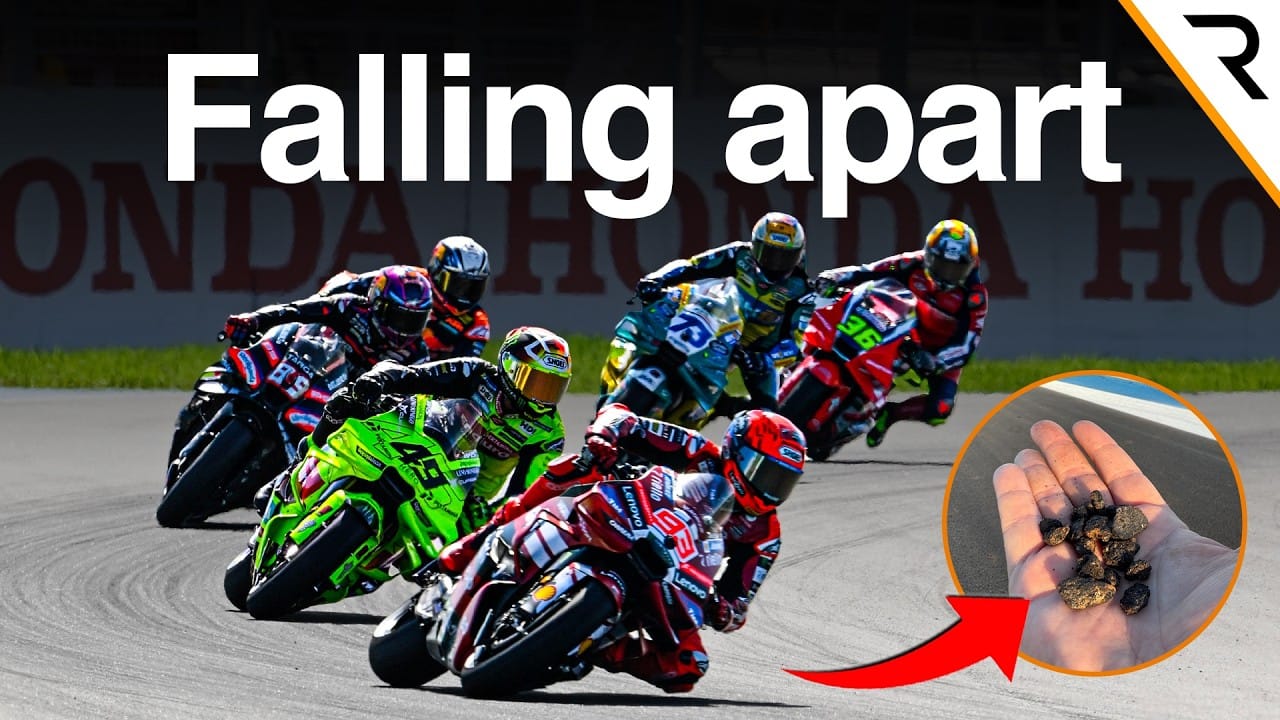
A confluence of factors at the Barcelona circuit created treacherous conditions, leading to numerous crashes throughout the weekend. Riders universally cited the track's notoriously low-grip surface, which was exacerbated by unseasonably cold temperatures. This rendered the pre-selected Michelin tyre allocation, designed for warmer conditions, fundamentally unsuitable for the reality on the ground.
The result was a predictable series of cold-tyre crashes, as riders found the tyres would not maintain operating temperature even with a minor drop in pace. This highlights a systemic issue where the inflexibility of advance tyre allocation creates unnecessary and foreseeable risks for competitors on an already challenging circuit.
"I ran a lap three or four seconds off the pace and that was enough for the tire not to function anymore."
Also mentioned in this video
- The potential dangers of future street circuits, using the close barriers at… (27:52)
- A "strange, messy weekend" for Aprilia, highlighting Jorge Martin's multiple… (30:05)
- Simon and Val discuss Jorge Martin's post-race shove of team manager Paolo… (35:50)
- The discussion moves to Marco Bezzecchi's recent poor performance, with a… (42:10)
- The podcast concludes on an optimistic note, acknowledging the incredible… (52:03)
Summarised from The Race MotoGP · 59:15. All credit belongs to the original creators. Streamed.News summarises publicly available video content.