🌐 Also available in: 🇩🇪 Deutsch
Original source: World Medical Innovation Forum
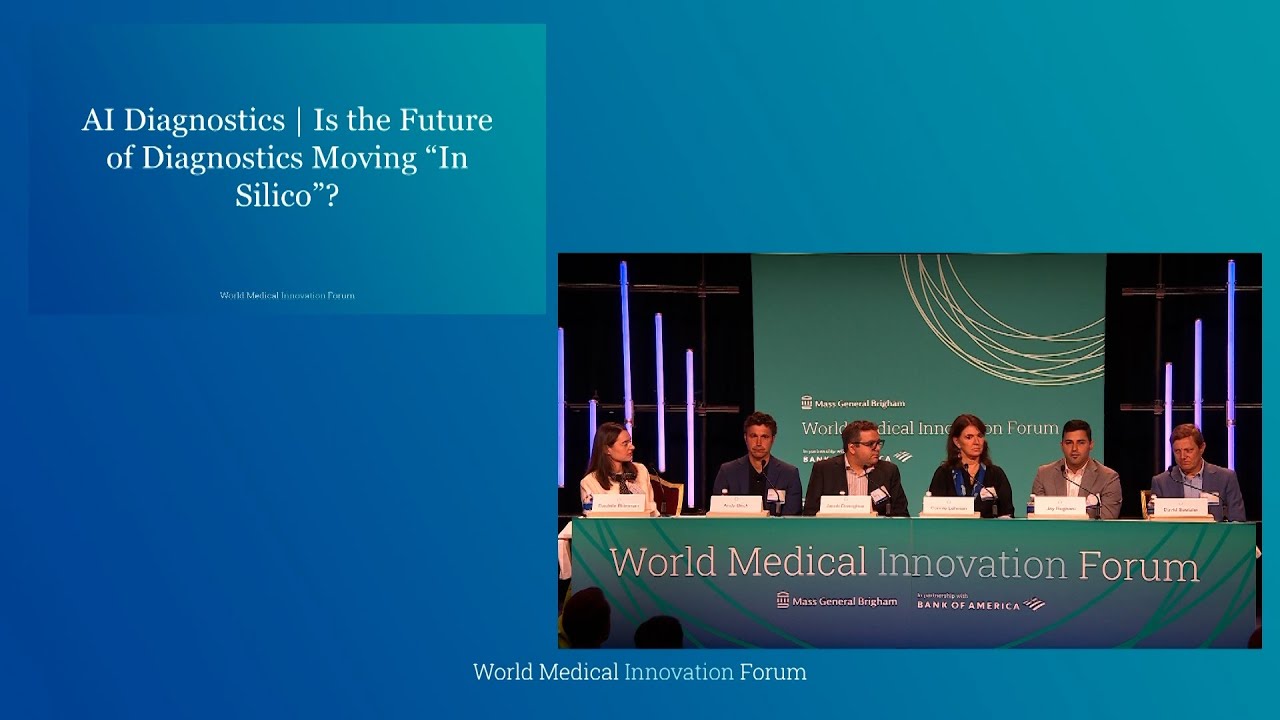
This video from World Medical Innovation Forum covered a lot of ground. Streamed.News selected 8 key moments and summarises them here. Everything below links directly to the timestamp in the original video.
Imagine a medical test that could save lives and cut healthcare costs in half, but it's stuck in a two-year regulatory limbo. This isn't a hypothetical; it's the reality for innovative AI diagnostics today.
AI Diagnostics Face Two-Year Reimbursement Hurdles Despite Cost Savings
AI-powered diagnostic tests, even those offering significant cost reductions, face substantial delays in gaining regulatory approval and reimbursement. David Spetzler of a diagnostic company highlighted a breast cancer early recurrence test that could halve costs compared to existing options, yet is stalled by a two-year regulatory pathway. This delay stems from its combined AI and Next-Generation sequencing approach falling outside current established frameworks, hindering patient access to innovative care.
The extended regulatory process creates a "tragedy" by delaying life-saving technologies from reaching patients for years. This bureaucratic inertia not only impacts patient outcomes but also disincentivizes innovation, as diagnostic startups struggle with the uncertainty and lengthy timelines required to bring their solutions to market and secure payment.
"It's a combination of AI on an image plus some NextGen, it falls outside of any regulatory pathway that exists. And so they told us, you know, it's great that we could save money, but you have to go through this two-year process in order to even apply for reimbursement."
AI in Imaging Evolves Beyond Augmentation to Uncover New Diagnoses
The integration of AI into imaging sciences has moved past initial fears of job replacement to an understanding of its augmenting role for radiologists. Connie Lehman points to the early 2000s adoption of CAD (Computer-Aided Detection) software for mammograms, which was widely reimbursed but later proven to not improve patient outcomes.
Today, AI models perform tasks beyond human capability, such as predicting a woman's five-year breast cancer risk from a mammogram, a domain where human radiologists cannot independently assess risk. This shift represents a significant evolution, transforming AI from a tool that merely assists human interpretation to one that generates entirely new diagnostic insights and pathways for patient care.
"This is our risk prediction model where we can take the mammogram, predict a woman's future risk of breast cancer going out five years; there is no radiologist accepting or rejecting it because I can't do that as a radiologist."
AI Risk Prediction Builds Trust and Engagement in Breast Cancer Diagnosis
Demonstrating the efficacy of AI through data and research, coupled with better education for physicians and patients, is crucial for building trust in AI-driven diagnostics. Connie Lehman emphasized that while patients trust doctors' recommendations for medication based on science, they often feel uncertainty about breast cancer diagnoses.
AI-driven risk prediction can address this uncertainty by identifying women at risk earlier, especially since 85% of breast cancer diagnoses are sporadic. This early identification, supported by rigorous research and educational efforts, fosters increased patient trust and engagement, enabling more proactive and personalized care pathways.
"If we start to shift over to identifying these women earlier, having them have that experience of having their risk identified early and their cancer detected earlier... that should increase their trust and increase their confidence in the process."
Ubiquitous Imaging and Diverse AI Models Key to Global Healthcare Access
Leveraging widely available technologies like screening mammograms for AI applications is essential for equitable global access to advanced diagnostics. Connie Lehman shared her company's experience navigating regulatory pathways for de novo authorization to predict breast cancer risk from existing mammograms, bypassing the need for new, expensive imaging technologies.
Crucially, building AI models with diverse geographic, racial, ethnic, age, and breast density data is vital to ensure global applicability. This approach counters the historical bias of models trained predominantly on data from specific U.S. regions, promoting inclusive and effective healthcare solutions worldwide.
"We from the beginning really wanted to make sure that we had geographic diversity, racial and ethnic diversity, age, breast density, all the different ways you can think about diversity from the beginning."
Healthcare Least Susceptible to AI Job Displacement Due to High Demand
The healthcare industry, which became the largest employer last year with 23.5 million workers, is uniquely positioned to avoid significant job dislocation from AI. Jay Rajani argues that the sector faces a continuous rise in demand for care, now accounting for nearly 20% of the economy, yet suffers from widespread understaffing, with over 50% of clinicians reporting insufficient team sizes.
AI's primary role in healthcare will be to augment clinicians' work, helping to address this immense supply-demand mismatch. Rather than replacing human jobs, AI tools will enhance efficiency and expand access to care, making the industry one of the least vulnerable to job losses caused by technological advancement.
"Healthcare in the last year became the largest employer... and it feels like the demand for care just continues to rise... So you have an opportunity for AI across the board to augment clinician work."
Complex Regulations Hinder AI Diagnostic Innovation, Favoring Large Firms
The regulatory and reimbursement landscape for AI-based diagnostics is marked by significant debate and uncertainty, which disproportionately challenges diagnostic startups. Jay Rajani notes that while some argue for entirely new regulations due to AI's novelty, others contend that existing frameworks for clinical validity and utility should apply.
This uncertainty creates a major barrier for smaller companies, deterring investors and slowing innovation. Complex and inconsistent regulations ultimately favor large corporations with extensive legal and regulatory teams, potentially stifling the development of exciting new diagnostic tools from agile startups.
"What is really challenging for any sort of diagnostic startup is uncertainty... complex regulations that are inconsistent basically favors the big guys."
AI's True Value Lies in Seamless Clinical Integration, Not Just Core Algorithms
While basic AI solutions for common problems may become commoditized, the long-term defensibility of AI in healthcare lies in its seamless distribution and integration into diverse clinical workflows. Andy Beck emphasizes that successful implementation across labs, health systems, and pharmaceutical companies requires immense engineering, continuous optimization, and real-time performance monitoring.
This complex process, often overlooked in favor of the AI algorithm itself, creates a robust ecosystem and a significant competitive advantage. Just as Google's success stemmed from wide distribution and continuous learning, AI healthcare platforms that deeply embed into clinical practice will be difficult to replicate, ensuring sustained value beyond the core AI components.
"The distribution and actually integration into the clinical workflow of labs and health systems... that's actually very difficult... requires tremendous engineering over time and optimization of product."
AI Transforms Pathology with Objective Diagnoses and Predictive Insights
AI diagnostic tools are profoundly reshaping patient care in the lab, influencing 70-80% of medical decisions. Andy Beck explains that in anatomic pathology, AI converts unstructured tissue data into objective diagnoses, a task historically performed solely by human physicians. In clinical pathology, AI analyzes structured blood work data to identify trends and predict clinical phenotypes.
This dual application significantly increases efficiency and accuracy, moving beyond human capabilities to better predict patient outcomes. The advancements are particularly notable in image-based anatomic pathology, where AI can now interpret complex visual data to guide therapy with unprecedented precision.
"The biggest advances in the last five years have been really in this image based work in anatomic pathology and we're starting to see many algorithms to increase efficiency, increase accuracy as well as to better predict clinical outcomes."
Summarised from World Medical Innovation Forum · 42:44. All credit belongs to the original creators. World Medical Innovatio Forum summarises publicly available video content.