🌐 Also available in: 🇩🇪 Deutsch
Original source: World Medical Innovation Forum
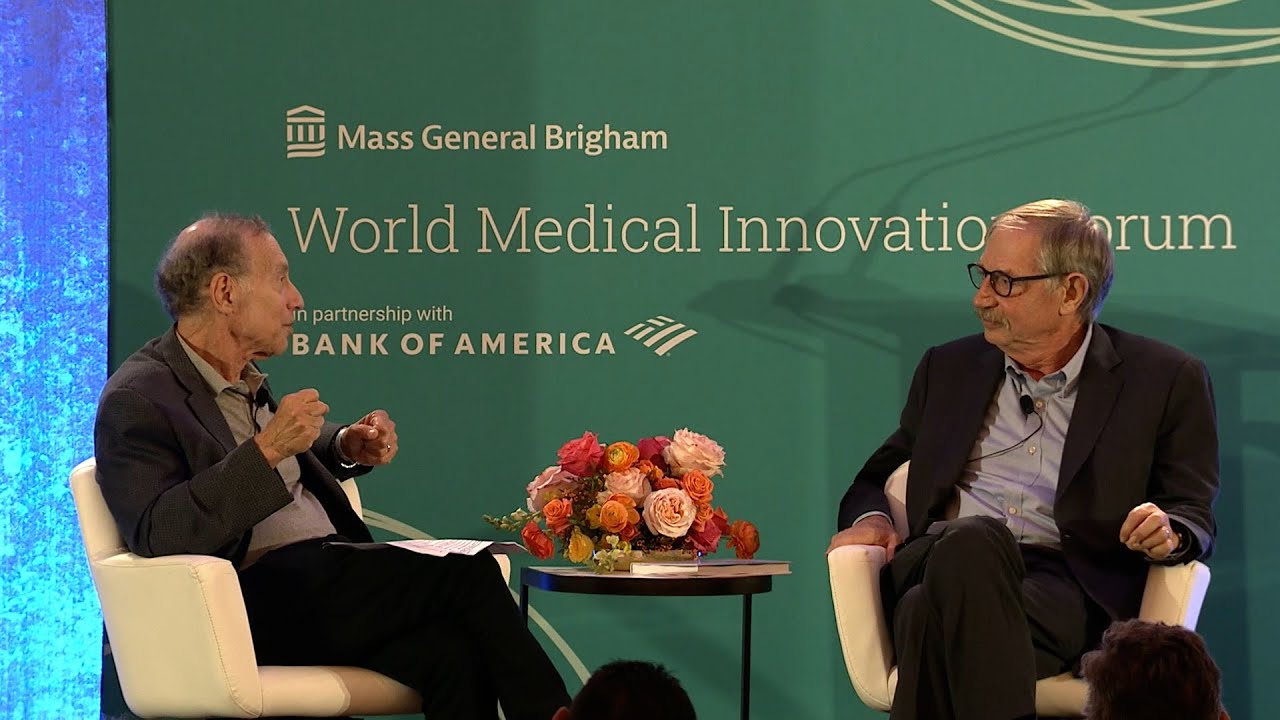
This video from World Medical Innovation Forum covered a lot of ground. Streamed.News selected 8 key moments and summarises them here. Everything below links directly to the timestamp in the original video.
Imagine a world where chronic pain is managed with a single injection or disfiguring genetic tumors simply vanish. These advancements could dramatically improve quality of life for millions, transforming how we approach pain management and genetic disease treatment.
Injectable Ice Blocks Nerves for Months, FDA-Approved Drug Melts Tumors
Dr. Rox Anderson announced breakthroughs in pain control and genetic disease treatment. A novel injectable ice formulation, originating from research into lipid sensitivity to cold, offers a three-month nerve block for chronic pain relief. Concurrently, a clinical trial showed that deoxyolate, an FDA-approved drug, can cause tumors in Neurofibromatosis Type 1 (NF1) to "melt away," addressing the most common genetic disease in humans.
These innovations promise significant relief for millions suffering from chronic pain and a disfiguring genetic disorder. The injectable ice targets myelin sheaths around nerves, leveraging their high lipid content for prolonged blocking effects. For NF1, the use of an existing drug streamlines the path to widespread patient benefit, highlighting the potential for repurposing known pharmaceuticals to tackle prevalent and devastating conditions.
"We are right on the cusp of being able to treat chronic pain by injecting ice... what makes me tick is in fact helping people and we're going to help a lot of people."
AI Surpasses Human Psychiatrists in Empathy, Study Finds
Generative language AI systems have outperformed human psychiatrists in perceived empathy during virtual psychiatric visits, according to a study cited by Dr. Rox Anderson. Patients rated their interactions with AI more favorably, attributing the AI's success to its unhurried nature and ability to actively listen and respond with genuine-sounding prompts like "tell me more."
This finding highlights AI's potential to address the current healthcare crisis of limited access, particularly in mental health. By offering empathetic and readily available virtual support, AI could alleviate pressure on overstretched healthcare systems and provide much-needed care to individuals struggling to secure timely appointments with human providers.
"It was in empathy that the AI system was far better and there's a reason for that: It's not in a hurry."
Langer Lab Develops Ultra-Precise Gene Editing and Personalized Brain-on-a-Chip
Robert Langer's lab is set to publish two groundbreaking papers: one on engineered enzymes that reduce gene editing errors by 60-fold, in some cases to zero, and another on creating personalized "brain-on-a-chip" models from patient cells. The gene-editing work, developed by Vcash Schwan, will appear in Nature, while the brain-on-a-chip, led by Alice Stanton, will be published in Proceedings of the National Academy of Sciences.
These advancements promise to significantly enhance the safety and precision of gene editing therapies, while the personalized brain models offer an unprecedented platform for studying neurological diseases and testing treatments. Additionally, the lab continues its extensive collaboration with the Gates Foundation, developing innovative drug delivery systems and single-dose vaccines for the developing world, aiming for widespread global health impact.
"Vcash has figured out a way of engineering enzymes so that he can get 60-fold less errors and in some cases zero and that's actually going to be coming out in I think, well, it's coming out in Nature."
Moderna's Personalized Cancer Vaccines Enter Phase 3 Trials, Langer Foresees Scientific Triumph
Moderna's personalized cancer vaccines are advancing into Phase 3 clinical trials, marking a significant step in mRNA technology's expansion beyond infectious diseases. Robert Langer, a pioneer in the field, highlights these vaccines as "incredibly exciting and important," expecting them to overcome current vaccine skepticism by offering life-saving treatments for cancer.
Langer expressed confidence that scientific advancements will ultimately prevail over political and societal hurdles. He emphasized that the underlying mRNA technology, capable of programming the body to produce specific proteins, extends far beyond traditional vaccines and holds immense potential for future medical breakthroughs, despite potential short-term delays.
"I think that what Moderna is doing is not only doing the hopefully better COVID vaccines, better flu vaccines, but some of the things that I think are incredibly exciting and important are the new cancer vaccines."
AI's Decades-Long Evolution Drives Breakthroughs in Medicine and Drug Discovery
Artificial intelligence, predating ChatGPT by decades, has been a driving force in medical and pharmaceutical advancements, according to Robert Langer. He cited early applications in 1999 that used machine learning to increase drug solubility by 50 to 100-fold, leading to new drugs and a significant company acquisition. Current applications include improved breast cancer detection and the design of more stable and targeted lipid nanoparticles.
While acknowledging concerns about AI's potential dangers, Langer believes its benefits will ultimately outweigh temporary problems, drawing parallels to past technological shifts like the automobile and DNA research. He anticipates continued significant advancements, framing AI's evolution as a historical pattern where innovation ultimately leads to progress despite initial challenges and societal anxieties.
"I think there's a sometimes I think people think AI just happened in the last year or two... actually AI has been around 80 years and it I think what's happened because ChatGPT is such a great demonstration for people."
Scientists Advocate Personal Connection and Broad Impact in Identifying Research Problems
Identifying transformative research problems requires a blend of personal passion and potential for broad impact, according to Robert Langer and Rox Anderson. Langer focuses on problems with the potential to make a significant difference, citing examples like vascular research and nanoparticle drug delivery. Anderson emphasizes personal connection, highlighting how his experience as a father inspired a non-invasive white blood cell count method.
Anderson also champions a "magic wand" exercise to engage clinicians, asking them to identify their greatest frustrations and envision solutions without constraints. This approach, implemented in a Mass General Hospital dermatology program, successfully transformed clinicians into problem-solvers, leading to NIH-funded research and new startup companies, proving that deeply felt clinical needs can drive significant innovation.
"If you had a magic wand, what would it do? ... What is it that really frustrates you? You really wish you had a magic wand."
Biotech Success Hinges on Problem Selection, Says Physician-Innovator Rox Anderson
Dr. Rox Anderson, a practicing physician, emphasizes that identifying the right problem is the paramount factor for success in biotechnology, asserting that many biotech failures stem from not selecting a problem truly worth solving. Drawing from his "front row seat to the drama of human life" in medicine, he advocates for an interdisciplinary approach that transcends traditional academic boundaries.
Anderson highlighted the value of initiatives like the biomedical enterprise program at MIT, which he co-taught with Warren Zapel. This program fostered collaboration between clinical, business, and scientific professionals, nurturing individuals who have gone on to significantly impact the world by focusing on real-world problems rather than being confined by specific scientific disciplines.
"For me, it's about picking a good problem... a problem actually worth solving and not worrying too much about what you are."
Synergy Between Academia, Industry, and Medicine Critical for Innovation, Says Anderson
Dr. Rox Anderson underscores the increasing synergy between academia, industry, and medicine, noting a positive shift towards greater collaboration. He advocates for open discussions about potential conflicts of interest and encourages more cross-sector teaching to maximize the collective impact of these interdependent fields.
Anderson highlighted that this collaborative trend is becoming pervasive across the country, with many academic departments embracing entrepreneurial approaches. He sees this as a crucial opportunity to refine the integration of research, business, and healthcare, ensuring that scientific discoveries translate more effectively into real-world solutions and patient benefits.
"I think we're on the road to what I would say is a really synergistic connection between them. I'd love to see more industry teaching."
Summarised from World Medical Innovation Forum · 1:03:48. All credit belongs to the original creators. World Medical Innovatio Forum summarises publicly available video content.