Original source: Energy Live News
This video from Energy Live News covered a lot of ground. Streamed.News selected 7 key moments and summarises them here. Everything below links directly to the timestamp in the original video.
Understanding how innovative construction materials can permanently lock away carbon reveals a tangible strategy for combating climate change, directly impacting the environmental footprint of the places we live and work.
Pabble's Carbon-Negative Concrete Gains Commercial Traction in Europe
Pabble's carbon utilization technology is demonstrating significant market demand, with 150 potential leads and 40 ongoing tests. The firm has successfully deployed four commercial projects, including the construction of walls for a building in Spain, flooring in Paris, and a house in the Netherlands, all of which have proven effective in reducing embodied carbon and permanently storing CO2 within the structures. This indicates a growing industry recognition of solutions aimed at decarbonising the construction sector.
This commercial success highlights a critical shift towards integrating permanent carbon capture within essential building materials. The successful implementation across diverse structural elements suggests a scalable pathway for reducing the environmental footprint of construction, addressing the pressing need for sustainable infrastructure development globally. The ability to embed CO2 into building components offers a tangible and enduring approach to climate mitigation.
"We reduce the amount of embodied carbon in the structures, right? Less cement, less embodied carbon at the same time and that's the uniqueness. We actually store physically store carbon in walls and floors. So we call it carbon sink."
Pabble Aims for Net-Negative Carbon Footprint with Green Energy and Strategic Sourcing
Pabble is strategically developing its operational footprint with a commitment to environmental sustainability, powering its plant with green energy and planning future factories near raw material sources and customer bases to minimise logistical emissions. The company's long-term objective is to achieve a net carbon footprint of minus 200 kg of CO2 per ton of product, thereby transforming captured carbon into a fine, white powder that serves as a direct "drop-in" replacement for cement.
This integrated approach, which combines green energy use with efficient logistics and material innovation, underscores a systemic effort to reduce the embodied carbon of construction materials. The ability to offer a cement alternative without requiring changes in existing construction practices is crucial for rapid adoption and widespread impact in decarbonising one of the world's most carbon-intensive industries.
"If I give you the long-term view, we target to arrive to what is called minus 200 kg of CO2 per ton of product."
Pabble Unveils Rotterdam Plant for Carbon Storage and Utilization
Pabble has launched a pioneering demonstration plant in Rotterdam with a capacity of 1.5 kilotons of product, making it the first facility of its kind dedicated to carbon storage and utilisation. The process converts captured CO2 into a mineral material, with approximately one-third of the final product's weight consisting of permanently stored CO2. This continuous process is meticulously monitored to ensure maximum carbon capture efficiency.
This development marks a significant step in industrial-scale carbon utilization, providing a tangible method for transforming atmospheric carbon into a stable, usable material. The plant’s operation offers a critical validation of enhanced mineralization as a viable strategy for long-term carbon sequestration, moving beyond theoretical models to practical application in the circular economy.
"In one ton of material about 300 kgs is CO2 permanently. So about a third then roughly."
Pabble Partners with CO2 Capture Firms to Slash Concrete Emissions by 40%
Pabble's technology represents the second phase of carbon utilization, collaborating with companies that capture CO2 from either direct air or industrial source points. The firm then processes this captured CO2, converting it into a mineral material that partially replaces cement in concrete formulations. This innovation can reduce the embodied carbon in concrete by up to 40%, depending on the replacement percentage and application.
This collaborative model demonstrates a critical division of labour within the carbon capture and utilization ecosystem, allowing specialists to focus on their respective areas of expertise. By targeting cement, a major contributor to concrete's carbon footprint, Pabble's approach offers a scalable solution for significantly decarbonising the construction industry, fostering more sustainable building practices globally.
"Our focus is actually how to convert CO2 in a material that can be reused and permanently captured so it cannot be released to the atmosphere. That's the core of the technology."
Pabble Accelerates Natural Mineralization to Permanently Store CO2 in Building Materials
Pabble has developed proprietary technology that significantly accelerates the natural carbon cycle process of mineralization, transforming CO2 into a stable mineral or rock within hours. This innovation allows for the permanent storage of carbon dioxide, which can then be incorporated into construction materials as a partial replacement for cement. The process essentially "hacks nature" to achieve carbon sequestration at an industrial pace.
This rapid mineralization offers a dual benefit: it sequesters CO2 permanently and provides a sustainable alternative for a high-emission industry. By integrating captured carbon into building materials, the technology addresses both the imperative for carbon reduction and the demand for durable construction solutions, thereby contributing to a circular economy in the built environment.
"We have a proprietary technology that uses the carbon actually and permanently stores in what we call enhanced mineralization. So we accelerate the process and stored it in a mineral in a rock and instead of the nature will take thousands of years, we do that in a couple of hours."
Pabble's Technology Poised for Global Impact, Citing Need for Regulatory Trust
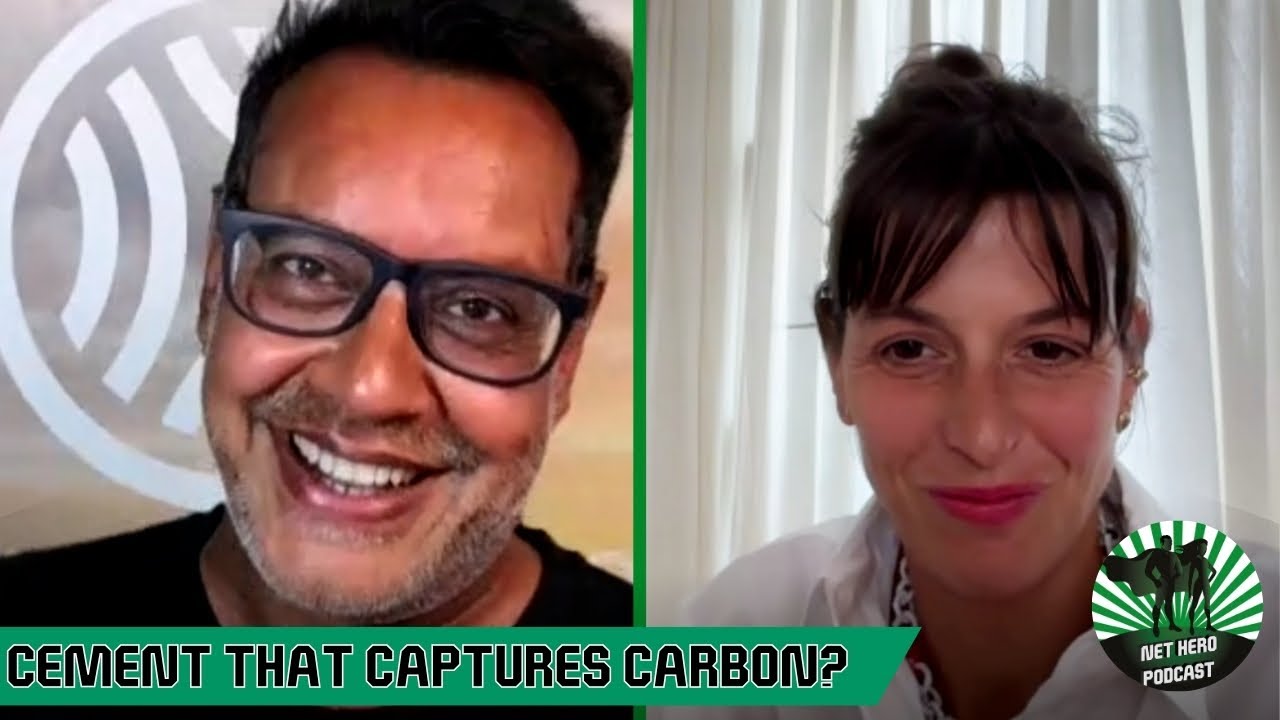
Anna Louise Vaz of Pabble asserts that their carbon utilization technology holds worldwide applicability, particularly for developing nations, due to its potential to reduce the environmental footprint of construction. However, she emphasises that global deployment hinges on building trust in the market, particularly through regulatory support and demonstrable effectiveness in developed countries. This initial phase of proving reliability is critical to overcoming inherent risk factors associated with new construction materials, such as ensuring structural integrity over decades.
This perspective underscores a fundamental challenge in scaling climate technologies: the interplay between technological readiness and institutional acceptance. For innovations like Pabble's to achieve their full global potential, particularly in regions where sustainable infrastructure development is most needed, policy frameworks in leading economies must actively support and de-risk their adoption, thereby establishing the necessary confidence for broader international uptake.
"This is a technology that can be used worldwide. But if I make an analogy to other technologies that we deploy, you first need to give trust to the market."
Pabble Balances Mineral Sourcing for Carbon-Negative Production at Scale
Pabble utilises both natural and waste-stream silicon-based minerals for its carbon capture process, acknowledging that mining specific raw materials is necessary to achieve the scale required by the binding industries. Despite this, the company is committed to ensuring that the entire production process remains carbon negative through rigorous Life Cycle Assessments (LCA) and precise mass balance tracking of carbon, thereby mitigating the environmental impact of mineral extraction.
This approach highlights the complexities of achieving industrial-scale decarbonisation, where raw material sourcing must be reconciled with overarching environmental objectives. By actively managing its carbon footprint across the entire value chain, Pabble demonstrates a commitment to balancing the demands of high-volume production with the imperative of climate action, setting a precedent for responsible industrial expansion in sustainable materials.
"We try to be as energy efficient as possible even if you have to mine raw materials in order that the overall is still carbon negative."
Summarised from Energy Live News · 26:04. All credit belongs to the original creators. Energy Live News summarises publicly available video content.