Original source: La Base
This video from La Base covered a lot of ground. Streamed.News selected 8 key moments and summarises them here. Everything below links directly to the timestamp in the original video.
Two specific government actions ignited Bolivia's conflict. Understanding them reveals how seemingly technical policies directly threaten entire communities' livelihoods and historical heritage.
Land Law, Adulterated Fuel Spark Bolivian Social Unrest
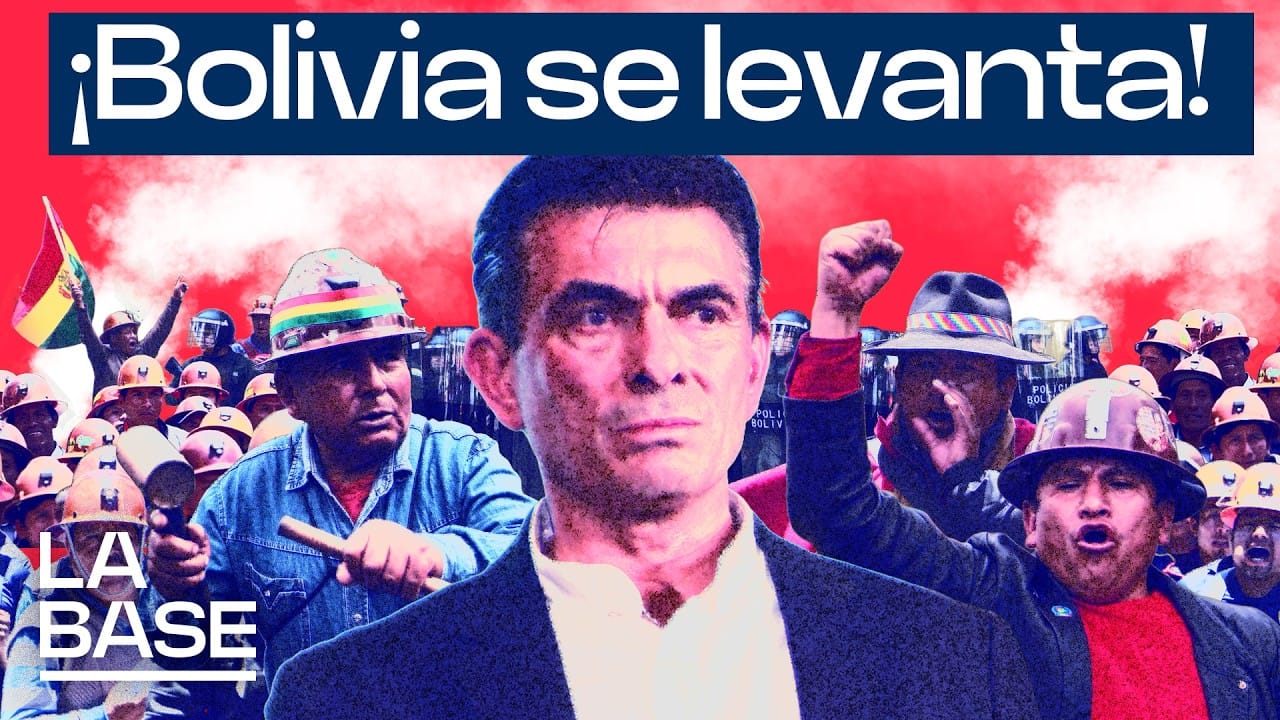
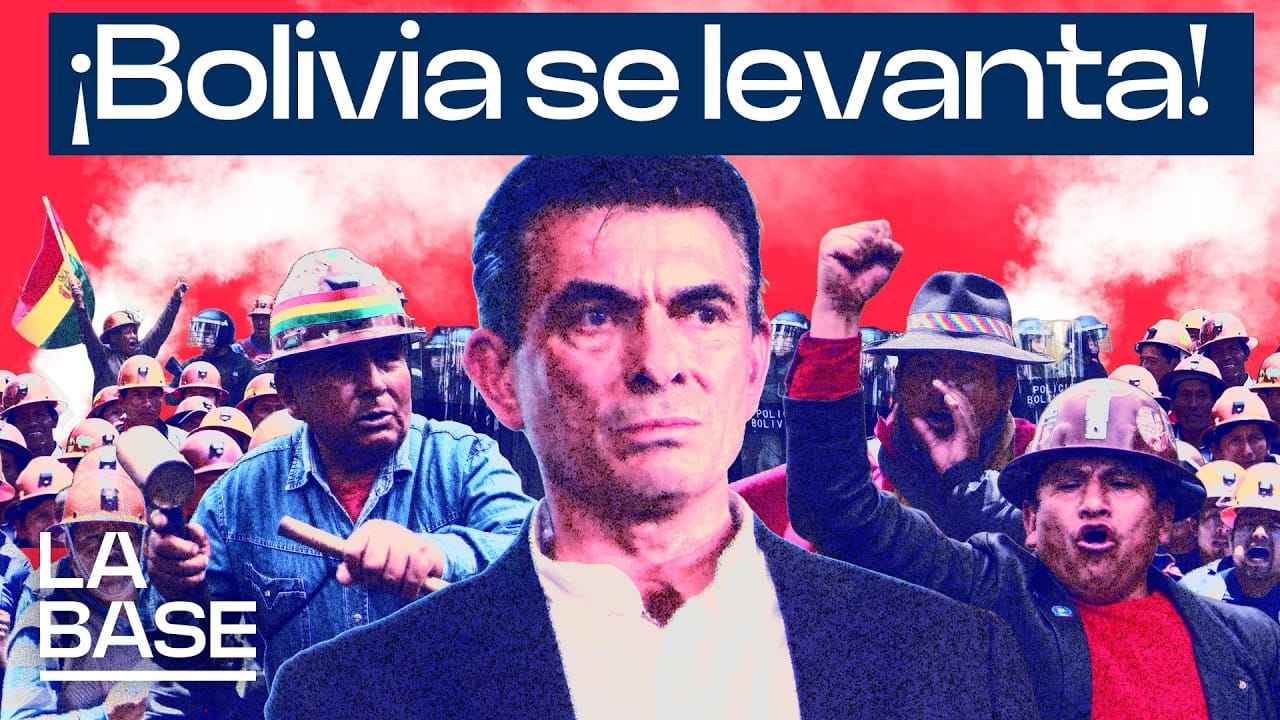
Two government measures ignited widespread social unrest against Rodrigo Paz's government in spring 2026. Citizens viewed these policies as direct attacks on the popular economy. First, authorities distributed adulterated fuel. This caused massive damage to private vehicles, public transport, and critically, to farmers' agricultural machinery. Second, a new land reclassification law proved even more contentious. This law allows small-scale peasant properties, historically exempt from seizure for over 80 years, to convert to 'medium property.' This change makes them eligible as loan collateral and thus vulnerable to seizure. Analysts say it sparked 'terror of losing land' among the populace.
"It touched a very sensitive nerve in the country because it unleashed the terror of losing land."
Bolivian Government Represses Protests, Charges COB Leader with Terrorism
Rodrigo Paz's government responded to mass protests with a playbook combining disinformation and state violence. After failing to blame Evo Morales for the conflict or divide protesters with handouts, the executive opted for repression. Police and military deployments resulted in 124 arrests and several deaths. The strategy escalated to selective judicialization. The Public Prosecutor's Office issued an arrest warrant for terrorism and public incitement to commit crimes against Mario Argollo, executive secretary of the Central Obrera Boliviana (COB). This forced the union leader into hiding, revealing an attempt to decapitate the popular movement.
"The Prosecutor's Office has issued an arrest warrant for terrorism and public incitement to commit crimes against Mario Argollo, the executive secretary of the Central Obrera Boliviana."
Evo Morales: 'I Resigned to Stop Mesa, Camacho Persecuting Leaders'
Evo Morales resigned under duress at the height of Bolivia's 2019 crisis. Widespread far-right violence, police mutinies, and OAS pressure for new elections characterized the period. Morales stated his decision was not an admission of defeat, but an attempt to protect his supporters from escalating violence. He explicitly aimed to stop opposition leaders Carlos Mesa and Luis Fernando Camacho from 'persecuting my fellow union leaders' or 'burning the homes' of MAS governors and assembly members. His testimony frames the resignation as a forced act to avert bloodshed, lamenting a coup that derailed the country's democratic course.
"I am resigning precisely so that my sisters and brothers, leaders, and authorities of the Movement Toward Socialism are not harassed, persecuted, or threatened. I deeply regret this coup."
Aymara farmers, transport workers paralyze La Paz amid fuel shortages
Bolivian social conflict escalated significantly. Aymara farmers and El Alto urban transport unions reaffirmed ongoing blockades, cutting strategic links to Peru. This brought La Paz to a standstill amid severe gasoline shortages. The social movements' show of force met government defiance. Faced with proposals for a state of siege to curb violence, a minister's revealing response underscored the government's repressive stance: "No state of siege; put the state in its place."
"No state of siege; put the state in its place."
Milei government accused of meddling in Bolivia, using advisor and Hercules planes
Bolivia's crisis shows clear international political interference from Javier Milei's Argentine government. Two key factors are highlighted: first, Fernando Cerimedo's presence in La Paz. The "La Derecha Diario" founder and advisor to President Rodrigo Paz faces charges in Brazil for Jair Bolsonaro's attempted coup and is known for dirty digital campaigns. Second, Argentina allegedly uses Hercules C130 tactical transport planes, sent as "humanitarian aid," to logistically support protest repression. Bolivia's situation is therefore not merely a domestic issue but part of a regional right-wing coordination.
Official 2019 count gave Evo Morales first-round victory despite fraud narrative and OAS pressure
During Bolivia's 2019 elections, an indefinite general strike unfolded as the opposition alleged fraud. The Organization of American States (OAS) recommended a run-off, despite results showing Evo Morales won outright. While Morales decried an ongoing coup, mainstream media framed the situation as mere "polarization." The ballot reality, however, contradicted this narrative. The final official count confirmed Morales' first-round victory with 47.08% of votes against Carlos Mesa's 36.51%. The over 10-point lead should have secured his fourth term, but a delegitimization campaign had already paved the way for constitutional breakdown.
2019 Coup Blamed for Bolivia's Current Political Crisis
Any analysis of Bolivia's political crisis must start with the 2019 coup. The coup halted an election and prevented Evo Morales from taking his fourth term. Without it, the country's recent history would differ radically.
This institutional breakdown led to Jeanine Áñez's de facto government. Áñez now faces formal genocide charges for the deaths of two dozen civilians during repression. Her regime reshaped the political landscape, laying the groundwork for the country's subsequent instability and conflicts.
"It's impossible to understand without the 2019 coup. First, because it tainted an electoral process from top to bottom."
2019 Coup Paved Way for 2025 Right-Wing Victory by Dividing Left, Disqualifying Morales
The 2019 coup was not a failure; it succeeded in its strategic goal: fracturing the Bolivian left and restoring the pro-U.S. oligarchy to executive power. The ensuing events, from de facto government repression to Evo Morales's disqualification, were crucial.
This chain of events split the Movement for Socialism (MAS), proving fatal in the 2025 elections. With the left fragmented, two right-wing candidates reached a runoff. Rodrigo Paz defeated Jorge Tuto Quiroga, solidifying the conservative restoration initiated by the coup.
"A coup that, despite its ups and downs, ultimately succeeded in its core objective: to destroy the Bolivian left and reinstall the pro-U.S. oligarchy in executive power."
Also mentioned in this video
- Las protestas y bloqueos continúan en La Paz, Bolivia, contra el gobierno de… (0:00)
- El ciclo del Estado plurinacional bajo Evo Morales marcó la irrupción de… (0:47)
- Tras el golpe de Estado de 2019, Bolivia no logró recomponer su tejido político… (1:22)
- El desgaste político fue aprovechado por Rodrigo Paz, un hombre del viejo… (1:56)
- Rodrigo Paz encarna una nostalgia conservadora de la Bolivia donde las élites… (2:21)
- La marginación del vicepresidente, el único vínculo popular del gobierno, y la… (3:15)
- La Bolivia 'cipaya' murió en 2005, lo que hace difícil que un presidente como… (4:12)
- A seis meses de asumir el poder, el gobierno de Rodrigo Paz se enfrenta a una… (5:54)
- La victoria electoral de Rodrigo Paz en 2025, de un 3% a un 54% en el balotaje,… (6:39)
- En las elecciones de hace ocho meses, Paz ganó con la fórmula de Edman Lara,… (7:18)
- La indignación popular se materializó en mayo con movilizaciones masivas en La… (9:54)
- Los seguidores de Evo Morales iniciaron una marcha desde Cochabamba, y Estados… (13:15)
- La politóloga boliviana Susana Bejarano explica que el estallido se debe a la… (13:37)
- Fernando Cerimedo, asesor de Rodrigo Paz, es señalado por su papel en campañas… (14:10)
- El gobierno de Rodrigo Paz busca créditos del FMI y el Banco Mundial, acabar… (17:02)
- Como una "verdad universal". (17:44)
- El Ministerio de Exteriores de Israel y Marco Rubio de EE.UU. expresan su apoyo… (18:22)
- Rafael Correa responde a Marco Rubio, mientras los medios como El País y las… (19:58)
- Los medios minimizan la violencia de los "Ponchos Rojos" al afirmar que "no se… (23:49)
- Los medios argentinos como "La Derecha Diario" y Grupo América difunden la… (26:05)
- Eduardo Feinman, en su programa, llama en directo al ministro de exteriores… (27:04)
- El ministro Quirno reitera la narrativa de que el narcotráfico financia la… (30:00)
- Manu Levín critica a los periodistas por ser portavoces del poder y "vomitar… (31:43)
- Eduardo García inicia su segmento sobre el "Clima de Guerra" en Bolivia,… (33:14)
- Durante el conteo de votos de las elecciones de 2019, la oposición boliviana,… (33:42)
- A pesar de la victoria de Evo Morales, la extrema derecha boliviana negó los… (37:03)
- El gobierno de Jeanine Áñez, aunque corto, fue crucial al inhabilitar a Evo… (41:17)
- Las diferencias económicas y los desencuentros políticos llevaron a una ruptura… (42:10)
- El pueblo Yemení, que ha sufrido muchas injusticias e intervenciones… (46:22)
- La crisis en Bolivia se originó con el quiebre del pacto social de 2005 y la… (47:28)
- Los sectores movilizados en Bolivia no se retirarán, manteniendo un "cerco al… (49:09)
Summarised from La Base · 50:37. All credit belongs to the original creators. Streamed.News summarises publicly available video content.