Original source: Eze Martínez
This video from Eze Martínez covered a lot of ground. Streamed.News selected 8 key moments and summarises them here. Everything below links directly to the timestamp in the original video.
A message sent to the stars reveals humanity's core essence. NASA chose science and poetry to represent us in the cosmos.
NASA's Europa Clipper Probe Carries Poem, 'Water' in 103 Languages to Jupiter Moon
NASA's Europa Clipper probe, set to reach Jupiter's moon Europa in April 2030, carries a plaque for potential extraterrestrial civilizations. The plaque features sound waves of the word 'water' in 103 languages, symbolizing the liquid ocean believed to lie beneath Europa's icy surface. This 'interstellar message in a bottle' also includes the Drake Equation, estimating civilizations in our galaxy. It features a portrait of planetary scientist Ron Greeley and U.S. poet Ada Limón's 'In Praise of Mystery,' blending humanity's scientific curiosity and artistic sensibility.
"Oh, second moon, we too are made of water, of vast inviting seas."
Wayback Machine: The Tool That Lets You Browse Internet's Past
Much of internet's history vanishes as websites update or delete content. But archive.org's Wayback Machine acts as a digital archive, letting users travel back in time. This tool captures and stores website versions over years, making previously unavailable information accessible. Its utility extends beyond curiosity, serving as a crucial resource for research and complex problem-solving. Notably, it helped solve the Cicada 3301 puzzle, as participants needed to access a Reddit banner from 2012.
"Using this tool was extremely useful for solving the most difficult puzzle in internet history."
Rosetta Project Creates Disk to Preserve Over 100 Languages for Future
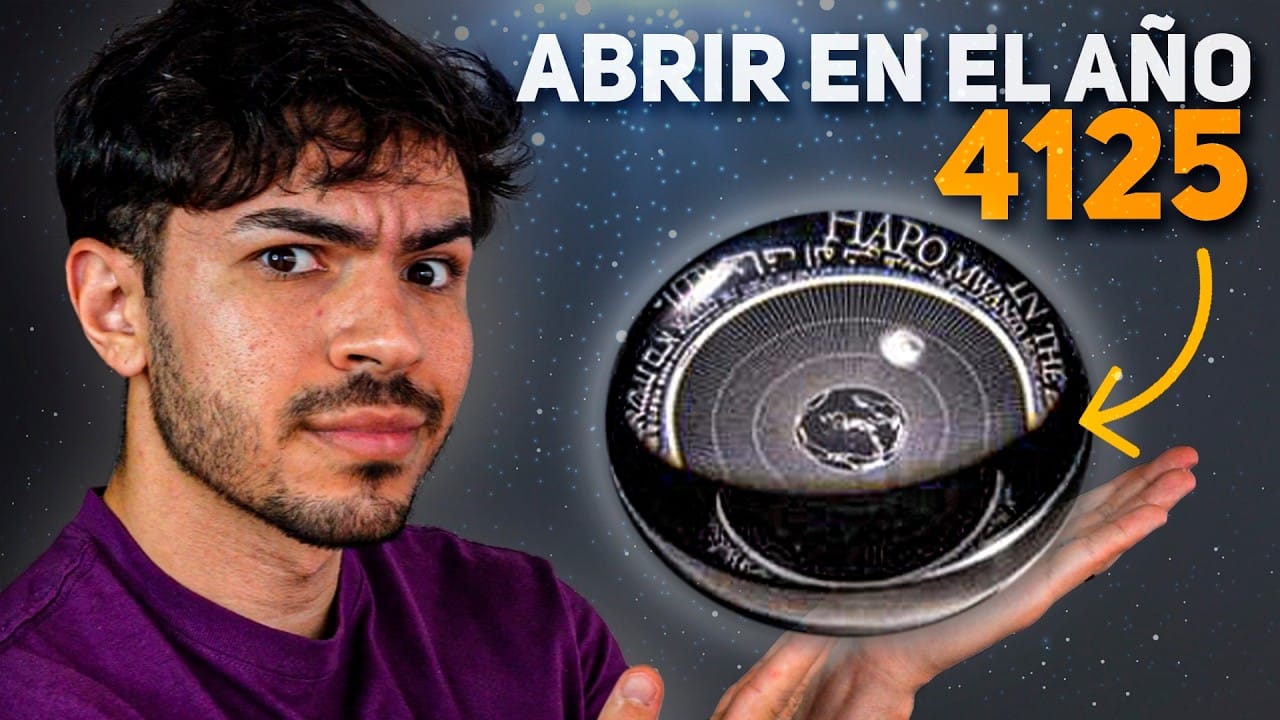
To prevent modern languages from becoming indecipherable, the Rosetta Project created a modern analog to the famous Rosetta Stone. This 7-centimeter disk, made in 2008, holds 13,000 pages of information in over 100 languages, all etched at a microscopic scale. Content is only readable with a 650x magnification microscope. The core idea: future historians, finding this object, can use comparative linguistics to decipher otherwise lost languages, functioning as a universal key to our cultural legacy.
"The idea is for future historians to find this object, apply comparative linguistics, and decipher other languages."
Internet Archive Amasses 99,000 Terabytes in History's Largest 'Time Capsule'
San Francisco's nonprofit Internet Archive set out to preserve all contemporary information for posterity. Its digital archive now holds 99,000 terabytes of data, growing by 40 terabytes weekly. This deliberate effort creates history's largest time capsule, ensuring future historians, anthropologists, and archaeologists can access the vast knowledge and culture of the digital age.
"Currently, all that information weighs 99,000 terabytes, growing by 40 terabytes per week. Therefore, we can affirm this is the largest time capsule ever made in history."
'Poema de Mio Cid' to Modern Spanish: Will Future Generations Understand Our Language?
Language's constant evolution challenges long-term cultural understanding. Reading works like "Don Quixote" (1605) or the 11th-century "Poema de Mio Cid" reveals Spanish's profound transformation; today, specialized study is needed to understand them. This natural change raises a key question: will future civilizations understand today's Spanish? Without new 'Rosetta Stones,' our cultural output risks becoming inaccessible.
"What will happen to our language after thousands of years? Will people understand it, or will it become a forgotten language?"
The 'Digital Dark Age' Threatens to Erase Our Era's Memory
Fragile digital formats and the web's ephemeral nature create the 'digital dark age.' Information gets lost not through physical destruction, but by an inability to interpret it. This resembles finding Egyptian hieroglyphs without a Rosetta Stone: data exists, but its meaning remains inaccessible. Constant content updates, broken links, and abandoned web domains fuel this massive knowledge loss. Future historians may face a vast information gap about the digital revolution, despite it being the most data-rich era in history.
"It's like finding hieroglyphs without the Rosetta Stone. The data exists, but you can't decipher it. Information is lost."
90% of World's Languages Could Vanish in 100 Years
Preserving a message for the future is pointless without decode keys. History features countless undecipherable writing systems, like rongorongo or the Voynich manuscript. This contrasts with Egyptian hieroglyphs, whose meaning the Rosetta Stone revealed. This historical lesson gains urgency as experts estimate 50% to 90% of today's spoken languages could disappear in the next century. Without deliberate efforts to create translation tools, much of current human knowledge risks becoming inaccessible.
"Experts estimate 50 to 90% of currently known languages will disappear in the next 100 years."
'Crypt of Civilization' Sealed Until 8113
The 'Crypt of Civilization,' the world's largest physical time capsule, rests in Oglethorpe University's basement in Atlanta. This 57-cubic-meter room, built between 1937 and 1940, was sealed with instructions not to open until 8113 — over 6,000 years from now. Inside, it preserves era artifacts, from typewriters and books to recordings of voices like Roosevelt and Stalin. The project contrasts with most time capsules, as 95% are lost or forgotten within five years.
"If that time capsule survives, it will have lasted longer than the time from today back to when the Egyptian pyramids were built."
Also mentioned in this video
- Time capsules concept: old banknote explanation (0:01)
- Presenter reflects on current era and vast info (1:49)
- Digital info stored on hard drives, encoded (2:12)
- Presenter shares personal story of lost photos (3:32)
- Presenter defines time capsule as object or info (10:09)
- Presenter invites viewers to create their own time capsule (18:13)
Summarised from Eze Martínez · 19:23. All credit belongs to the original creators. Streamed.News summarises publicly available video content.