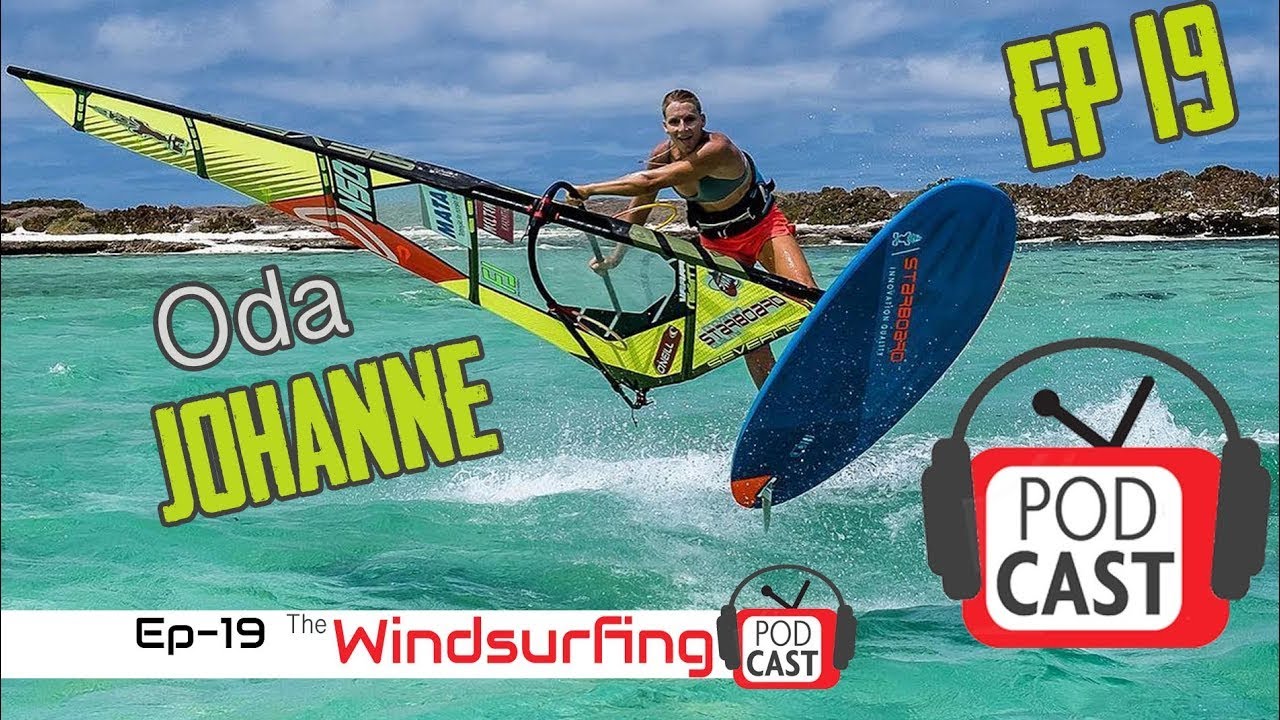
Original source: The WindsurfingTV Podcast
This video from The WindsurfingTV Podcast covered a lot of ground. Streamed.News selected 8 key moments and summarises them here. Everything below links directly to the timestamp in the original video.
When considering pay equality in sports, it's crucial to look beyond broad generalizations and examine the distinct economic and cultural dynamics of each discipline. Why do some sports thrive with equal pay while others maintain stark disparities?
Gender Pay Gaps Vary Wildly Across Professional Sports, Research Shows
Research into pay disparities across professional sports reveals significant variations, with some sports showing vast gaps while others achieve parity. For instance, the NBA's minimum salary of $580,000 per year starkly contrasts with the WNBA's maximum salary of $120,000, representing nearly a five-fold difference. Conversely, tennis and surfing have successfully implemented equal prize money for men and women, demonstrating that parity is achievable.
These findings suggest that pay gaps are not universally tied to gender but are influenced by specific revenue models, historical context, and cultural factors within each sport. The financial structure of a league, such as how revenue is divided between players and owners, directly impacts earnings. The host contends that increasing prize money for women's windsurfing would not detract from men's earnings but would rather elevate the overall skill level and attract more participants.
"Every sport is very different in this scenario because like basketball NBA minimum salary is $580,000 a year, WNBA which is the women's is maximum salary of $120,000 a year, so it's almost five times less the max than the minimum in the NBA."
Oda Johanne Advocates for Equal Prize Money in Windsurfing to Elevate Women's Sport
Oda Johanne, a professional windsurfer, passionately advocates for equal prize money for men and women in her sport, drawing on her past experience in handball where gender equality in earnings was the norm. She highlights the current disparity, where winning a women's World Cup nets approximately €3,500, compared to €6,500 for men. Johanne asserts that increased prize money for women is crucial to enable full-time training, which in turn would significantly raise the overall skill level and attract a larger pool of participants.
Johanne explains that current pay structures create a detrimental cycle: lower pay leads to less training, which is then cited as a reason for lower prize money. She believes that investing in women's prize money would break this cycle, fostering greater professionalism and elevating the competitive landscape, ultimately benefiting the sport as a whole by increasing visibility and inspiring future generations of female windsurfers.
"I just think like let's say you win a World Cup... she is putting in the same training, she's performing... she needs to pay for the same board bags to travel, she's putting the same risk and why should you be paid less?"
Oda Johanne to Pursue Olympic IQ Foil Windsurfing in 2021
Oda Johanne has announced her decision to begin training for Olympic IQ foil windsurfing in 2021, driven by a desire to avoid future regret and challenge herself in a new discipline. Initially hesitant, her interest was sparked after a training session with Olympic medalist Lilian de Geus. Johanne aims to balance this new pursuit with her existing commitments to freestyle and slalom windsurfing, acknowledging the unique demands of each discipline.
Her venture into Olympic foiling reflects a broader trend of athletes diversifying their skills and seeking new competitive avenues. The unique characteristics of foiling, which allows for sailing in lower wind conditions, present both a logistical advantage for training and an opportunity to expand her athletic repertoire, underscoring the dynamic nature of professional windsurfing careers.
"I don't want to be in the sideline and see other people in Norway trying to get into the Olympics and I could have tried it so I decided like some weeks ago that in 2021 I want to start training for being able to compete."
Oda Johanne Transitions from Professional Handball to Windsurfing at 21
Oda Johanne made a pivotal career shift at age 21, leaving professional handball to pursue windsurfing, a sport she had only recently discovered. Her decision was spurred by an intense desire to learn freestyle tricks and the newfound freedom she experienced on the water, contrasting with the structured and injury-prone environment of handball. Johanne adopted an analytical and strategic approach to learning windsurfing, focusing on efficient training methods and selecting optimal locations to accelerate her skill development.
This unconventional transition highlights the profound impact personal passion can have on athletic choices, even at the cost of an established career. Johanne's methodical approach to mastering a new sport, leveraging her discipline from handball, demonstrates that a professional mindset can enable late-career transitions and rapid ascent in disciplines where innate talent is often assumed to be paramount.
"I finally found my like combination, something that's a bit like freestyle slope style in snowboard, but still I won't injure myself on it because you crash on water and then I just got so hooked on it."
Oda Johanne Secures Fifth Place at First World Cup, Highlights Challenges in Women's Freestyle Windsurfing
Oda Johanne achieved a surprising fifth-place finish at her inaugural World Cup event at age 23 or 24 in 2013, despite initially being hesitant to compete. Her unexpected success underscored the motivational power of competition, prompting her to commit to a professional windsurfing career. Johanne notes that the growth of women's freestyle windsurfing faces significant hurdles, primarily due to the demanding training requirements and the scarcity of suitable, consistently windy locations necessary for mastering complex tricks.
Her experience highlights a critical barrier for aspiring female freestyle windsurfers: the extensive time and financial investment required for training often necessitates leaving jobs or studies. This logistical challenge, combined with the technical difficulty of the sport, limits participation and hinders the overall development of women's freestyle, suggesting a need for greater support and infrastructure to foster its growth.
"I just feel like that year was like a game changer actually, then was the moment I realized that I actually want to do, if I can make a living out of this, I want to push hard in this."
Technique Overcomes Raw Strength in Freestyle Windsurfing, Says Oda Johanne
Oda Johanne, a professional windsurfer, emphasizes the nuanced role of physical fitness in freestyle windsurfing, arguing that while strength certainly helps, developing proper technique, especially from a younger age or when physically weaker, is paramount. She contends that athletes who learn without relying on brute force often cultivate superior fundamental skills, avoiding the pitfall of compensating with strength rather than precision. Johanne also advocates for varied training methods, including CrossFit, tennis, mountain biking, and skateboarding, to enhance overall agility and body control essential for complex freestyle maneuvers.
This perspective challenges the common assumption that raw power is the primary determinant of success in action sports, instead highlighting the critical interplay between technique, coordination, and diverse physical conditioning. The implications are that athletes, particularly in technical disciplines like freestyle windsurfing, benefit more from a holistic approach to fitness that prioritizes adaptability and precise execution over sheer muscularity.
"When you learn certain sports when you are a kid or when you are really weak, you learn the technique better because you cannot compensate with any... you have no strength to compensate."
Oda Johanne Views Sarah-Quita Offringa as Inspiration in Freestyle Windsurfing
Oda Johanne openly discusses the formidable challenge of competing against Sarah-Quita Offringa, acknowledging Offringa's exceptional talent and longer professional career in freestyle windsurfing. Rather than viewing Offringa as an insurmountable obstacle, Johanne considers her an inspiration, consistently pushing herself to learn new tricks and improve. Johanne's primary motivation in freestyle is her deep love for the sport and the pursuit of mastering new maneuvers, rather than solely focusing on competition results.
This perspective highlights the personal drive that sustains athletes even when facing dominant competitors. While winning is a goal, Johanne's emphasis on continuous personal growth and the inherent joy of the sport underscores a crucial aspect of high-level athletic careers, where internal motivation can be as significant as external competitive success. The dynamic also reveals the elite tier of women's freestyle, where one athlete sets a consistently high benchmark for others.
"She just like, she's the most talented windsurfer ever, like she is learning so much and she also competed like seven more years... I'm just taking her as an inspiration to get better myself."
Oda Johanne Proposes Role Models and Youth Camps to Boost Women's Windsurfing
Oda Johanne advocates for strategic initiatives to enhance the professional landscape of women's windsurfing, emphasizing the crucial role of visible female role models and targeted youth camps. Citing the success of clinics organized by the Moreno twins, she argues that these programs directly inspire young girls, fostering a new generation of talent. Such efforts, she believes, are essential for elevating the overall skill level and popularity of the sport, making it more attractive for both participants and spectators.
The implications of these suggestions extend beyond individual skill development, aiming to address the systemic challenges that impede women's participation and professionalization. By cultivating a strong base of young, skilled athletes and providing inspiring figures, the sport can generate more interest, potentially leading to increased media coverage, sponsorship, and, ultimately, more professional opportunities for female windsurfers.
"I would say like, for example, what the Moreno twins did, they had this girls' clinic... there's so many young girls ripping and they had a training camp with them and that like that the level would be really good."
Summarised from The WindsurfingTV Podcast · 1:14:55. All credit belongs to the original creators. Windsurfing TV Press summarises publicly available video content.
