Original source: BBC Sport
This video from BBC Sport covered a lot of ground. Streamed.News selected 8 key moments and summarises them here. Everything below links directly to the timestamp in the original video.
Beyond the high-stakes world of Formula 1 team changes, this situation highlights how personal circumstances and contractual nuances can heavily influence even the most sought-after professional moves in elite sports.
Jonathan Wheatley's Aston Martin Move Faces Contractual Hurdles and Personal Factors
Jonathan Wheatley's potential move to Aston Martin as team principal is complicated by his existing contract with Audi, where he is currently on gardening leave after being relieved of his duties. Aston Martin owner Lawrence Stroll's unpredictable decision-making style further adds uncertainty to whether the deal will finalize.
A key factor in Wheatley's potential shift is a desire to return to the UK due to personal reasons, including family, as settling in Switzerland proved challenging. While a significant financial offer from Stroll is likely involved, the primary motivation appears to be his need to be closer to home, with limited alternative team principal openings if the Aston Martin deal falls through.
"My understanding is there are personal issues involved about Jonathan Wheatley wanting to come back to or needing to come back to the UK."
New F1 Regulations Enhance On-Track Racing Despite Driver Complaints
Despite widespread negativity from drivers and fans, the latest Formula 1 regulations have significantly improved on-track racing and increased the challenge of certain corners. Andrew Benson cited the multi-lap battle between Charles Leclerc and Lewis Hamilton in China as prime example of genuine racing, alongside the heightened difficulty of corners like Japan's 130R due to cars arriving at over 340 km/h.
Alice Powell noted that the reduction in downforce forces drivers to 'fight the car' more, which, combined with high straight-line speeds, adds a new dimension to the sport. While energy harvesting in fast corners remains a point of contention, the chassis regulations themselves are seen as a positive step, making cars more enjoyable to drive and fostering closer competition for spectators.
"There's no question that the racing, on whatever level, has been better than it was, has been for quite some time."
Lewis Hamilton's Ferrari Prospects Questioned Amid Performance Gaps
Lewis Hamilton's chances of winning a race this year are uncertain, despite Ferrari's strong chassis performance. Andrew Benson highlighted that while Ferrari has shown good race starts, their engine power deficit and historical struggles with development curves could hinder sustained competitiveness against top British teams like Mercedes and McLaren. Hamilton consistently trails his teammate Charles Leclerc, suggesting he needs to overcome multiple formidable rivals to secure a win.
While Hamilton appears more comfortable with the current Ferrari car compared to last year, his ability to secure a win hinges on Ferrari's development trajectory and potential reliability issues. A more positive season, even without a win, could extend his career beyond his current three-year Ferrari contract, which sees him through 2026. However, with young talents like Ollie Bearman in Ferrari's development program, his future beyond that point remains speculative.
"To win a race, he's got to beat both Mercedes and Leclerc, and that's without even wondering about Norris and Piastri in the McLarens. So, it won't be easy."
Kimi Antonelli Emerges as Strong F2 Title Contender, Ferrari Missed Opportunity Noted
Kimi Antonelli is firmly established as a genuine championship contender, currently leading the F2 standings, with Mercedes confident in his abilities. Despite some luck with a safety car in Japan, Antonelli demonstrated incredible pace and command once in the lead, following a strong qualifying performance in China. Mercedes engineers believe he would have won the Japan race even without the safety car, attesting to his significant development over the winter and impressive rookie F2 season.
Ferrari notably passed on signing Antonelli to their young driver academy when he was 11, a decision that is now seen as a missed opportunity, especially given his Italian heritage. Mercedes, led by Toto Wolff, instead nurtured his talent, fast-tracking him through junior categories directly into F2. This choice could prove pivotal for Ferrari, potentially denying them a future home-grown star.
"Mercedes believed that he probably would have won anyway. They were going to leave him out on those tires."
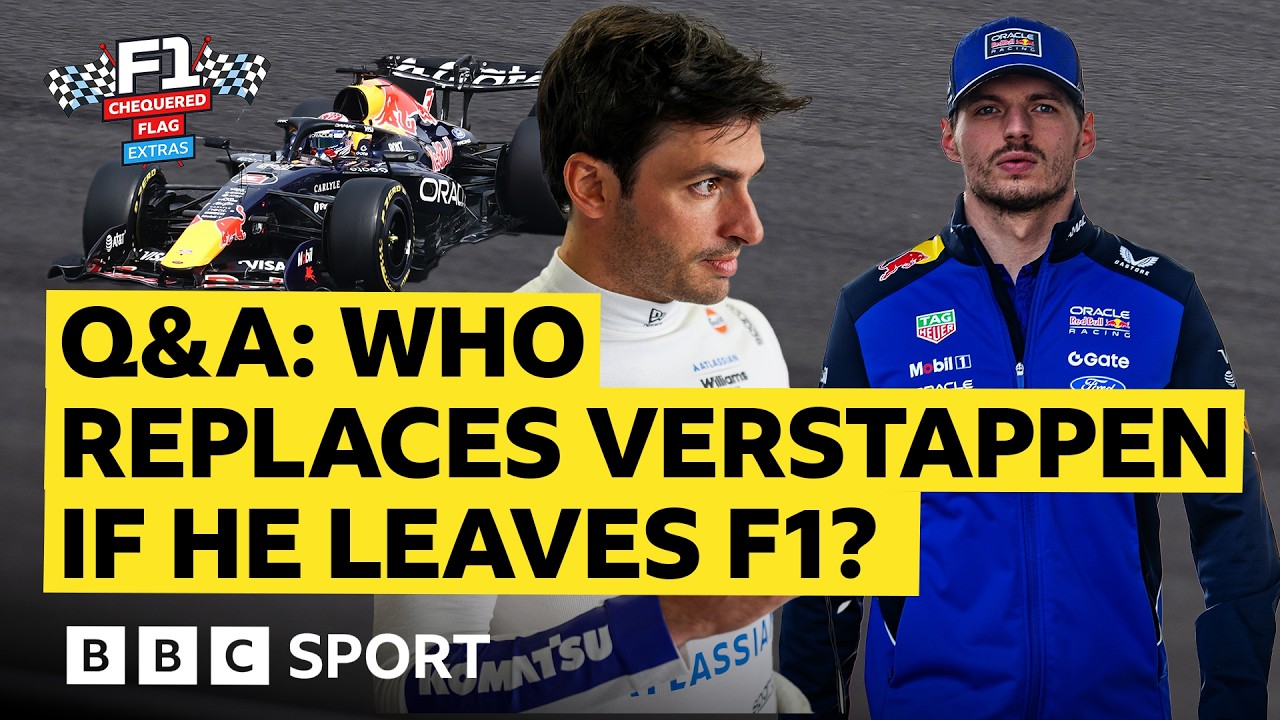
Red Bull Faces Driver Shortage If Max Verstappen Departs
Red Bull could face a significant challenge finding a suitable replacement if Max Verstappen were to retire at the end of the season. While Red Bull boasts a vast junior driver program, including promising talents like Nikola Tsolov in Formula 2 and several younger drivers in Formula 3, none are immediately ready to step into a Formula 1 championship-contending seat. The appeal of the Red Bull seat itself has diminished, with the car's current chassis and engine performance not as dominant as 12-18 months ago, making it less attractive for established F1 drivers.
This situation puts Red Bull in a difficult position, as top-tier drivers like Charles Leclerc or George Russell are unlikely to leave their current teams, even if contractually possible. Max Verstappen's substantial contract, reportedly offering 75 million reasons to stay, makes his departure seem unlikely. However, if he were to leave, Red Bull would need to either promote a rookie or convince a seasoned driver to join a team whose current performance makes it a less desirable prospect than before.
"Red Bull is not as appealing a seat as it was this time 12 months ago or 18 months ago. They've not had a great start to the season."
Cadillac's F1 Entry Stumbles Due to Independent Development Strategy
Cadillac is struggling to achieve immediate competitiveness in Formula 1 because, unlike Haas a decade ago, they are building their car almost entirely in-house. Andrew Benson explained that Haas entered F1 in 2016 by exploiting loopholes to purchase nearly all non-mandatory parts from Ferrari, allowing them to be competitive from the outset. Cadillac, however, has opted to establish itself as a completely new team, undertaking full independent development.
This self-reliant approach makes achieving competitive levels far more challenging and time-consuming. Cadillac's current performance is notably uncompetitive, nearly a second slower than Aston Martin's already struggling car in qualifying pace. While F1 has granted them some leeway, the team faces pressure to demonstrate significant and consistent progress soon to justify their presence on the grid.
"Cadillac have set themselves up as a brand new team, and they've built everything themselves. So, it's much harder to get to a competitive level from that sort of starting point."
F1 Engine Rules Create On-Track Speed Fluctuation and Driver Frustration
Modern Formula 1 engines can be restarted on track using the Motor Generator Unit – Kinetic (MGU-K), a component of the hybrid system, eliminating the need for external starters in race conditions. However, current engine regulations have introduced significant complexities, leading to cars unexpectedly slowing down during practice sessions, qualifying, and races. This phenomenon is attributed to intricate power-limited periods and unpredictable acceleration spikes that leave drivers short of energy deployment at critical moments.
These highly overcomplicated engine rules, which prevent cars from maintaining flat-out speeds, are a source of frustration for drivers and are widely seen as an image problem for the sport. The FIA's attempt to regulate power delivery to avoid cars losing excessive speed on straights has inadvertently created a cascade of other issues, which team bosses and F1 management are now seeking to address by potentially simplifying these technical complexities.
"Many of which feel like that... This is the opinion of most people in Formula 1 that these current engine rules are hugely overcomplicated."
F1 Fans Debate Ideal Classic Circuits to Replace Modern Tracks
Formula 1 fans and pundits are debating which historic circuits should replace current venues like Bahrain or Saudi Arabia, with suggestions ranging from classic tracks to more recent, albeit defunct, additions. Harry Benjamin favored the Buddh International Circuit in India and the Korea International Circuit for their nostalgic value. Andrew Benson advocated for iconic, challenging tracks from F1's past, including the Nürburgring, Montjuïc Park, and Sebring, highlighting a desire for circuits with deeper historical significance and demanding layouts.
Alice Powell expressed a preference for tracks that are enjoyable to drive, citing the Buddh International Circuit as a personal favorite where she raced. Other suggestions included Sepang in Malaysia and Brands Hatch, though the latter was acknowledged as potentially unsuitable for modern F1 cars. The conversation underscored a yearning among fans and former drivers for circuits that offer both historical gravitas and a greater driving challenge, despite the logistical and licensing complexities of returning them to the calendar.
"You've got the choice of I thought it was good. It was okay. I raced around it. Of modern Formula 1, I would go beyond that."
Summarised from BBC Sport · 39:35. All credit belongs to the original creators. Chequered Flag summarises publicly available video content.