✦ Advanced Writer
Original source: BBC Sport
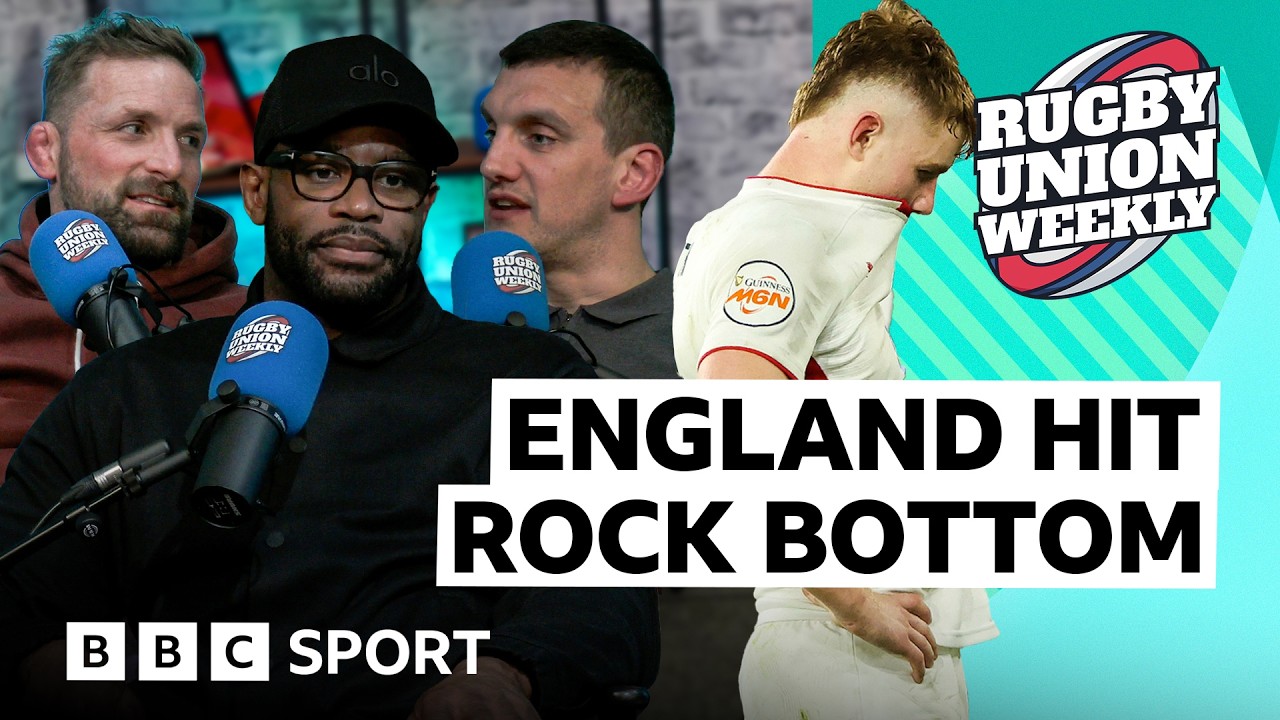
This video from BBC Sport covered a lot of ground. Streamed.News selected 8 key moments and summarises them here. Everything below links directly to the timestamp in the original video.
A team debating its coach's future four weeks ago just posted the most dominant Six Nations victory in recent memory. Scotland's turnaround is one of the tournament's most remarkable stories.
Scotland Score 50 Points Against France in Murrayfield Masterclass
Scotland dismantled the Six Nations' presumed Grand Slam favourites 50-40 at Murrayfield, producing 12 tries and 30 line breaks in a result that left France — who had been averaging 22 offloads per game, far ahead of any historical benchmark — with zero offloads on the day. Scotland's defensive plan specifically targeted France's perceived strengths, using double tackles to neutralise the offload game and aerial threat that had defined France's campaign.
The margin of victory understates Scotland's dominance: at the 65-minute mark the score stood 47-14, and the panellists noted that even that final scoreline flattered France. The result transformed Scotland's championship prospects almost overnight, arriving just weeks after serious debate about head coach Gregor Townsend's future.
"Scotland made what everyone thought was going to be the Grand Slam winners look very ordinary for 65 minutes."
Scotland's Forward Pack Silences Critics With Relentless Breakdown Dominance
Scotland went through the entire match against France without conceding a single turnover at the breakdown — a statistic the panel described as extraordinary. Their forward pack, previously questioned for lacking the physical edge of rivals, carried hard, cleared with aggression, and sustained that intensity for the full 80 minutes across three consecutive tournament wins.
The shift matters beyond one result. Scotland's long-standing vulnerability up front had been a ceiling on their ambitions, and removing that doubt — combined with a clear, consistent attacking identity — positions them as genuine championship contenders heading into a final-round trip to Dublin.
"They've shown in this tournament they've got the toughness of any other pack in this tournament."
Italy Beat England for First Time Ever, Exposing Deep Structural Flaws
Italy recorded their first ever victory over England, winning despite carrying a lengthy injury list and, by the panel's assessment, performing well below their ceiling. Winger Ange Capuozzo was absent, as were Lorenzo Patta, Sebastian Negri, and others, yet Italy's defence — shaped by coach Richard Hodge — held England to 18 points. The panel pointed to a generational shift: fly-half Paolo Garbisi is now in his fifth Six Nations campaign, and Tommaso Menoncello has emerged as a world-class threat capable of influencing games both with and without the ball.
The result carries a structural lesson: panellists highlighted that every recent Six Nations and World Cup winner has maintained stable combinations at nine-ten, twelve-thirteen, and across the back row. England have rotated those pairings constantly under Steve Borthwick, and the absence of those partnerships was visible in every attacking phase.
"The tournament needs six really good competitive teams, and I'm genuinely delighted that Italy are now genuinely a good team."
England Concede Seven Yellow Cards and a Red in Four Matches as Discipline Crisis Deepens
England's disciplinary record across this Six Nations — seven yellow cards and a red card in four matches — is the statistical expression of a deeper problem the panel traced to defensive fragility and an absence of what they called "intelligent aggression." Against Italy, four penalties in a seven-minute spell between the 55th and 62nd minutes surrendered a position of control, handing Italy two yellow-card advantages and transforming a game England were leading.
The pattern, the panel argued, is self-reinforcing: a defensive system that invites pressure produces more desperate and error-prone decisions under that pressure. France, by contrast, gave away just 17 penalties across the entire championship before conceding 10 in a single match against Scotland when placed under sustained stress — illustrating precisely how pressure multiplies penalty counts.
"England didn't have that intelligent mindset in that ten minutes. There were four penalties in seven minutes. Game's gone."
England Face Historic Low of One Six Nations Win as Coaching Questions Mount
England have never finished a Six Nations campaign with only one victory, but that outcome is now possible if they lose in Paris. The panel was unanimous that the manner of the three consecutive defeats — thrashed by Scotland, beaten at home by Ireland, then outmanoeuvred by Italy — is more alarming than the results alone. One panellist drew on a Formula 1 analogy: England appear to have either a great driver in the wrong car or a great car with the wrong driver, and the combination is not working.
The concern centres on the game plan rather than the personnel. Several panellists argued that Steve Borthwick is a high-quality coach but that his system is suppressing the instincts of players who perform with far greater freedom in their club environments. The RFU issued a statement of support for Borthwick, but the panel suggested a serious review of coaching philosophy — not just personnel — will be unavoidable if the final result confirms a historic collapse.
"Something's broken if that happens. You go from 12 wins to all of a sudden one win."
Borthwick's Aerial Game Plan Draws Criticism as England's Attack Stalls Again
England travelled to Rome, doubled down on their aerial kicking strategy, and were beaten anyway. The panel argued that a strong autumn series — in which the aerial approach gave England an edge over opponents — produced exactly the wrong lesson, validating a conservative game plan rather than prompting attacking evolution. The departure of defence coach Felix Jones, whose influence from a World Cup-winning environment was considered highly valuable, raised further questions about whether attacking coaches are being given the authority to implement their ideas.
The panel's core challenge to the RFU is pointed: Borthwick has been granted more resources, time, and structural support than any previous England head coach, including central contracts and a competitive Premiership producing quality players. That investment makes the current performances harder, not easier, to explain away.
"Steve is a good coach, but the philosophy has to change. It just has to change."
Wales Show Steady Progress as Centre Partnership and Front Five Begin to Take Shape
Where England's trajectory is descending, Wales are moving in the opposite direction. Sam Warburton pointed to the Joe Hawkins and Eddie James centre partnership as a combination that is solidifying week on week, and identified Dav Jenkins, Derry Lake, and Reese Carrie as front-five players delivering their best performances in Welsh shirts. The team has developed carriers across the pack — a quality previously absent — and the defensive effort against Ireland drew specific praise.
For a nation that has struggled for results over the past two years, the significance is less about this season's table position and more about continuity. Warburton's argument is that Wales now know their core group, and with most of these players in their early twenties, the trajectory points upward.
"Unlike England, I'm seeing progression. I'm seeing combinations developing and they're getting better each week."
Wales Backline's Athletic Profile Gives Warburton Cause for Long-Term Optimism
Warburton made a specific point about physical profile: international rugby at the highest level demands athletes of a particular size and power, and Wales are finally assembling a backline that meets that threshold. Joe Hawkins at twelve, Eddie James at 6'4" or 6'5" at thirteen, Zamit at 6'3", and Mason Grady at a similar height represent a combination of size and pace that Wales have lacked in recent cycles. Matched with a front five that now carries the ball as a genuine threat, the physical platform is becoming credible.
The panel noted that Ireland were made to work hard for their victory in Dublin, and that a disallowed try and a potential obstruction penalty went in Ireland's favour. Wales' defensive effort, particularly from the front five, was highlighted as evidence that the physical gap between Wales and the tournament's top teams is narrowing.
"I can see a group of players now who are going to grow year on year — we're not experimenting anymore."
Summarised from BBC Sport · 58:33. All credit belongs to the original creators. Men's Six Nations 2026 summarises publicly available video content.