Original source: BBC Sport
This video from BBC Sport covered a lot of ground. Streamed.News selected 8 key moments and summarises them here. Everything below links directly to the timestamp in the original video.
Imagine achieving the pinnacle of your career, only for the memory to be completely erased. Steve Thompson's story forces a confrontation with the true cost of sporting glory.
World Cup Winner Steve Thompson Cannot Recall Historic Victory Due to Dementia
Former England rugby international Steve Thompson, a 2003 World Cup winner, revealed he cannot recall his team's historic victory due to early-onset dementia. Thompson recounted his mental health struggles, including suicidal thoughts, and described past training sessions with frequent, unprotected head impacts, sometimes enduring a hundred scrums in a single session. He emphasized the lack of emotional attachment he feels when watching clips of himself playing.
Thompson is now part of a lawsuit against rugby's governing bodies, seeking accountability and fundamental changes to player safety protocols. His experience highlights the severe long-term neurological risks associated with the sport's past practices and underscores the urgent need for reforms to protect current and future generations of players.
"I can't remember being in Australia. It's like there's like nothing in that period. You think of your head as a camera because you're taking stuff in, but this SD card's damaged."
Anthony Watson Admits Cheating Concussion Protocol in Crucial Lions Test
England international Anthony Watson revealed he deliberately circumvented the Head Injury Assessment (HIA) protocol during a 2017 British & Irish Lions test against New Zealand to remain on the field. Watson, despite feeling hazy after a significant impact, memorized the concussion test words to ensure he passed, highlighting the intense pressure players face in high-stakes matches. He contrasted his actions with Garry Ringrose's decision to withdraw from a Lions test due to ongoing concussion symptoms, acknowledging a cultural shift in player responsibility.
Watson believes current protocols and technology, including smart mouthguards, make it far more difficult to cheat the system now, suggesting players are safer than ever. However, his candor underscores the historical conflict between player welfare and the pursuit of victory, indicating that while systemic changes are progressing, individual player honesty remains a critical factor in concussion management.
"If I report a concussion there, you know, then I might rule myself out for next week. And you know, have to wait four years to potentially do it again. A Lions tour that happens once every four years, you may not get another opportunity."
Former Rugby Players Detail Brain Injuries, Advocate for Safety Reforms
Former Wales international Alex Popham and England World Cup winner Kat Merchant shared their personal battles with rugby-related brain injuries, including early-onset dementia and post-concussion syndrome, emphasizing the severity of neurodegenerative diseases. Popham received a diagnosis of early-onset dementia and probable CTE at 31, while Merchant recounted suffering a seizure on the pitch after a concussion, leading to a year of debilitating symptoms.
Both former players are now campaigning for the Head for Change charity, advocating for mandatory contact limits in training, similar to the NFL's measures from 15 years ago, and shorter seasons. They stress the importance of learning from past mistakes, particularly as the women's game professionalizes, to ensure player safety and the long-term sustainability of rugby.
"80% of my damage was done in training, and we can manage that contact. The length of the season at the moment for UK players is 10-11 months long, that's far too long."
Former England Captain Louis Moody Diagnosed with Motor Neuron Disease
Former England rugby union captain Louis Moody has been diagnosed with motor neuron disease (MND), a devastating condition he describes as a 'prison sentence within your own body.' Moody reflected on the overwhelming wave of support he has received, acknowledging the profound emotional impact of the diagnosis on his family. Despite the high-profile cases of rugby players like Doddie Weir and Rob Burrow also being diagnosed with MND, Moody stated he was acutely aware of the risks of playing rugby but felt the joy and reward far outweighed them.
Moody's candid account offers a deeply personal insight into living with MND, emphasizing his gratitude for the life rugby afforded him. His journey mirrors a growing concern within the sport about the potential link between repeated head impacts and neurodegenerative diseases, prompting broader discussions about player welfare and the long-term health consequences for athletes.
"I was happy that the reward and the joy that playing a sport that has risks associated with it, you know, the reward for me far outweighed any of the risks. And I would do again, you know, I loved it."
Louis Moody Aims to Use Platform to Aid MND Community
Louis Moody, recently diagnosed with motor neuron disease (MND), has expressed a strong desire to leverage his public platform for positive impact within the MND community. Reflecting on the legacies of figures like Doddie Weir and Rob Burrow, who transformed the landscape for MND awareness, Moody feels a responsibility to continue their work, noting the increased hope and support available today. He aims to help other individuals with MND find their voice.
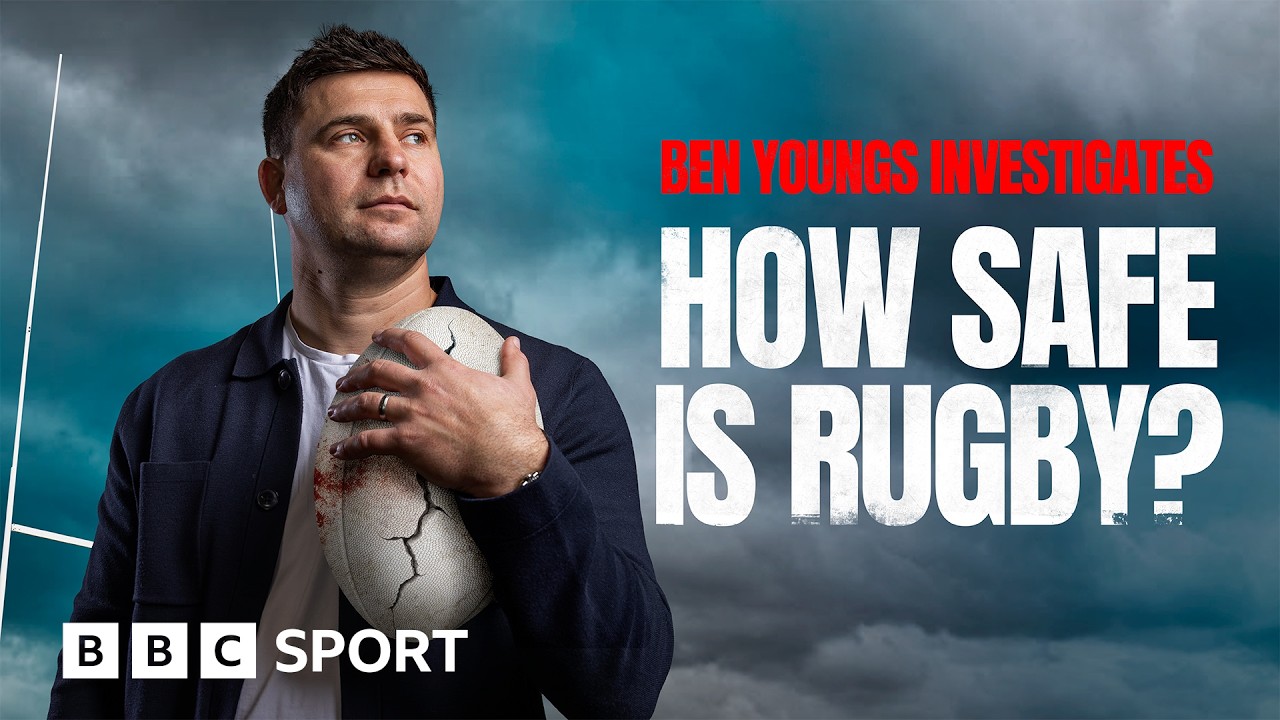
Ben Youngs, Moody's former teammate, found the conversation deeply emotional, particularly Moody's unwavering passion for rugby despite his diagnosis. This highlights the ongoing tension between the love for the sport and the looming questions about its potential link to neurodegenerative diseases, a link that remains complex and under investigation.
"I'd really like to use my platform for as big a positive impact as I can."
Groundbreaking Study Uses MRIs, Smart Mouthguards for Concussion Diagnosis in Rugby
Professor Cusick is spearheading an independent study that employs MRI scanners at rugby matches and smart mouthguards to objectively diagnose concussion severity and ensure safer returns to play. The research aims to develop precise metrics for understanding concussion mechanisms, scanning athletes pre-season to establish individual baselines for comparison in case of injury. This approach promises to remove diagnostic ambiguity and better inform player recovery protocols.
The study's ultimate goal is to create broadly applicable metrics for concussion diagnosis and management across all levels of rugby, from professional to youth leagues. This initiative reflects a significant commitment to enhancing player safety and fostering the long-term viability of contact sports by integrating advanced technology with personalized medical assessment.
"The first is to develop a more objective diagnostic of the incidence and the severity of concussion in order to remove any blurriness as to whether someone should come off the pitch or not."
World Rugby Enhances Concussion Protocols with Smart Mouthguards and Independent Doctors
Lindsey Starling, World Rugby's science and medical manager, detailed significant advancements in the Head Injury Assessment (HIA) protocol, a system implemented over a decade ago. The HIA involves multiple assessments immediately after an incident, post-match, and the following day, followed by a phased return-to-play for diagnosed concussions. Recent innovations include smart mouthguards that measure head acceleration and the introduction of independent doctors to eliminate pressure on players and team medical staff during critical concussion decisions.
These enhancements aim to ensure concussions are never missed and players receive optimal care, reflecting World Rugby's investment in making the game safer. The focus is on fostering a culture where long-term brain health takes precedence over immediate game outcomes, enhancing player trust and shared understanding of concussion risks and management.
"The other great addition, I believe, is the independent doctor. Because you could have pressure in yourself in terms of trying to get back on the field. You could have pressure from your own doctor… But all of that is removed now."
Women Rugby Players May Report More Concussion Symptoms, Cultural Shift Noted
Dr. Karen Jones, a former England international and RFU clinical services lead, observed that women in rugby tend to report more concussion symptoms than men, and their symptoms may last longer. While the exact reasons are unclear, potentially involving cultural factors, honesty, or physiological differences, the issue is being actively investigated by World Rugby to determine if differentiated management protocols are needed. Dr. Jones highlighted a significant cultural shift among players, with increased awareness and willingness to report symptoms.
Despite advancements, the absence of a single objective test for concussion means diagnosis still relies heavily on player honesty and education. Dr. Jones, drawing on her experience as both a player and a medical professional, emphasized the challenges of players admitting they are not right, especially in high-pressure game situations, underscoring the ongoing need for continuous education and evolving safety measures.
"Women in rugby tend to report more symptoms than men and potentially those symptoms last a bit longer in women than they do in men. Now, we don't really know why yet and that may be cultural."
Summarised from BBC Sport · 58:13. All credit belongs to the original creators. Men's Six Nations 2026 summarises publicly available video content.