🌐 Also available in: 🇪🇸 Español
Original source: The Prof G Pod – Scott Galloway
This video from The Prof G Pod – Scott Galloway covered a lot of ground. Streamed.News selected 8 key moments and summarises them here. Everything below links directly to the timestamp in the original video.
When considering factors that determine how long people live, an uncomfortable truth emerges: economic status plays a more decisive role than almost anything else. This analysis challenges the narrative that individual choices alone dictate health outcomes, instead pointing to systemic issues that demand collective solutions.
Poverty Identified as Strongest Predictor of Longevity
Poverty stands as the single clearest indicator of longevity, influencing lifespan more profoundly than many other factors. The associated stressors, including housing insecurity, inadequate healthcare access, poor nutrition, lack of sleep, and exposure to environmental pollution in economically disadvantaged areas, collectively diminish life expectancy. This structural disadvantage means individuals often reside near industrial sites or cancer clusters, further compromising their health prospects.
In contrast to the high costs and suboptimal outcomes of the U.S. healthcare system, countries like South Korea, which offers universal healthcare, demonstrate soaring longevity rates, particularly for women. This disparity highlights that policy interventions such as universal healthcare are crucial mechanisms for improving population health outcomes, rather than individualistic 'biohacking' approaches that are largely inaccessible to the majority.
"Poverty is the single clearest indicator of longevity because stress around housing, lack of universal healthcare, lack of health care of any good, lack of good food, lack of sleep…"
Meta Projected to Overtake Google in Digital Advertising Revenue
Meta is projected to surpass Google this year as the world's leading digital advertising business, with eMarketer forecasting Meta's net ad revenue to exceed $243 billion. This shift is primarily attributed to the success of Meta's Reels and its AI recommendation system, which has significantly boosted watch time by over 30% in the most recent quarter. Mark Zuckerberg's consistent understanding of entertainment trends and product development is identified as a key differentiator, contrasting with Google's historical struggles in social media platforms.
The market realignment underscores Meta's effective adaptation to evolving content consumption patterns, particularly in the realm of short-form video. While Google's search advertising market share is expected to fall below 50%, the long-term competitive landscape in digital advertising is poised to be shaped by continued advancements in AI, which will enhance efficiency for both platforms. This trajectory highlights the enduring importance of product acumen and strategic integration of emerging technologies in maintaining market dominance.
"The one thing Mark Zuckerberg does get right when he has a great product is he was very smart to see Instagram, early and take advantage of it. And then he didn't just buy Instagram, he did stuff with it."
Social Interaction Deemed Most Crucial Health Factor, Surpassing Therapy
Social interaction, rather than solely therapy, is posited as the most crucial factor for overall health and longevity, a finding supported by the long-running Harvard happiness study. This perspective emphasizes that genuine human connection and engagement, often involving 'friction' through shared activities, provide more profound health benefits than isolation. The argument acknowledges that while therapy can be beneficial for some, its increasing popularization, particularly through platforms like TikTok, risks overemphasizing individual self-work at the expense of communal well-being.
The decline in social engagement, exacerbated by factors like the COVID-19 pandemic and the rise of AI chatbots, is identified as a significant public health concern. Encouraging participation in activities that foster human connection—such as group games, sports, or in-person work—is presented as a vital intervention. This institutional lens suggests that structural support for community-building initiatives could yield substantial public health dividends, contrasting with individualistic, commodified solutions.
"More importantly and I think the science really bears this out very clearly is not therapy as much as social interaction. It's the number one health besides not being poor and being rich slash being rich, the number one thing that came through was social connections."
Tech Leaders Not Saviors, Collective Governance Essential
Tech leaders, including figures like Sam Altman, should not be regarded as societal saviors, but rather as business figures whose primary motivations often include personal gain. This perspective challenges the common narrative that positions them as benevolent innovators, arguing instead that their tendencies to prioritize self-interest are pervasive within the industry. The rapid transformation of public perception from hopeful anticipation to cynical disillusionment regarding these figures underscores a fundamental misapprehension of their institutional role.
The concentration of immense power and wealth in the hands of a few unelected tech executives is identified as a significant structural risk. Rather than relying on individual tech magnates to make decisions on critical issues like public health, the argument is made for collective decision-making through democratically elected officials. This framework asserts that accountability mechanisms inherent in democratic governance are superior to the unchecked power of private individuals, regardless of their purported intentions or technological prowess.
"I don't want any of them to to be the savior. I don't I don't think our business leaders should be our saviors. I think collectively we should."
Public Policy Interventions Urged to Boost National Health Outcomes
Beyond personal health adjustments such as reduced sugar intake, increased fiber and protein, and consistent exercise, systemic public policy changes are critical for improving national health. Key policy recommendations include the implementation of universal healthcare, raising the minimum wage to $25, and robust funding for advancements in mRNA technology and GLP-1 medications. These measures are seen as foundational for enabling broader population health improvements, particularly for those not in the highest income brackets.
The rationale behind these policy proposals is rooted in the understanding that socioeconomic conditions significantly dictate health outcomes. A higher minimum wage directly enhances individuals' choices and reduces the pervasive stress associated with economic insecurity, which demonstrably impacts mental and physical health. Similarly, universal healthcare and investment in cutting-edge medical research, such as mRNA and GLP-1 technologies, democratize access to essential care and treatments, thereby addressing systemic health disparities that individual behavioral changes alone cannot resolve.
"Universal healthcare for everybody and then the rich can buy more they always do right they always get the juicy bits but universal healthcare. Um, probably a $25 minimum wage so people can start to have choices."
Tech Leaders Ranked by Civic Duty and Product Acumen; Zuckerberg Called 'Most Dangerous'
Among prominent tech leaders, Mark Cuban, Satya Nadella, Tim Cook, and Reed Hastings are identified as figures who demonstrate a commendable blend of product acumen and civic duty. Mark Cuban, in particular, is singled out for his sensible approach and willingness to engage across political divides, prioritizing optimal outcomes. These leaders are recognized for creating high-quality products while maintaining a sense of responsibility beyond profit motives, offering a model for corporate leadership within the tech ecosystem.
Conversely, Mark Zuckerberg is designated as potentially the 'most dangerous' due to his immense power and perceived carelessness in its application. This assessment stems from the vast influence wielded by Meta's platforms, coupled with Zuckerberg's unassailable control, which, in this view, lacks sufficient accountability. The structural implications of such concentrated, unchecked power are presented as a significant societal concern, overshadowing the impact of other influential tech figures who may operate with greater circumspection or within more constrained domains.
"I would say Zuckerberg's the most dangerous if I had to pick, even though Thiel is really quite dastardly in many ways. Um, probably Mark in terms of pure power and lack of thoughtfulness, I think, and he can't be displaced and he's certain of everything."
Bryan Johnson's Anti-Aging 'Experiment' Deemed Narcissistic and Irresponsible
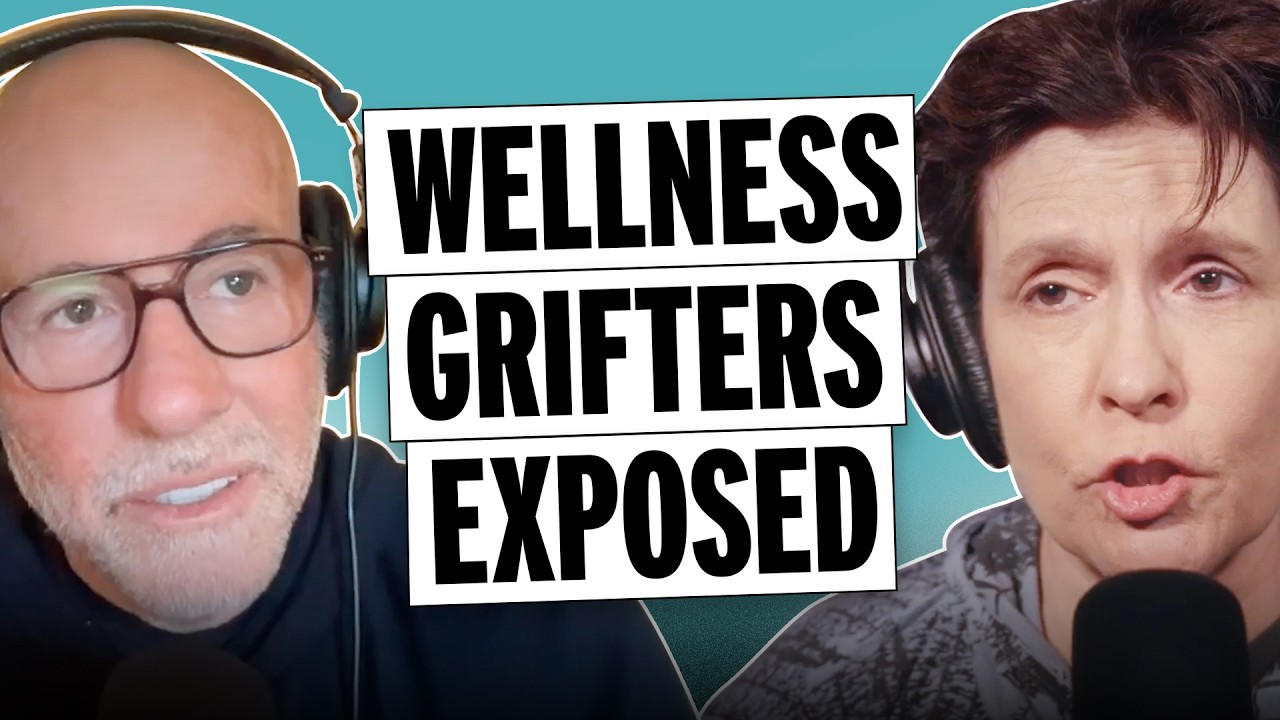
Bryan Johnson, a prominent figure in the anti-aging movement, is characterized as an "experiment of one" whose meticulous self-measurement, from biological functions to dietary intake, has evolved from a personal struggle with depression into a narcissistic and potentially irresponsible public platform. While some of his health advice, such as promoting whole foods, may be sensible, his extreme methods, including injecting stem cells and advocating untested therapies, are seen as medically unsound and lacking broader applicability. The medical community dismisses his approach as largely pointless for general population health due to its individualized nature.
Johnson's transformation from a humble entrepreneur discussing brain cognition to a self-proclaimed 'influencer' advocating dangerous advice underscores a problematic trajectory within the wellness industry. His pursuit of anti-aging, funded by an $800 million payment company sale, exemplifies how significant financial resources can be directed towards highly individualized, unproven interventions rather than broadly beneficial health initiatives. This phenomenon highlights a structural issue where personal wealth enables the public promotion of unverified health practices, potentially misleading a wider audience.
"It was narcissistic even though he denies it. And at the same time I find him very poignant in a way. I mean he a lot of he looks very shiny. He's always like he does his he he measures his erections. He measures his poop. He measures everything."
Unregulated Peptides Pose Health Risks Amid GLP-1 Promise
The use of peptides from unregulated sources, frequently originating from China, presents significant health risks due to insufficient testing and concerns about contamination. Unlike GLP-1 medications, which are undergoing rigorous medical scrutiny and demonstrating credible health benefits, including potential stroke prevention, these peptides lack a robust scientific foundation. The prevalent anecdotal evidence of efficacy, often shared within social circles, does not substitute for gold-standard clinical trials required to establish safety and effectiveness.
This landscape underscores a critical divergence in health interventions: those grounded in systematic scientific research versus those propelled by unverified claims and unreliable supply chains. The fascination with quantifiable health data, particularly among men, is identified as a potential distraction from genuine well-being, often leading individuals to embrace unproven substances. A more effective public health framework necessitates stringent regulatory oversight for novel compounds and a greater emphasis on evidence-based medicine over impressionistic self-experimentation.
"Right now, peptides, they come from China. They're not they're they're full of like impurities and you could hurt yourself, right, in terms of this without any real benefits."
Summarised from The Prof G Pod – Scott Galloway · 55:45. All credit belongs to the original creators. TheProfGPod summarises publicly available video content.